
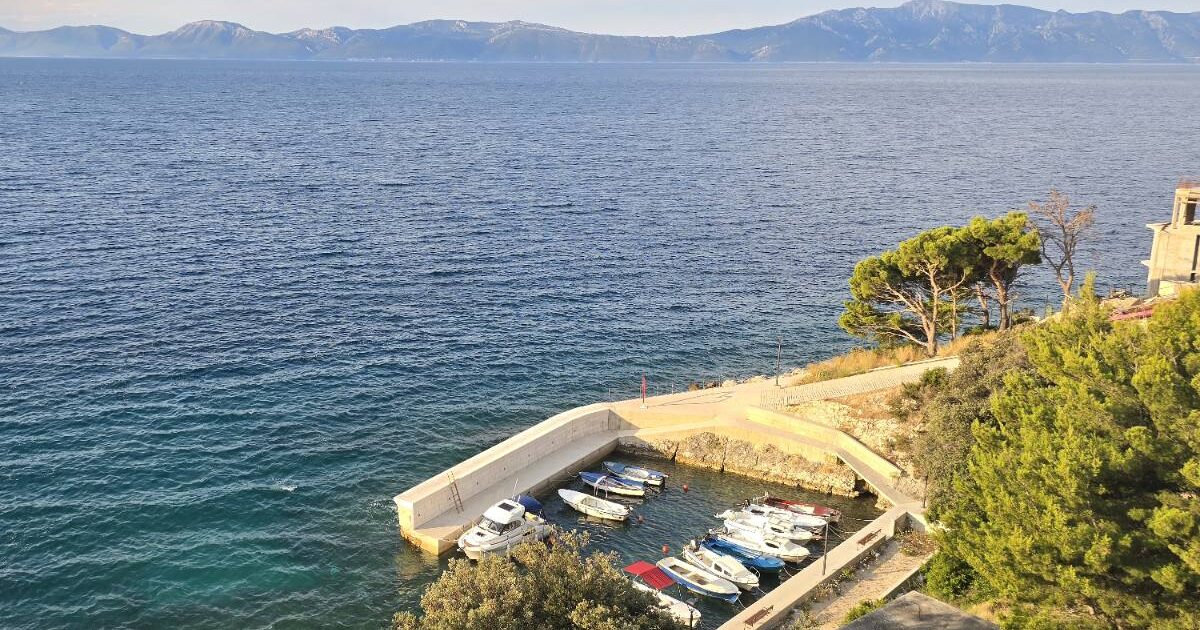
Once a symbol of working standards and organized summer vacations, the resorts of companies and institutions from Bosnia and Herzegovina on the Croatian coast today mostly stand as abandoned buildings, legally unresolved or turned into tourist complexes.
It is about the so-called passive off-balance sheet assets of the former BiH. companies, which after the breakup of Yugoslavia was not fully resolved through the process of succession between the successor states. It is estimated that around 70 percent of this property is located in Croatia, mostly in the most attractive tourist areas such as Dubrovnik, the Makarska Riviera and central Dalmatia, but also in key logistics points such as the ports of Ploče and Rijeka.
The largest number of these buildings are located on the Makarska Riviera, especially in the town of Gradac, where the largest part of former trade union and state property from Bosnia and Herzegovina is concentrated.
The most famous resorts from Bosnia and Herzegovina in Croatia
Among the most famous objects stand out:
“Đuro Salaj” – Gradac
Formerly a large workers’ complex, today abandoned and in a dilapidated state, without settled ownership.
“Walter Perić” – Gradac
A building owned by Elektroprivreda BiH, today dilapidated and unused.
“Traders” – Gradac
The trade union resort of trade workers, with an area of about 1,500 m², is neglected today.
“Vila Bosanka” – Gradac
Owned by Željeznica BiH, the subject of long-standing court disputes.
“Saobraćajci” – Gradac
One of the larger complexes (about 3,500 m²), completely abandoned.
“H2O complex” – Gradac
Formerly a joint facility of the railway union and builders’ union of Bosnia and Herzegovina, today without a clear status.
Resort of the City of Mostar
One of the few buildings that has been returned to the local authorities, but is still waiting for a concession solution or a lease.
Property without an owner and without a solution
After the breakup of the former Yugoslavia, a large part of the property remained “stuck” in the succession process between the states.
In practice, this means that some of the facilities are still owned by companies from BiH, some are in court cases, while some have already been privatized or converted into tourist complexes.
Although the Succession Agreement of the former SFRY, including Annex G, provided for the return and protection of property, its application in practice remained partial and uneven.
The bigger picture of value
Before the breakup of Yugoslavia, Bosnia and Herzegovina had significant assets on the Croatian coast – from workers’ resorts and hotels to ports and energy infrastructure. Today, the total value of these assets is estimated to be from hundreds of millions to several billion convertible marks.
At the very top are luxurious tourist complexes such as Hotel Belvedere in Dubrovnik, in which Agrokomerc had a share, and the Sun Gardens complex, which is today one of the most expensive resorts on the Adriatic.
These examples show how the most valuable locations, which today generate the highest tourist profits, were once part of the property of Bosnia and Herzegovina. companies.
Industry, ports and energy
Property of Bosnia and Herzegovina the firm was not limited to tourism. Numerous companies had their own facilities and shares in strategic infrastructure.
Particularly significant are the shares in the Port of Ploče, the Port of Rijeka, as well as energy systems such as the Adriatic Oil Pipeline (JANAF), which have regional economic and strategic importance.
Among the industrial entities that had property in Croatia are Borac Travnik, Fabrika duhana Mostar, Merkur Mostar and Hidrogradnja.
From social tourism to lost value
The former system of worker tourism, in which thousands of employees from BiH vacationed on the Adriatic, has today been replaced by ruins, private complexes and unresolved legal disputes.
Expert assessments indicate that it is a property of great value, but without a unique management system and a clear strategy for its resolution.
Workers’ resorts from Bosnia and Herzegovina in Croatia today are more of a legal and property problem than a tourist resource. Three decades after the breakup of Yugoslavia, this property remains one of the most important unresolved economic issues between the two countries.
While some objects have been returned, privatized or repurposed, most of them still remain stuck between court cases, administrative blockages and the growing market value, which makes this story more and more complex, he writes. NOISE.


