
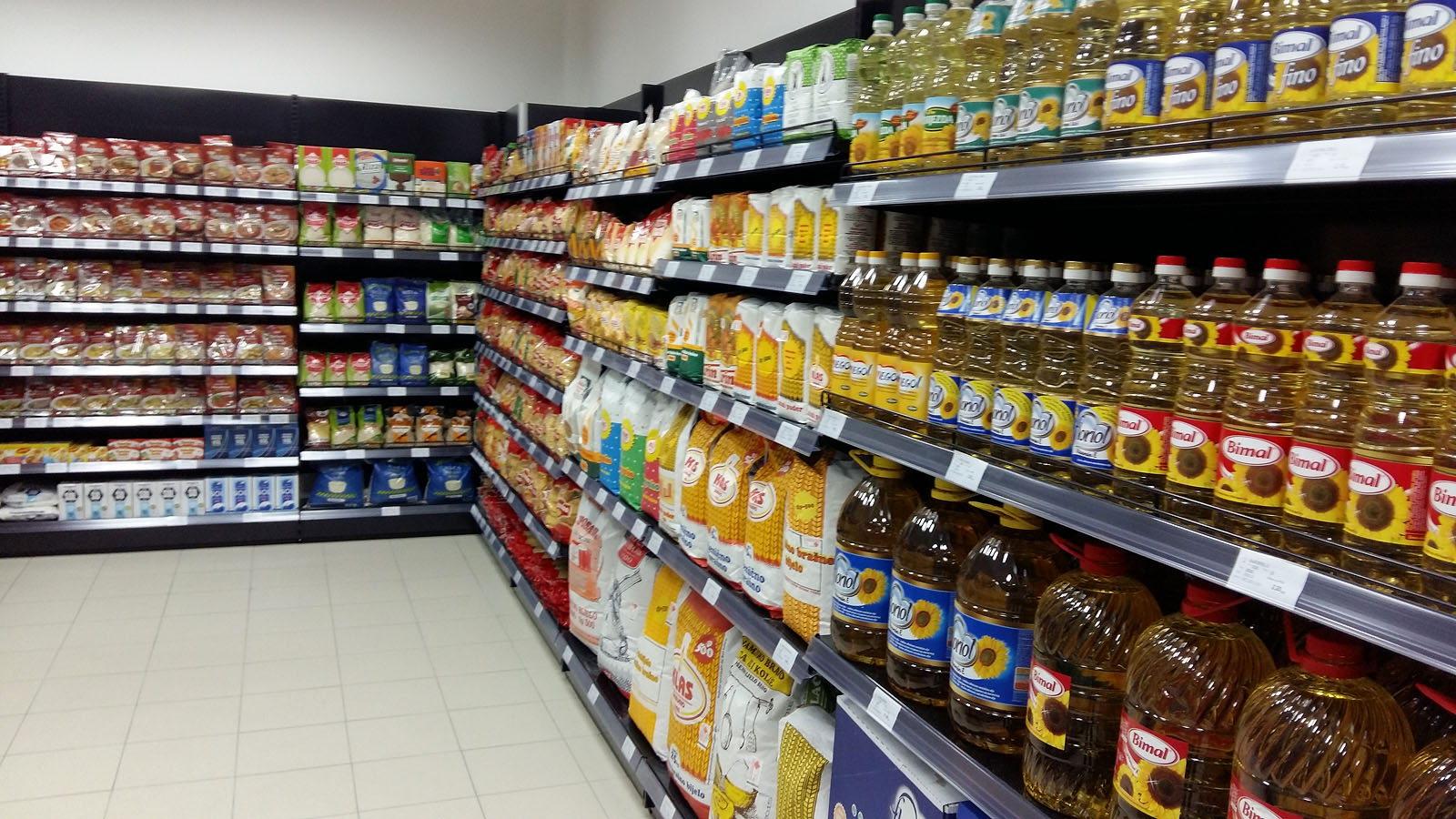
Although food prices in some countries may be lower than the EU average, households in those countries often spend a larger proportion of their budgets on food.
According to Eurostat data, food is one of the biggest expenses of households in Europe, on average around 11.9 percent of total consumption, while in countries like Romania that share reaches 20 percent.
Eurostat’s food price level index makes it possible to compare the costs of a standard food basket among European countries. If the average basket in the EU is set to 100, the index shows how much the same basket would cost in a particular country. Values above 100 mean that the country is more expensive than the European average, while values below 100 indicate cheaper prices.
According to data for 2024, North Macedonia is the cheapest country for food among 36 European countries – a standard basket of food there costs 73 euros, which is 27 percent cheaper than the EU average. Bosnia and Herzegovina is right after North Macedonia, Romania and Turkey, with an index of 82.5, which is still significantly below the European average. Romania is slightly more expensive than Macedonia at 74.6 euros, while Turkey records a basket price of 75.7 euros.
Conversely, Switzerland is the most expensive country in Europe with food prices 61.1 percent above the EU average, ie 161.1 euros per standard basket. It is followed by Iceland (146.3) and Norway (130.6), all members of the European Free Trade Association (EFTA).
Structural factors such as production costs, supply chain integration and exposure to global shocks play a key role in price differentials. Smaller and more open economies, especially those with currencies subject to greater fluctuations, felt the rise in energy and agricultural input prices more strongly during the pandemic and the Russian-Ukrainian conflict.
Experts emphasize that price differences are especially affecting where households spend a larger part of their budget on food. In the countries of Central and Eastern Europe and the Balkans, such as BiH, that share can exceed 20 percent, while in richer EU countries it is usually below 12 percent.
Differences in food prices are strongly related to differences in average wages and labor costs. Countries with higher average incomes, such as Denmark and Switzerland, also see higher food prices as labor costs in agriculture, processing and retailing are passed on to consumers. Taxes, particularly VAT on food products, also contribute to the differences, while some countries, such as Ireland, apply a lower or zero rate of VAT, in Denmark food is subject to the standard rate.
Although food in countries like Denmark looks expensive, high disposable incomes allow residents to easily afford the prices, while in countries like Bosnia and Herzegovina, lower food prices still represent a significant burden for households with limited incomes, writes Euronews.


