
According to new data from the Food and Agriculture Organization of the United Nations, the food price index on world markets recorded growth for the third month in a row.
The increase in food prices on world markets is also reflected in Bosnia and Herzegovina, he reports BHRT.
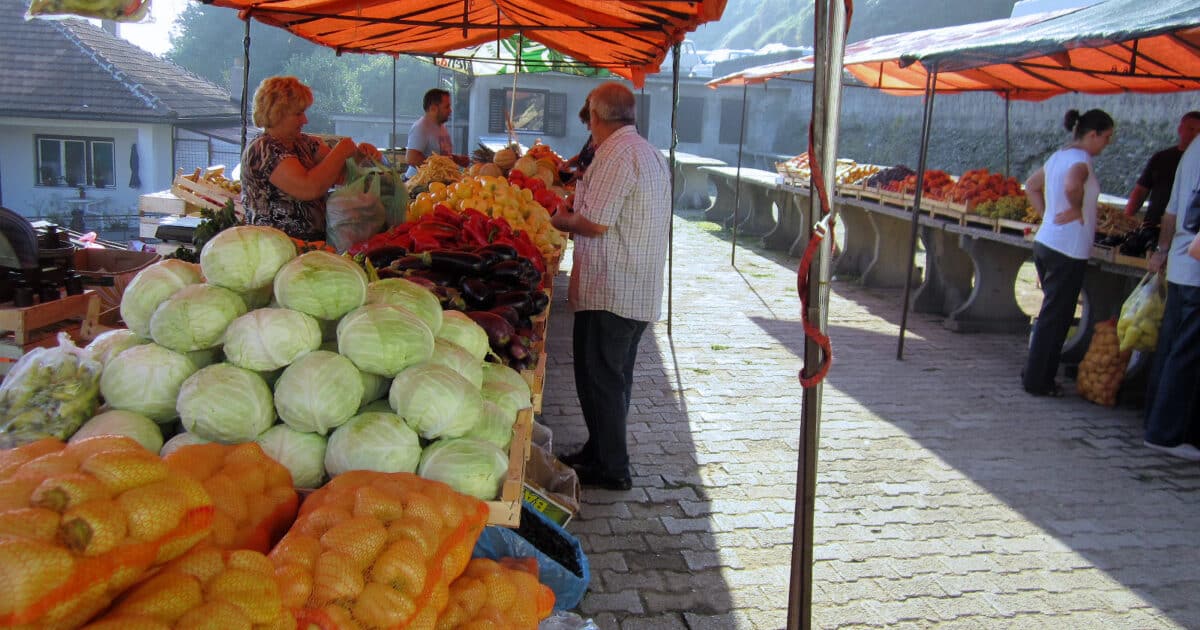
“There was an increase in prices, everything went up very well. Now the prices have started to decrease slightly. Let’s say that the price of tomatoes went up by ten marks, now it is seven marks, there are even five marks,” says Muratka Banda, a trader.
According to the data provided by the entity statistical institutes, in the comparison of March 2025 and March 2026, the price of basic foodstuffs has increased in the Federation of Bosnia and Herzegovina and the RS.
The highest growth was recorded in vegetables, which in the Federation of Bosnia and Herzegovina increased in price by up to 20% in certain categories, followed by meat, with an increase of between 5 and 8%, and fruit, which increased in price by almost 7%. Also, bread and butter prices rose in the RS, while dairy products mostly had a slight decline.
Overall, the data show the continuation of inflationary pressure on basic food products, with more pronounced increases in the prices of fresh food and meat.
The average salary in Bosnia and Herzegovina does not even cover 50% of the consumer basket of a family of four, according to official data from the Bureau of Statistics. The Association for Consumer Protection states that citizens are left to fend for themselves, and that the state has failed in many areas.
“We import 80% of the food we consume. We don’t have any decent plan for the development of agriculture, animal husbandry. Things can’t be fixed overnight, only if we invest in the production of our own food. However, that message is essentially brutal and dark, which means you are left to your own devices. Plant some food so you have something to eat. We have to ask ourselves what the state will do for us,” says Marin Bago from the “Futura” Mostar consumer association.
Considering the global increase in oil prices and the still present disturbances in the energy market, as well as the inflationary pressures confirmed by domestic statistical institutes, in the coming period we can expect continued pressure on prices and the possibility of additional price increases. How much longer can the citizens endure?


