This transformation process, unchanged thousands of years, used to be considered a form of magic. In a similar way, immigrants activate and reshape their lives in Western societies, not only adapting to new socio-economic realities, but also subtly reforming these social structures. In the case of bakers scattered in the west, work on making breads intertwine with the construction of the future, both for them and for the communities they feed.
For its new independent exhibition, Kemilbektechi takes yeast as a starting point for thinking about work, migration and resistance. This thinking stems from a deeply personal place. His father, Ruzmirbekteši, baker is whose work is enabled by the acemic art practice. Through its work, Kemil gives the voice to his father, and thus all those whose work creates invisible conditions for art and survival.
Rooted in personal histories, the works direct their views of Kosovo scattered in the west – not as stereotypes, but as workers, artists and individuals moving between worlds. Today, it is estimated that about a third of people born in Kosovo live abroad. The stereotype that Kosovars are bakers, and to possess or work in bakers, a nationalist cliché in the Balkans, often repeated without breaking or thinking. Here Kemilbektech takes that cliché and reverses it, examining what lies below the surface.
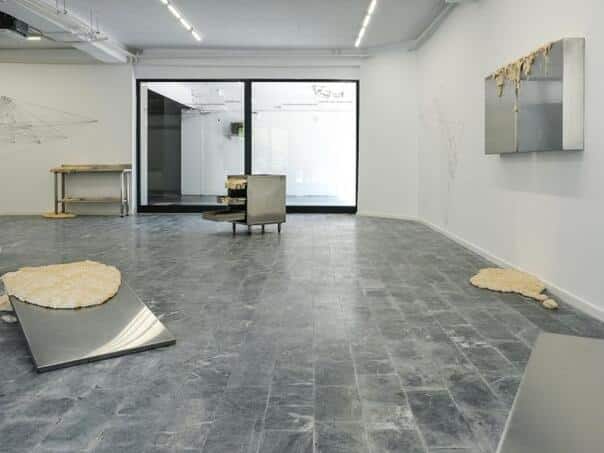
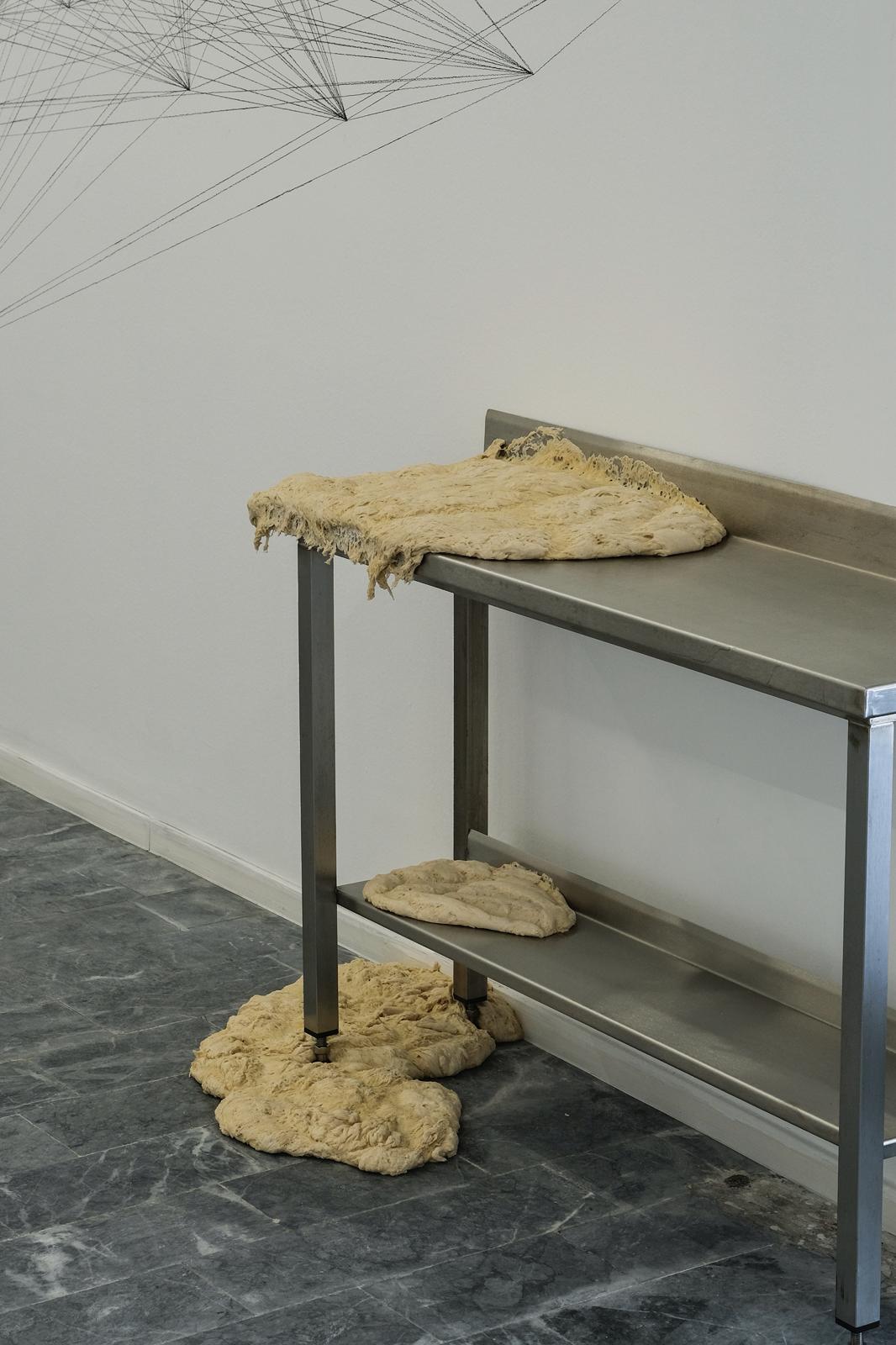
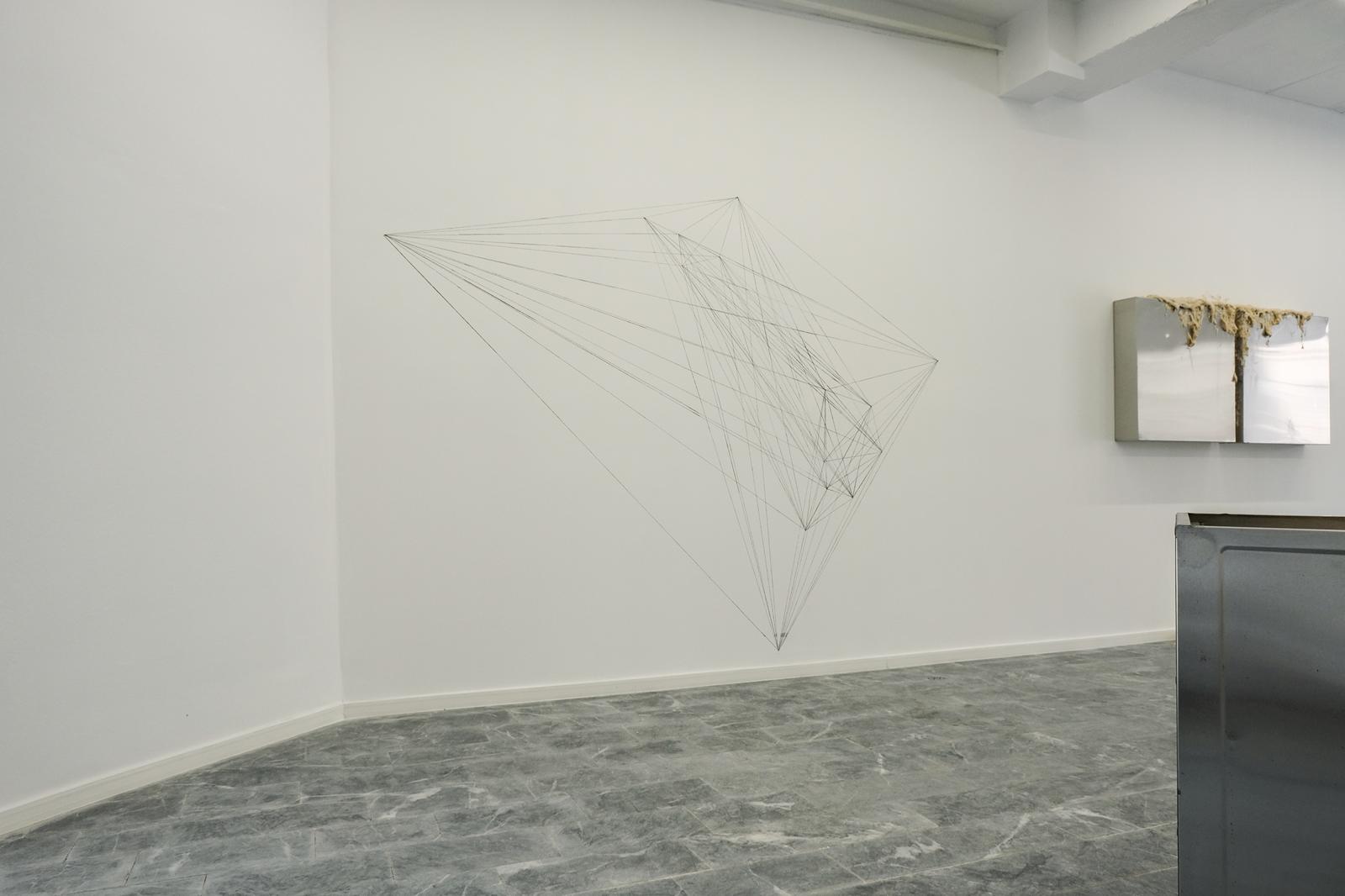
Slow and unstoppable include a series of processual installations, composed of stainless steel structures, from which the dough is growing slowly and quietly. Cold, industrial and sterile steel, standard in professional cuisines, becomes a frame for something soft, warm and alive. The dough continues to grow inside, transforming installations during the exhibition. Slowly. Unstoppable. About these sculptural works are maps 001-004, wall drawings of abstract folders. These maps Kemil was made in cities in which he recently worked, including Berlin, Sarajevo, Ljubljana, New York, always going to the west. In each city, he visited the bakers owned by Kosovars, noting their coordinates and connecting them.
This cartographic gesture is read as a form of urban and diasporic pilgrimage that allows you to connect to roots away from home. The gallery resonates with constant buzzing, sounded on the workplace Rozmirabekteši. GGM21 records the sound of a mixing machine for the dough that his father involves every morning at 2:00. By the time the bakery opened, and the machine and Ruzmir have been working, invisible and silent for hours. In the exhibition space, this silent buzz becomes the voice of that invisible work / worker.
Together, these works talk about migration, transformation and fermentation as metaphors and methods of life. As a microscope reveals that fermentation is not magic, but work, in parallel, the chemical installations reveal spores and cumulative processes that form diaporters: generational persistence, care and endurance.
Kemilbektechi (born in 1997) is a Bosnian-Kosovo Visual artist from the Gorski komala, whose work explores the topics of identity, geopolitics and cultural memory through personal histories marked by boundaries and migration.
Its artistic practice includes different media, including installations, sculptures, public interventions, with a special focus on location specifications and time.
Its art often reflects cultural and political overlaps between the countries of the former Yugoslavia, while he himself navigated in the region during his life. Bektešijevo’s research into social issues often focuses on complex relationships between nations, cultures and histories, and how they express themselves in modern visual forms. Its work examines interpersonal and geopolitical dynamics, positioning it as a reflective voice in the current discourse on regional identity.
He graduated in (2020) and a master’s degree (2021) at the Academy of Fine Arts in Sarajevo, where he was rewarded by a golden badge for exceptional academic achievements. During 2018/19, he studied contemporary art at the Faculty of Pretty Arts in Porto (Portugal). In 2023. He participated in the WHW Academy in Zagreb, Croatia. Bekteši received several recognitions, including the Ringtone for young visual artists in Bosnia and Herzegovina in 2024. years, and was the finalist for the Mangelos Award (YVAA) in Belgrade in 2022. Years.
(Vijesti.ba)