
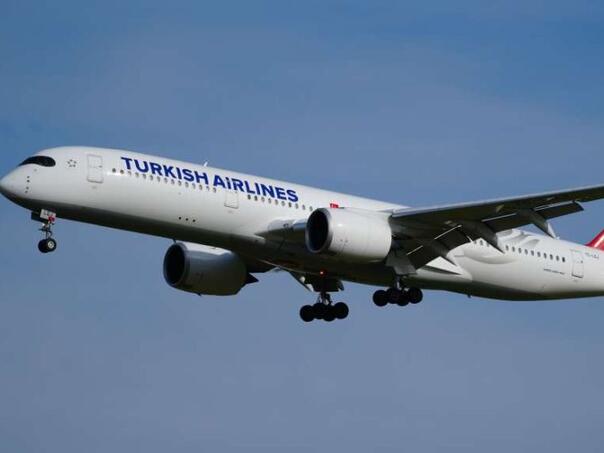
Low-cost airline Transavia this week announced its first flight cancellations in May and June, citing a sharp rise in the price of kerosene, a widely used jet fuel. As the war in the Middle East rages on, European airlines are bracing for more cancellations but hoping to avoid a fuel shortage that could ground their fleets this summer.
A question that is being asked more and more often is whether it is even safe to plan flights this summer. Because of the blockade of the Strait of Hormuz, which is disrupting global oil markets, there is growing concern that Europe could run out of jet fuel several weeks before the peak of the summer season.
The alarm was raised in mid-April, when the head of the International Energy Agency warned that Europe had “perhaps six weeks’ worth of jet fuel.”
Transavia thus became the latest airline, after Ryanair and Volotea, to announce the cancellation of some European flights in May and June, due to high fuel costs and difficulties in importing kerosene from the Gulf countries.
As peace talks between the US and Iran stagnate and traffic through the Strait of Hormuz remains blocked, the question is how likely it is that European flights will be grounded en masse this summer.
Shortage caused by falling imports
For weeks now, the lack of imports of oil and oil derivatives from the Gulf countries, due to the blockade of the Strait of Hormuz, has fueled speculation about a possible shortage of kerosene, the fuel that powers most aircraft engines.
– France produces significantly less kerosene than it consumes. About three million tons are produced annually, while consumption is about five million. The difference is compensated by imports, primarily from the Middle East – said Wouter Dewulf, a professor from the University of Antwerp.
Gulf countries export not only crude oil, but also refined products such as Jet A-1 fuel, the most commonly used jet kerosene.
Data from the French Ministry of Energy show that before the war in the Middle East, about 50 percent of jet fuel was produced in France, 20 percent came from the Middle East, and the remaining 30 percent from Europe, the USA and Asia.
The situation is similar in other European countries.
– Europe produces very little oil and has reduced its refining capacity in the last few years. It is increasingly dependent on the import of processed products, which makes it vulnerable to global crises – said energy expert Thierry Bros.
France: No risk in the coming weeks
However, experts say that France is in a slightly better position than some of its neighbors because it is less dependent on imports from the Middle East.
Great Britain, for example, imports about 60 percent of kerosene from Saudi Arabia, the United Arab Emirates and Kuwait.
Paris’ two main airports, Orly and Charles de Gaulle, should avoid the more serious consequences of a possible shortage thanks to a network of oil pipelines connected to the refineries and the terminal in Le Havre.
Most of the crude oil for these systems comes from North America, which puts France in an advantageous position compared to other countries.
The government announced that it has strategic supplies sufficient for about two months, while commercial supplies at airports can cover ten days of operations.
– Currently, there is no risk of a shortage of kerosene in the coming weeks – said Government spokeswoman Maud Bregeon.
Experts warn that a prolonged conflict could cause problems later in the year.
– This combination of factors will probably save the summer, but the question remains how long the crisis will last. If the conflict continues, the same problems could appear in the fall, in October or November – said Dewulf.
France and the European Union are already preparing measures to deal with possible long-term disruptions, including increased inventory monitoring and maximum utilization of refinery capacity.
The European Commission has warned that collective action may be needed to preserve the functioning of the single market and ensure stability of supply.
Passengers can expect more expensive tickets
While the shortage may not be an immediate threat, travelers could feel other effects.
– Availability and price should be distinguished. Even without a shortage, the prices of plane tickets can rise significantly – said Bros.
The price of kerosene has more than doubled due to the war in the Middle East, and fuel accounts for up to 40 percent of the price of a plane ticket.
The biggest impact is expected at low-cost airlines, which operate with small margins. Because of this, companies like Transavia have already been forced to raise prices and cancel less profitable flights.
– It is not so much about shortage as about profitability. If ticket prices become too high, it will be more profitable for airlines to ground planes – added Bros.
What to do if the flight is cancelled
In the event of a flight cancellation, passengers have limited options.
According to European Union laws, airlines have the right to cancel flights if they notify passengers at least 14 days in advance.
In that case, they are obliged to offer a refund or an alternative flight at no additional cost.
However, they are not required to pay compensation if the cancellation is due to “extraordinary circumstances”, such as the current crisis caused by the war in the Middle East, reports France 24.
(Vijesti.ba / Fena)



Chat readers
Open a chat for this news