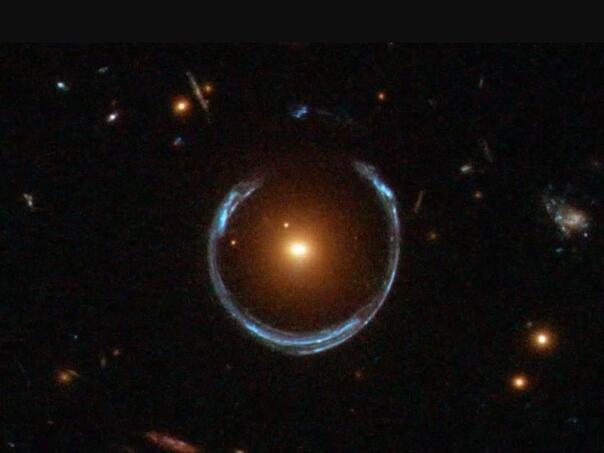
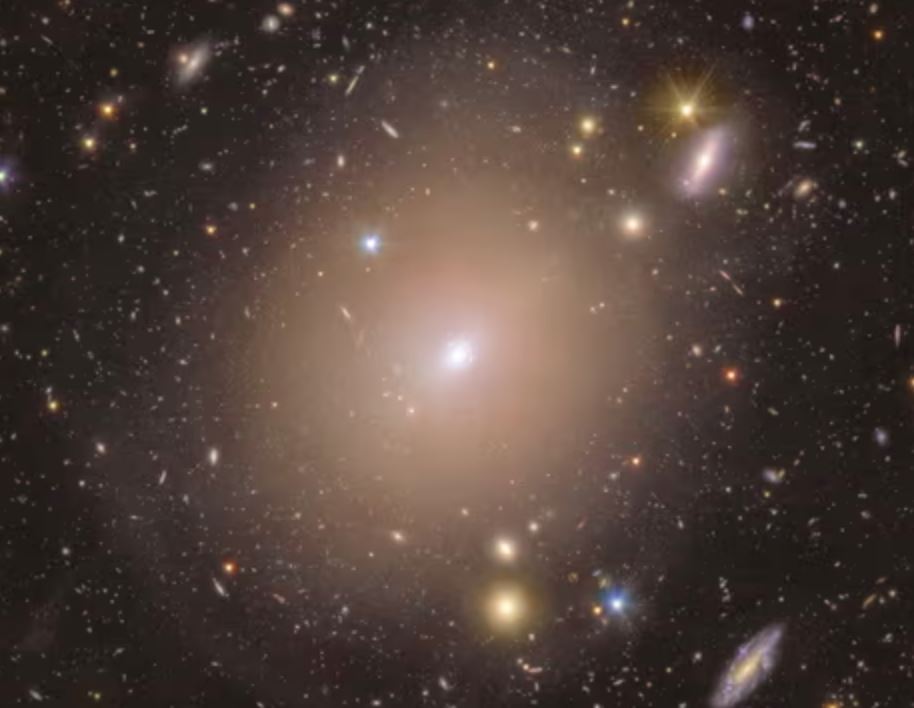
The glittering image shows the nearby galaxy, NGC 6505, surrounded by the perfect circle of light. The ring gives a view of the remote galaxy, which is located just behind the NGC 6505, whose light star bent around the galaxy in the foreground.
“This is wonderful, extraordinary, exciting and happy discovery in our first data,” said Professor Stephen Serjeant, astronomer at the University Open University.
The general theory of relativity of Albert Einstein predicts that light will bend around massive facilities in the universe, which means that galaxies can behave like huge lenses.
Einstein rings are a powerful tool for astronomers because they reveal objects that would otherwise be sheltered from view and show the mass of the medium galaxy – including any hidden mass in the form of a dark substance.

In this case, astronomers estimate that the galaxy in the foreground consists of approximately 11% dark matter. This is a relatively small share since it is believed that a dark substance is dominated by the overall content of the universe.
(Vijesti.ba)