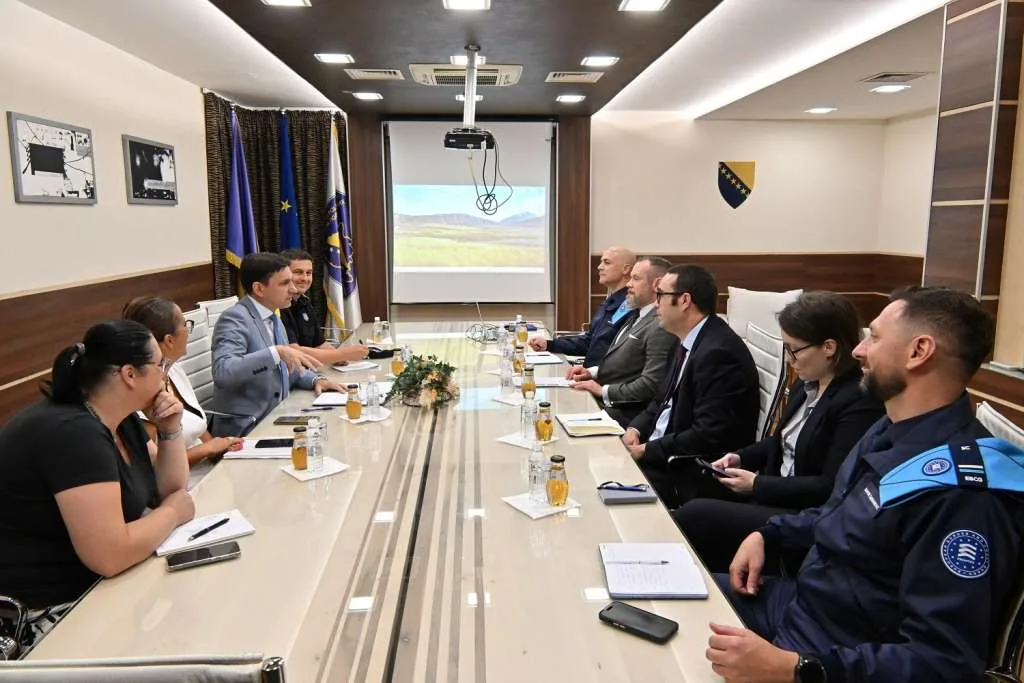
At the seventh session of the Conference on Healthcare in Bosnia and Herzegovina, agreement was not reached on several key initiatives proposed by the Ministry of Civil Affairs of Bosnia and Herzegovina (MCPBiH).
Among them is the proposal for the development of a strategic document for healthcare in BiH, which was not adopted, although the European Commission continuously emphasizes the need to strengthen the strategic framework and coordination in that area in BiH.
The conference was chaired by the Minister of Civil Affairs of Bosnia and Herzegovina Dubravka Bošnjak, with the participation of entity health ministers Nediljko Rimac and Alen Šeranić and the head of the Health Department of the Brčko District of Bosnia and Herzegovina, Zoran Bulatović.
Coordination of development directions
It was pointed out that the absence of strategic documents makes it difficult in the long term to plan reforms, use international funds and align with European standards.
From the Ministry of Civil Affairs of Bosnia and Herzegovina, to Faktor’s inquiry, they responded that at the beginning of February this year, they again launched the initiative to create a strategic, or planning document in the field of health at the state level with the aim of harmonizing common development directions and improving the health system.
They added that the proposed document was conceived as a framework that, with full respect for the constitutional structure of BiH and the competences of all levels of government, would identify common development priorities and areas in which it is possible to achieve progress through strengthening coordination and cooperation.
As they stated, the document would not encroach on the existing competences of the institutions, but would serve as a basis for harmonizing common directions of development.
– The goal of the initiative was to strengthen inter-institutional coordination, improve the quality of health care and improve the health status of the population, with full respect for the various organizational models of health systems in BiH and the interests of citizens as the end users of health services – the MCA of BiH states.
As they further pointed out, the basic functions of the document would refer to: establishing a structured and continuous mechanism of coordination between competent institutions at all levels of government, in order to improve the exchange of data, information and good practices; defining jointly recognized development priorities that could serve as guidelines for planning health policies, as well as ensuring a harmonized and efficient approach to fulfilling BiH’s international obligations in the field of health.
The document would also resolve the issue of improving cooperation with international institutions and organizations and strengthening the intersectoral approach to public health issues, including prevention, resilience of health systems and response to crisis and emergency situations.
Also, the creation of such a document could contribute to better planning and more efficient use of international resources and funds, bearing in mind that strategic documents are often a prerequisite for applying to international projects.
Care for citizens’ health
However, as emphasized by the MCA, after the discussion at the session, it was concluded that no agreement was reached, that is, that the representatives of both entities – the Federation of BiH and Republika Srpska – voted against the mentioned initiative.
– The health strategy is not just an administrative document, it is a plan that determines how we will take care of the health of our citizens in the country in the next five or ten years. Without this document, the healthcare system functions reactively, i.e. putting out fires, instead of proactively. It enables the system to be predictable, transparent and focused on the ultimate goal, i.e. on extending life expectancy and improving the quality of life of citizens. The strategy provides continuity of health policy regardless of changes in government – the Ministry of Civil Affairs of BiH pointed out without answering the question – what are the reasons why the representatives of the entities voted against it.
Why did he vote against this initiative? As usual, the minister did not answer the phone.
At the aforementioned session, agreement was not reached on the establishment of a registry of malignant diseases in BiH, as well as on the creation of a joint annual health report, despite the clearly expressed need to improve planning and availability of public health data in BiH.
The question of establishing regulatory assumptions for the use of cannabis-based medicines also remained without agreement.
Although the Council of Ministers of Bosnia and Herzegovina removed the fundamental legal obstacle to the use of cannabis for medical purposes in December 2025, the necessary changes to the by-laws at the entity level have not yet been implemented, which makes its practical application impossible.
As stated by the MCA, the Federal Ministry of Health (FMZ) expressed readiness to regulate this area, but without the consent of all participants of the Conference, the appropriate conclusion proposed by the Ministry of Civil Affairs of BiH was not reached, writes Factor.