
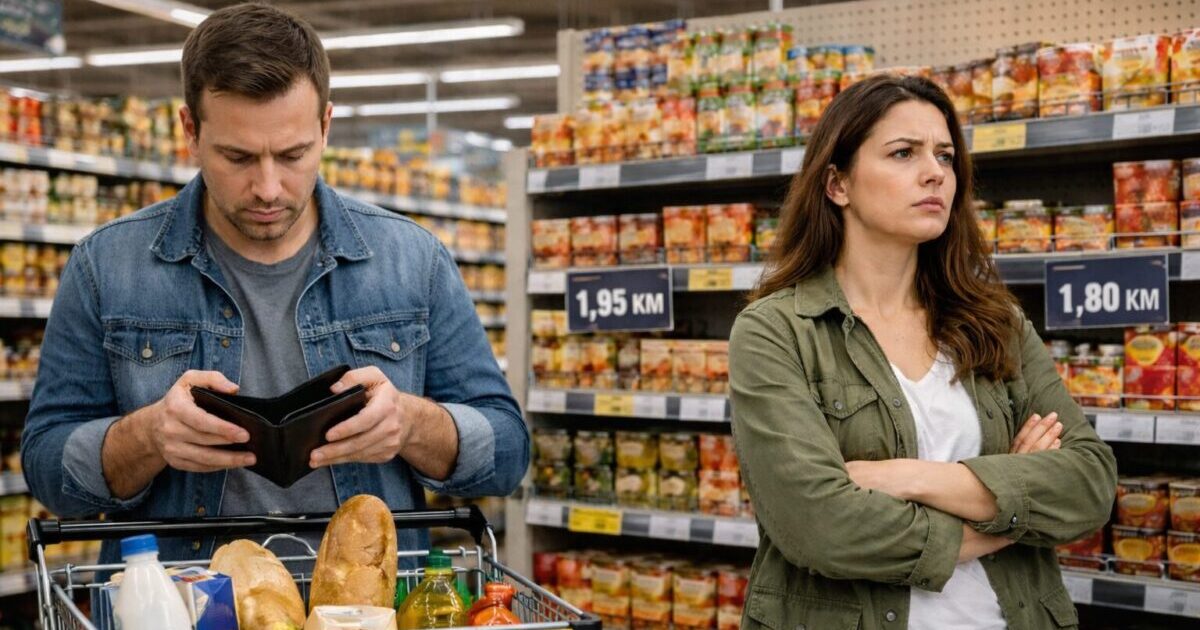
Economic experts announce a new increase in the prices of basic foodstuffs due to the increase in the price of oil and oil derivatives. Fuel is a key factor in transport and production, so its price increase directly affects the daily expenses of citizens, he says FTV.
Chain effects
The rise in diesel and gasoline prices is already spilling over to other sectors. Experts warn that fuel is the driving force in almost all stages of production and distribution, which is why its price increase inevitably affects food prices as well.
Economic analyst Željko Rička pointed out that citizens are already feeling the consequences: “Residents continue to suffer the consequences of keeping excise taxes at a high level. We only have the option to store fuel while it is still cheaper or, on the other hand, to reduce car use and consumption, which drastically affects all sectors.”
Consumers are already feeling this chain effect. Higher transport prices increase the cost of purchasing raw materials, as well as the distribution of finished products, which is ultimately reflected on store shelves. Citizens notice price increases and find it increasingly difficult to balance their household budget. They point out that price increases have already become everyday.
Limited measures
Consumer associations warn that institutional measures are insufficient and that citizens increasingly have to adjust their spending themselves. Although there is occasional talk of abolishing or reducing excise taxes as a possible solution, experts point out that such measures would have a limited and temporary effect.
Gordana Bulić, president of the “Tuzla Canton Consumer Club” Association, stated that the global situation further complicates forecasts.
“Unfortunately, the situation in the world is not promising and it is ungrateful to make any forecasts. Due to fuel prices, but also other risks in commodity traffic and production, prices continue to rise.”
If the trend of rising fuel prices continues, an additional impact could follow precisely on basic foodstuffs, which would hit the most vulnerable categories of the population the most.


