
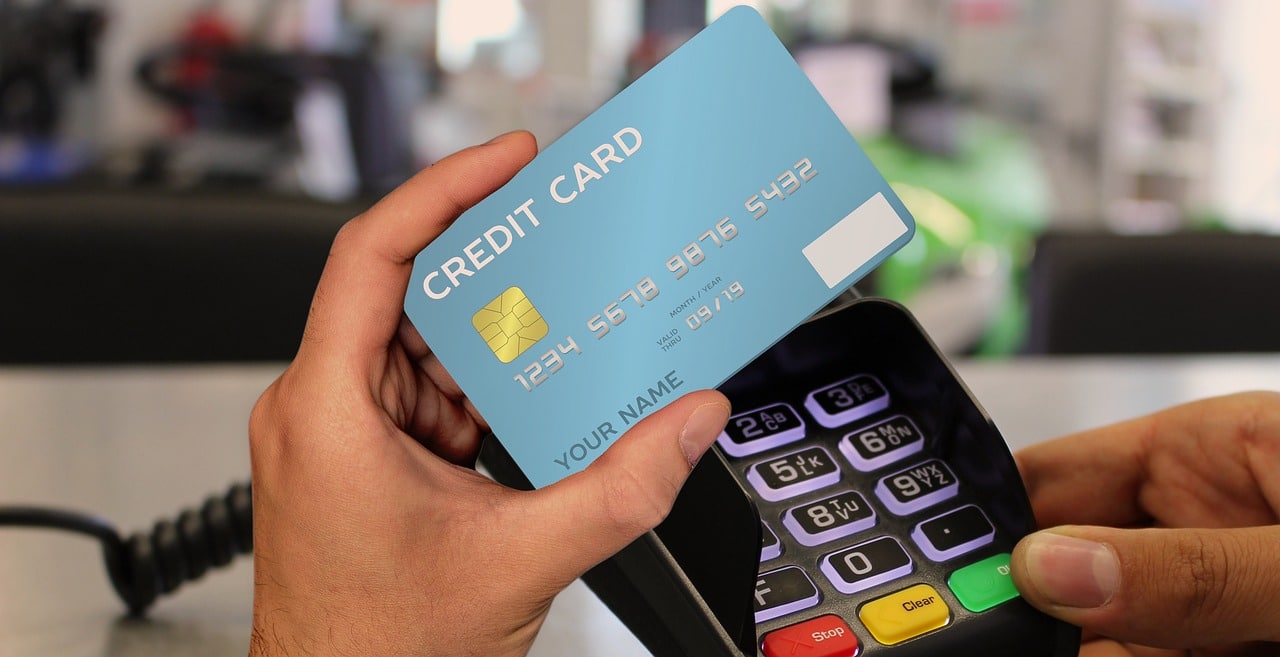
When paying with the card, whatever to pick up the tip, or approve the greater amount, so far we have to enter a PIN. Pressing buttons or screen control is not only inconvenient, but also a place where microbes are easily accumulated.
The team from the University of British Columbia therefore works on the alternative. Their approach is to manage the card with simple hands movements, such as deleting or knocking. These movements should make contactless payment easier, hygienic and more affordable, writes Smart Up News.
The principle is simple: the card and terminal already exchanges radio signals. Researchers have used these signals and add small coils to the device. This creates small changes in magnetic field that allow recognition whether the card is moved to the left or briefly touched. The computer program connects these changes to the appropriate movements. So as many as nine different movements can be identified – including deletion in four directions, double touch and short movement. In the tests, the system has achieved accuracy greater than 90%.
The most important aspect is not the movement itself, but the fact that no one has to touch the terminal. The card only moves above the antenna; The device “reads” samples in the signal and recognizes the movement. Shared surfaces for press keys are no longer needed, thus reducing the risk of microbes transmission. To select a tip or approve of the transaction, only one movement or double touch is sufficient.
Instead of pressing small keys, simple hands are enough. This helps people with motor difficulties and makes use easier for older people because no complicated entries are required. With the NFC system from the University of British Columbia, PIN codes could be replaced by movements, making payment to hygienic.
Unlike counting codes, your own movements are harder to follow. Researchers show that gesture codes can serve as a second layer of security. Although there is concern that someone could look over shoulder, in case of loss of the card, found will usually not know the gesture code. “The interaction via movement could also provide an additional security level,” says Doctoral Bo Li.
The system recognizes nine movements, including various deletion directions, short touches and scrolling. In testing, recognition accuracy was about 92%, given different persons. Two gestures were a little harder to recognize (moving up, a free vertical movement), but the tags or change of terminal position can make it easy. Additional coils on the device, which enable the recognition of directions, minimally reduce the signal.
The technology can be installed in terminals for a maximum of $ 20 per device. Many devices already have enough computer forces, and there is a small and cheap upgrade in an emergency. According to the Robert Xio project, many terminals are already well equipped for this technology, transmits Evening.ba


