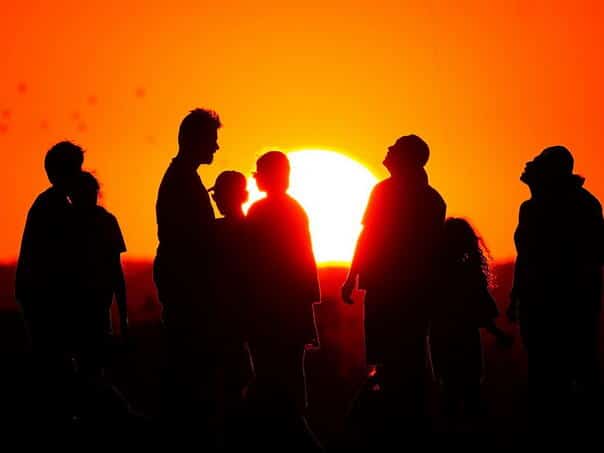
The extreme heat hit from the middle of July, otherwise cold Nordic land, with temperatures above 30 degrees in Finland during 22 consecutive days, which is the longest heat wave recorded in that country.
In the Norwegian part of the Arctic Circle, during the 13 days of July, it was above 30 degrees. Sweden had 10 consecutive tropical nights when temperatures did not descend below 20 degrees.
The study of the World Weather Attribution organization is warn that heat-causing changes, have consequences for the health system and that similar events will become five times more common than 2100.
“Even the comparable cold scandinavian countries are facing dangerous heat waves with 1.3 degree heating. This event should be understood that no country is safe from climate change,” said the author of the Friederika Otto.
According to that study, climate change is the heat wave in the middle of July in Norway, Sweden and Finnish at least 10 times more likely than it would be in the world without global warming of 1.3 degrees.
Scientists also concluded that the temperatures in these countries during the heat wave were for two degrees.
With global warming, such a two-week high temperature period is expected for approximately every 50 years, and if the average global temperature increases by 2.6 degrees, similar events will be five times more likely and more likely than today.
Long periods of heat in three countries led to overheated and overheated hospitals, fire, flowing heat algae and a larger number of drowning.
It also caused difficult conditions for work, insomnia and health risks, and researchers warn that the “quiet killer” may have caused hundreds of death-related deaths.
Due to the great heat Irvas, they searched the shade in cities, and the cattle breeds warned that the lives of their animals were endangered.
One of the Maja Valberg studies indicated that infrastructure in these countries was not made to withstand these extreme temperatures and that the older population is increasingly subject to dangerous heat.
“We have seen some progress in adaptation and preparation, since 2018. years, when we experienced our last major heat wave. But we still need to make more to ensure that our infrastructure and systems are custom and high temperatures,” Valberg said.
(Vijesti.ba)