In the last months, relations between China and Taiwan reached a new boiling point.
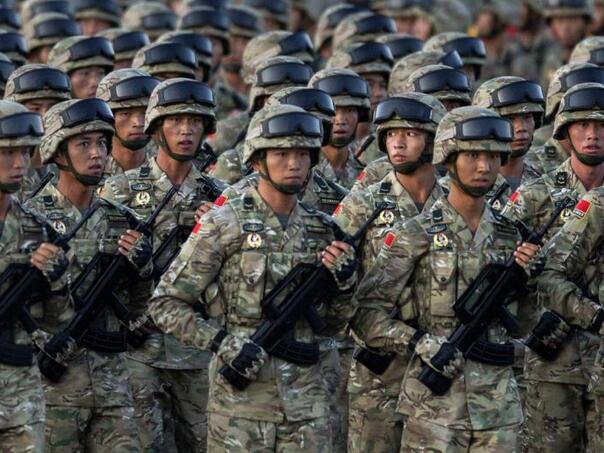
The Chinese army conducted large military exercises around Taiwan, sending a strong message to the island government and its international allies.
While Beijing claims that these activities are just exercise, analysts believe that the goal of these maneuvers is much broader: mental pressure, demonstration of power and potential preparation for a more serious conflict.
China has carried out military operations around Taiwan for two days in a row, including the deployment of war ships, combat planes and coasts in strategic areas around the island.
Official Beijing stated that exercises are aimed at testing the ability of “common blockage and control” of the sea and the sky around Taiwan.
Also, Chinese forces performed precise strikes on simulated goals in the Eastern Chinese Sea, which includes key ports and energy facilities.
“Joint blockade could prevent the separatists from escaping and preventing the external forces to provide Taiwan,” said Chinese military expert General Meng Shangzan, emphasizing how destructive would be destructive by the island.
The Taiwanese Ministry of Defense announced that 76 Chinese military planes in the vicinity of the island was recorded in 24 hours, while at least 13 Chinese warships patrolled in Taiwan Seauz.
For Taipei, this exercise represent another reminder of a constant threat from Beijing. The Chinese government considers Taiwan to partly his territory and does not exclude the possibility of using force for his re-merger. Taiwanese authorities sentenced military maneuvers as an unjustified provocation, accusing China to cause instability.
Although the exercises were intense and aggressive, analysts believe that China carefully balances between intimidation and avoiding direct conflicts with the United States, which are the key ally Taiwan.
Taiwan is a self-governing democratic state with 23 million inhabitants, but China sees it as a child-borne province that must be attached to the nut – calmly or force. Although Beijing claims that it is ready for peaceful unification, military modernization and increasingly aggressive maneuvers indicate other plans, the new ones are transmitted.
The United States is traditionally the largest protector of Taiwan, despite not having official diplomatic relations with the island. Washington maintains a policy of “strategic ambiguity”. Although it does not guarantee direct military intervention in the case of Chinese invasion, it regularly supplies Taiwan weapons and military equipment.
The US Second Defense Minister Pit Hegset said Japan said that the United States remains committed to maintaining stability in the Indopacifix and will continue to support Taiwan. China, on the other hand, accused the United States to encourage Taiwanese separatism and revenge regional peace.
The roots of tensions between China and Taiwan originate in China, which lasted since 1927. until 1949, when Mao Cedunga communists took power in Beijing, while the members of the nationalist party escaped and established the refugee government of the Republic of China. Since then, China has never managed a taiwan, but does not give up on request for his reunification.
Beijing insists on the “principle of one China”, according to which there is no legitimate, independent Taiwan state. This principle is based on the so-called consensus from 1992, which interpret the Beijing and Prokinish politicians in Taiwan differently. However, that consensus has never officially recognized the Democratic Progressive Party (DPP), currently the ruling party in Taiwan.
President Laj Ching, which comes from the DPP, clearly pointed out that the National Republic of China has no right to represent Taiwan, which further insured Beijing.
In addition to military pressures, China also benefits economic measures to isolated Taiwan. Beijing has made many states to stop official relations with Taipei and today only 11 countries and Vatican recognize Taiwan as a sovereign state.
In addition, China puts pressure on international organizations and companies that Taiwan indicate as part of China. The Chinese authorities have introduced sanctions and against Lithuania because it allowed the opening of the Taiwan representative office in its capitality.
However, Taiwan is a key player in the global economy thanks to its dominance in the semiconductor industry. TSMC TSMC produces more than 90% of the most advanced chips in the world, and the United States has recently invested billions of dollars to ensure the strategic production of chips out of China.
(Vijesti.ba)