
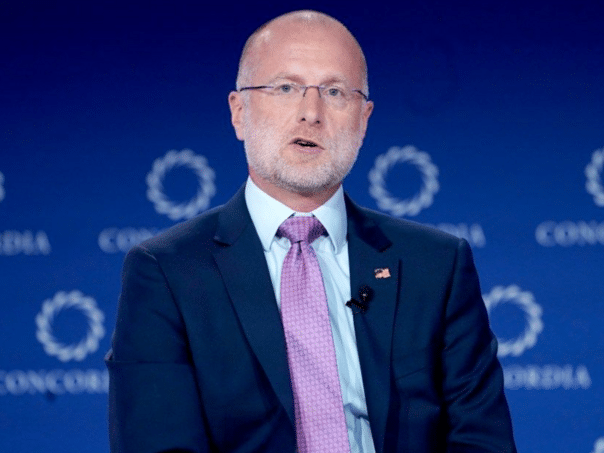
The chairman of the US Federal Communications Commission has threatened to revoke broadcasters’ licenses after US President Donald Trump criticized their coverage of the US-Israeli war with Iran.
Brendan Carr told CBS News, the BBC’s US partner, that broadcasters’ licenses were not a “property right” and warned they could be taken away if stations did not serve the public interest.
Carr’s threat came after he accused the broadcasters of “spreading deception and distorted news”, saying they could still “correct course” before renewing their licences.
Some Democratic lawmakers called Carr’s comments unconstitutional. The FCC issues licenses to individual broadcast stations, but does not issue licenses to television networks.
“People have gotten used to the idea that, you know, licenses are some kind of property right and there’s nothing you can do that will result in them losing their license,” Carr told CBS News.
“I’m trying to kind of help reorient people to the fact that, no, there is a public interest and broadcasting is different.”
The FCC — the nation’s broadcast media regulator — regulates radio, television and satellite airwaves, giving it power over a range of issues, including mergers and complaints about obscenity.
On Saturday, Carr responded to a social media post from Trump in which the US president said “the poor ‘newspaper’ and media actually want us to lose the war.”
Carr wrote: “The law is clear. Broadcasters must act in the public interest and will lose their licenses if they don’t.”
Democratic lawmakers criticized Carr’s threats as unconstitutional.
Massachusetts Senator Elizabeth Warren wrote that it is illegal “for the government to censor free speech just because it doesn’t like what’s being said about Trump’s war with Iran.”
California Gov. Gavin Newsom called Carr’s threat “clearly unconstitutional,” while Sen. Mark Kelly wrote, “This is an overreach by the FCC because this administration doesn’t like being put under the microscope and doesn’t want to be held accountable.”
Carr was at the center of the Trump administration’s fight against broadcasters with whom Trump disagreed.
The chairman of the FCC called for the suspension of TV host Jimmy Kimmel after the late-night ABC host criticized Trump and Republicans for their response to the assassination of Charlie Kirk. Kimmel’s show was taken off the air, but returned six days later.
Trump has also frequently targeted media outlets for how he sees them as biased against him, including lawsuits against The Wall Street Journal, The New York Times and others.
The FCC, an independent agency, issues eight-year licenses to broadcast stations, many of which are owned and operated by television networks. It does not issue licenses to TV networks such as CBS, NBC, ABC or Fox.
The FCC states on its website that “The First Amendment and the Communications Act expressly prohibit the Commission from censoring broadcast content.”
He also states that the commission’s role in monitoring content on radio and television waves is “very limited”.
The FCC’s authority over content standards is limited to broadcast television and radio and does not include cable networks or streaming platforms.
(News..ba)


