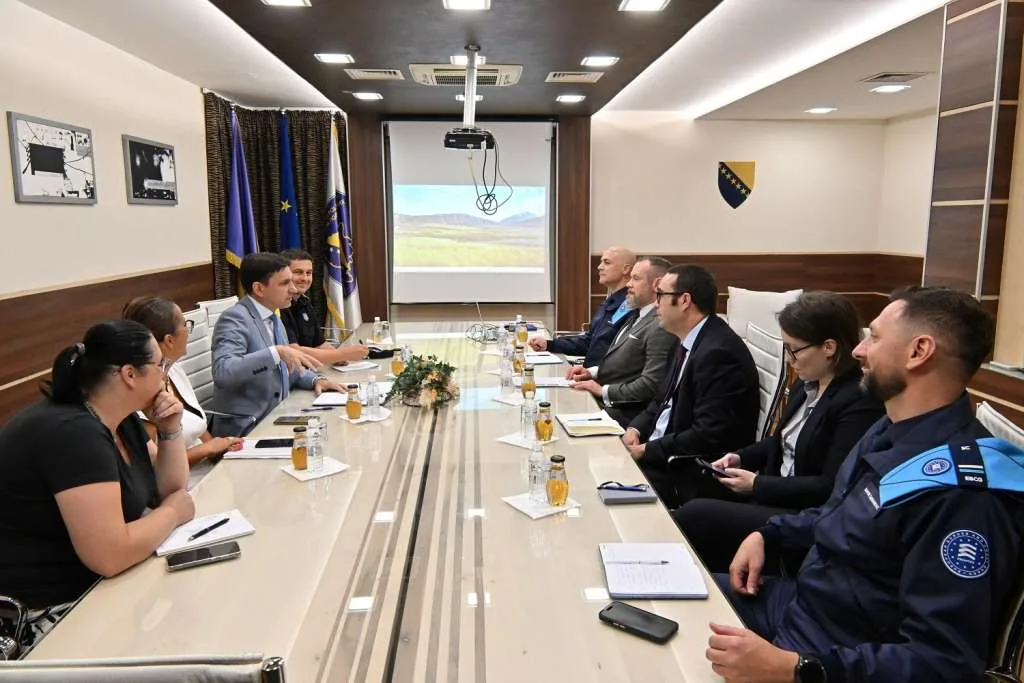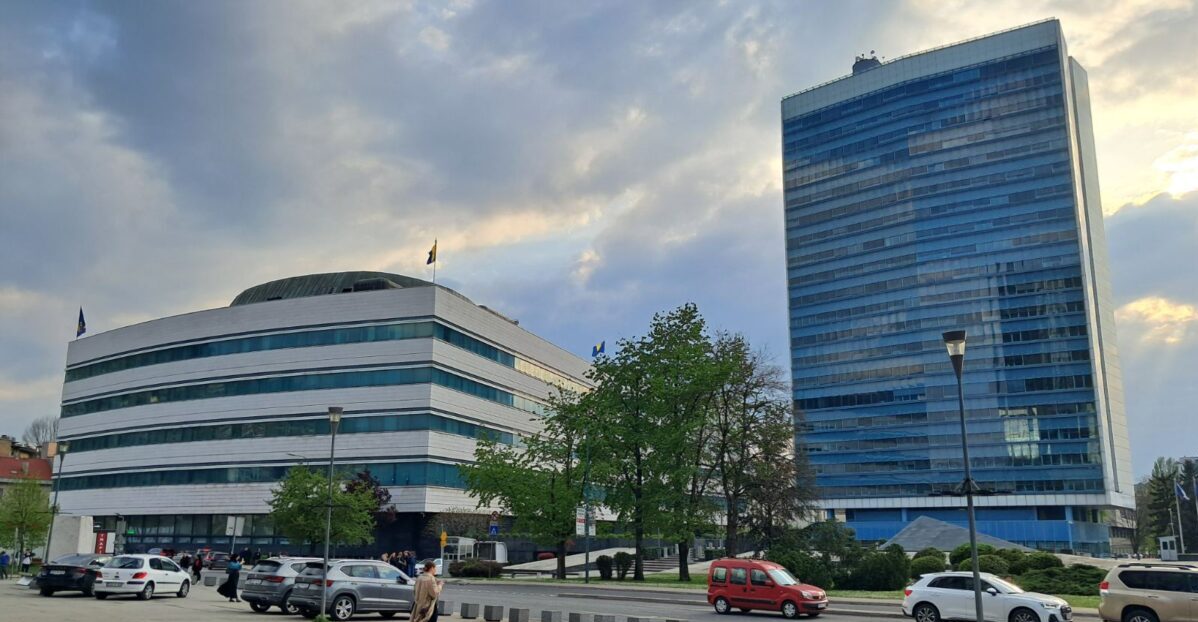
At the 7th session of the Conference for the field of health in BiH, which was chaired by the Minister of Civil Affairs of BiH Dubravka Bošnjak, with the participation of entity health ministers Nediljko Rimac and Alen Šeranić and the head of the Department of Health of Brčko District of BiH Zoran Bulatović, a number of open questions in the field of health policy, international cooperation and public health were considered.
The conference confirmed the determination to continue cooperation with Eurotransplant, with an emphasis on concrete steps towards the inclusion of health institutions in transplantation programs, as well as defining priorities in professional education.
The importance of concluding and implementing the Education and Training Agreement (TTA), which was delivered to Bosnia and Herzegovina through the Ministry of Civil Affairs of Bosnia and Herzegovina in November 2025, was especially highlighted and was urgently forwarded to entity ministries for further action.
It is the first operational instrument of cooperation between Eurotransplant and Bosnia and Herzegovina, as a country that is not a full member. The signing of the agreement would enable the direct cooperation of transplant centers in BiH with institutions from member states of the network, through the exchange of knowledge, the application of common standards and quality control systems, and the potential limited inclusion of patients from BiH in the organ exchange system.
In connection with the TTA agreement, it was emphasized that the Ministry of Civil Affairs of Bosnia and Herzegovina has completed its part of activities related to the establishment of this model of cooperation, including the delivery and coordination of the draft Agreement to the entities, to which the entities have not expressed objections or ambiguities, which indicates its acceptability as a basis for further action. Further steps, including its implementation and operational connection of health institutions, are the responsibility of entity ministries of health and health institutions.
In this context, the competent entity ministers accepted the proposal of the Ministry of Civil Affairs that the representatives of their ministries start regular participation in the next operational meetings with Eurotransplant, which fully opens up the space for assuming an operational role in further stages of cooperation.
The conference also discussed the re-announced working visit of the Eurotransplant delegation to Bosnia and Herzegovina, which should take place during this year, and which is planned to include a visit to clinical centers in Mostar and Tuzla, with the aim of assessing the capacity and further development of transplantation medicine and organ donation.
In the segment of international cooperation, current affairs were analyzed in connection with the previously started procedure of concluding a memorandum of understanding in healthcare with the Republic of Croatia and Montenegro, and the Conference also supported activities for the accession of Bosnia and Herzegovina to the Partnership of the European Process for Environment and Health for poison control centers, which further strengthens international cooperation in the field of public health.
The conference supported activities to improve the surveillance of acute flaccid paralysis (polio), given that Bosnia and Herzegovina is classified as one of the countries with a high risk of poliovirus transmission. It was agreed that, after the preparation of entity plans, further discussions on their harmonization and unification at the state level would be started.
However, the Conference did not reach agreement on several key initiatives of the Ministry of Civil Affairs of Bosnia and Herzegovina. The proposal for the drafting of a strategic document for healthcare in BiH was not adopted, although the European Commission continuously emphasizes the need to strengthen the strategic framework and coordination in this area in Bosnia and Herzegovina.
In the long term, the absence of strategic documents makes it difficult to plan reforms, use international funds and align with European standards.
Consensus was not reached on the establishment of a register of malignant diseases in BiH, as well as on the creation of a common health yearbook, despite the clearly expressed need to improve planning and availability of public health data in BiH.
The issue of establishing regulatory assumptions for the use of cannabis-based medicines also remained without agreement. Although the BiH Council of Ministers removed the fundamental legal obstacle to the use of cannabis for medical purposes in December 2025, the necessary changes to the by-laws at the entity level have not yet been implemented, which makes its practical application impossible. The Federal Ministry of Health expressed readiness to regulate this area, but without the consent of all participants of the Conference, the appropriate conclusion proposed by the Ministry of Civil Affairs of BiH was not reached.
With the aim of initiating further activities and opening an expert dialogue, the Ministry of Civil Affairs of Bosnia and Herzegovina announced the holding of a round table – an expert discussion, to which representatives of entity ministries of health, the Agency for Medicines and Medical Devices of Bosnia and Herzegovina, pharmaceutical and medical chambers, as well as other relevant stakeholders were invited, in order to jointly define the next steps necessary to enable the availability of cannabis-based medicines to patients, writes Klix.