
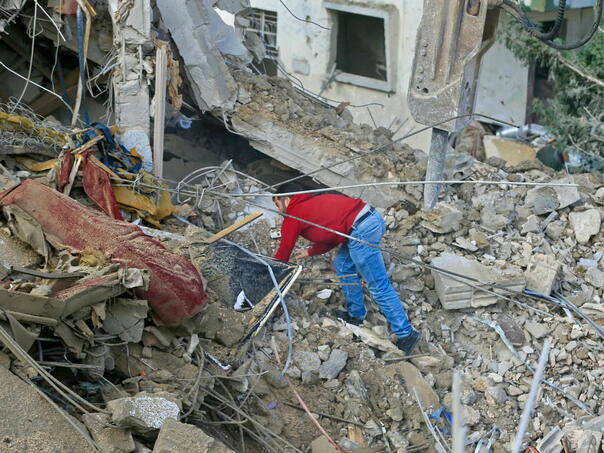
As Reuters reports, the attack on Kfar Hata followed a nighttime evacuation order by the Israeli army ordering residents to leave the village.
As Lebanon’s Christians, who make up about a third of the population, marked Easter, the country experienced one of its most violent days since fighting broke out with Israel early last month.
Throughout the day, the sounds of crashes and screeches of low-flying planes overhead echoed through Beirut. The southern suburbs of the capital were hit by eight airstrikes, state media reported.
Earlier on Sunday, the Lebanese army said an Israeli strike in southern Lebanon killed a soldier.
On Saturday, Israel’s military issued an evacuation warning targeting Lebanon’s Masnaa border crossing with Syria, the main entry point connecting the two countries, claiming it was being used for military purposes by the Lebanese armed group Hezbollah.
Lebanon was drawn into the Middle East conflict when Iran-backed Hezbollah began firing rockets at Israel on March 2 in a show of support for Tehran. Israel launched attacks on Lebanon and invaded the south in what became the most violent spillover of the US-Israeli war against Iran.
By the end of March, more than 400 Hezbollah fighters had been killed, sources told Reuters. At least 10 Israeli soldiers were killed in the same period in southern Lebanon, the Israeli army said.
The Lebanese Ministry of Health announced that 1,461 people had been killed by Israeli attacks in Lebanon by Sunday, increasing the death toll by 39 in about 24 hours since the start of the war. More than a million people have been displaced.
Israel has stated that it intends to control a “security zone” up to 30 km deep inside Lebanese territory. He issued evacuation orders covering about 15 percent of Lebanese territory.
But tens of thousands of Lebanese remained in their homes in the south, including about 9,000 Lebanese Christians living in a cluster of border towns who told Reuters they were determined to stay.
(Vijesti.ba / FENA)


