
It is estimated that in St. Between 60,000 and 70,000 Bosnians and Herzegovinans live in Louisu, and many of them arrived in the early 1990s during the war in Bosnia and Herzegovina and the breakup of Yugoslavia.
The national team of Bosnia and Herzegovina will be in St. Louis, at the Energizer Park stadium, will play a friendly match against Panama, while the group stage matches of the World Cup will be played in Toronto against Canada, Los Angeles against Switzerland and Seattle against Qatar.
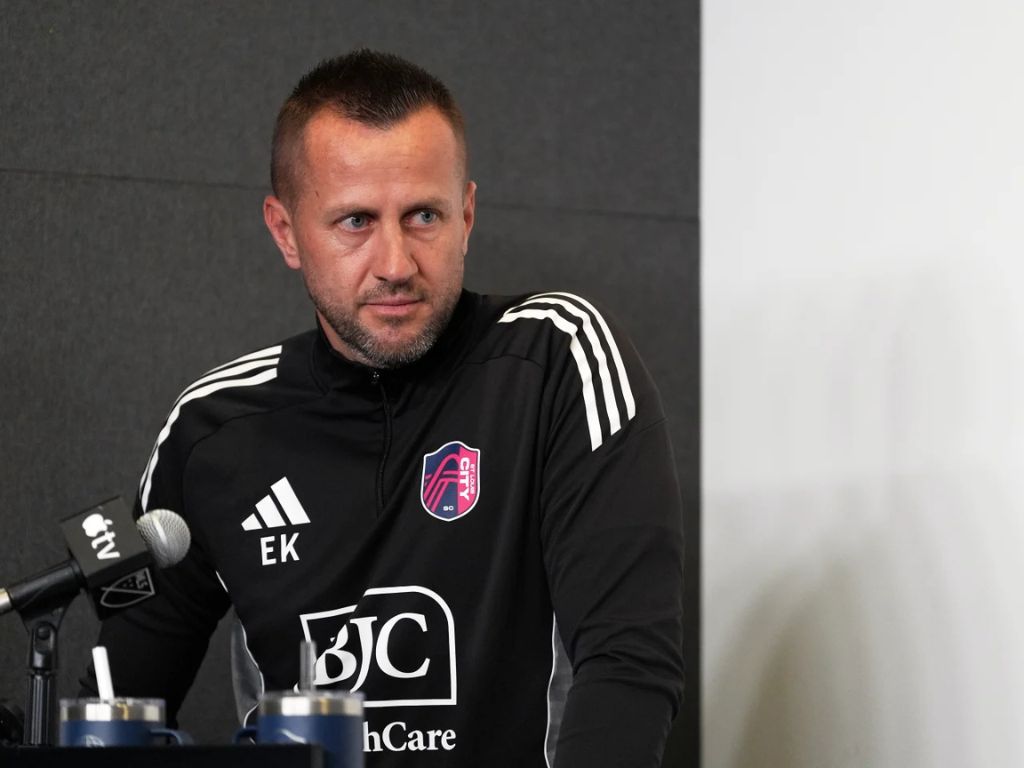
“We should manage to create an atmosphere as if we were playing on home turf,” said Elvir Kafedžić, a native Bosnian who lives in St. Louis and the assistant coach of the MLS club St. Louis City SC.
A reminder of the past
He was only nine and a half years old when he fled Bosnia and Herzegovina with his mother and brothers in 1992 to avoid the war.
“Unfortunately, I remember a lot,” said Kafedžić, whose story reminds us of the fates of numerous Bosnians and Herzegovinans who, after wandering around Europe, built a new life in St. Louis.
“We passed through several countries such as Montenegro, the Czech Republic and Sweden, in order to end up in Germany,” Kafedžić recalled.
This lasted until Germany stopped providing temporary protection to the citizens of Bosnia and Herzegovina at the end of the nineties.
“We had nowhere to return to in Bosnia and Herzegovina. We already had relatives living in St. Louis, so in 1999 my mother, two older brothers and I moved there.”
Bosnia and Herzegovina qualified for the World Cup two months ago after defeating the four-time world champion Italy 4:1 after penalty shootout, after the regular part of the match ended 1:1.
The decisive penalty was scored by Esmir Bajraktarević, a Bosnian and Herzegovinian born in the American state of Wisconsin.
“That day you could see cars with Bosnian flags on the streets,” said Kafedžić, talking about the celebration in St. Louis.
“All the restaurants and cafes were packed, people who didn’t even know each other were hugging each other. For me, this goes beyond football. This shows who we are, our pride, where we come from and how deeply connected we are to our roots.”
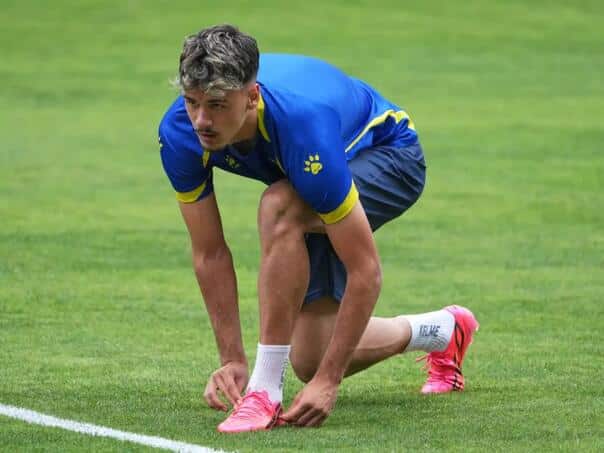
The national team of Bosnia and Herzegovina is led by 40-year-old captain Edin Džeko, along with 18-year-old winger Kerim Alajbegović.
During his career, Dzeko scored at least 50 goals in the English Premier League, the Italian Serie A and the German Bundesliga.
Bosnia and Herzegovina’s only previous appearance at the World Cup was in Brazil in 2014, when the national team was narrowly eliminated already in the group stage.
Bosnia and Herzegovina’s first goal at the world championships was scored by Vedad Ibisevic in a 2:1 defeat against Argentina.
Ibisevic played high school football in St. Louis, was a star at Saint Louis University, and then built a successful professional career, mostly in the Bundesliga.
“Mala Bosnia” in St. Louis
St. Louis stood out among the refugees from Bosnia and Herzegovina as a desirable destination because it offered jobs, affordable housing prices and an already existing smaller Bosnian community.
“We all came looking for a better life because everything was taken from us at home,” said Kafedžić.
“It’s impossible to put into words how grateful we are,” he added.
The southern part of the city is known as “Little Bosnia”, recognizable by its neat red brick houses, bars, cafes and bakeries, as well as a replica of a wooden fountain reminiscent of Sarajevo’s Sebilj.
“He represents Sarajevo in the heart,” said Jasmina Silić, who works across the street from the monument at the Skala bar on Gravois Avenue, one of the centers of the local community.
A reminder of the war
Skala is located just a few bars away from the Association of Genocide Survivors in Srebrenica, which is a constant reminder of the war and ethnic cleansing committed by Bosnian Serb forces.
More than 8,000 Bosniaks were killed in Srebrenica, and the United Nations, the International Court of Justice and numerous other institutions characterized that crime as genocide.
It is estimated that around 104,000 people died during the war, that two million people were displaced, and 83 percent of the civilian victims were Bosniaks.
Bosnian trail in St. Louis
The influence of Bosnia and Herzegovina is present throughout St. Louis, a metropolitan area with almost three million inhabitants located along the Mississippi River.
The best-selling food at the stadium of the MLS club in St. Louisu comes from the Balkan Treat Box restaurant, which offers Bosnian specialties.
The Center for Bosnian Studies operates at Saint Louis University, and several books have been written about the Bosnian diaspora, including “Bosnian St. Louis: Between Two Worlds” by Patrick McCarthy and Akif Coga.
The book is about tragedy, resilience and the community’s strong ties to Europe.
“A woman in St. Louis still keeps the keys to her house in Bosnia and Herzegovina,” the authors wrote.
“Another man described his relationship with Bosnia and Herzegovina as a divorce he didn’t want from the woman he still loves.”
Before the war, Bosnia and Herzegovina was a multi-ethnic and multi-religious state, mostly Muslim, but with a large number of Catholics and Orthodox.
This diversity also connects the representation of Bosnia and Herzegovina, which is a symbol of pride and reconciliation.
“Many people from here travel to Bosnia and Herzegovina every year to visit their family,” Silić said in a conversation at the Skala bar.
“The representation represents unity because all three faiths are represented in it and they are all one, as it used to be in the time of Yugoslavia,” she concluded.
(Vijesti.ba)
Chat readers
Join the discussion