
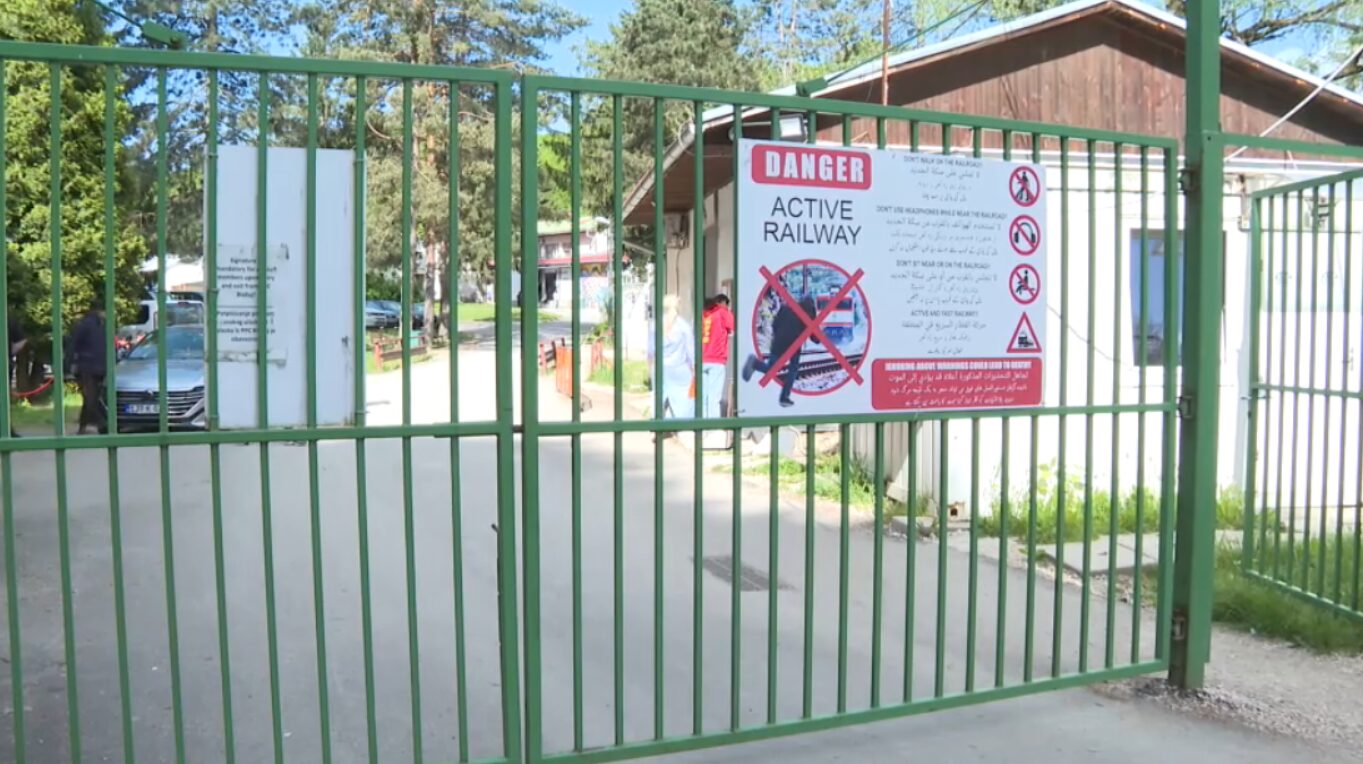
One year after the Parliamentary Assembly of Bosnia and Herzegovina adopted the initiative to close and relocate the migrant camp in Blažuj, there are still no conditions for implementation. The Minister for Human Rights and Refugees of Bosnia and Herzegovina, Sevlid Hurtić, visited this center where about 500 people are currently staying. Although the minister says that the conditions are satisfactory, he points out that the state is losing the battle with organized crime and human traffickers who profit from the misfortune of migrants.
Behind the gates of the migrant center in Blažuj, the picture is far from ideal. The temporary reception center is home to around 500 people who are stuck in transit in search of a better tomorrow.
“I can say that I am satisfied with the conditions that the state of Bosnia and Herzegovina has provided for migrants. There are some small problems that will be solved in due time. The buildings and roofs are bad so that bed bugs get into the mattresses where people sleep,” said Sevlid Hurtić, Minister of Human Rights of Bosnia and Herzegovina.
The relocation of this center is requested precisely for humane and security reasons.
Although the initiative of the Municipality of Ilidža and the residents of Blažuj was adopted in the House of Representatives of the PS BiH back in July of last year, the conditions for this have not yet been met.
Meanwhile, human trafficking is booming, and criminal groups are making millions off the misfortune of those fleeing war and poverty. Blažuj is not only a temporary refuge, but, apparently, also a hub where desperation and unscrupulous profit intertwine.
“Here, for me, the bigger problem is the criminal organizations that deal with migration. In my opinion, in my opinion, this is like a business for them, they bring goods from Afghanistan, bring them to Bosnia and Herzegovina and sell them to the EU and earn huge amounts of money. What Chief Muzur proposed is to move the camp, to believe that we will be in greater trouble if these people are released, that they are not there to spend the night, that they are not fed when they sleep,” said Hurtić.
The burden of daily survival of migrants is borne by the Red Cross. From hot meals, hygiene to first aid.
“Today, the situation is much easier because the number of migrants is much smaller. Borders are more open, migrants reach Western Europe more easily and stay in BiH is shorter, the number of people passing through BiH is greater, but those people stay in BiH for a shorter time,” said Asad Kučević, secretary of the Novo Sarajevo Red Cross.
After the minister’s visit, Blažuj remains a mirror of our system, which offers neither security to locals nor dignity to migrants, leaving space open exclusively for those who profit from other people’s misfortune, writes N1 BiH.


