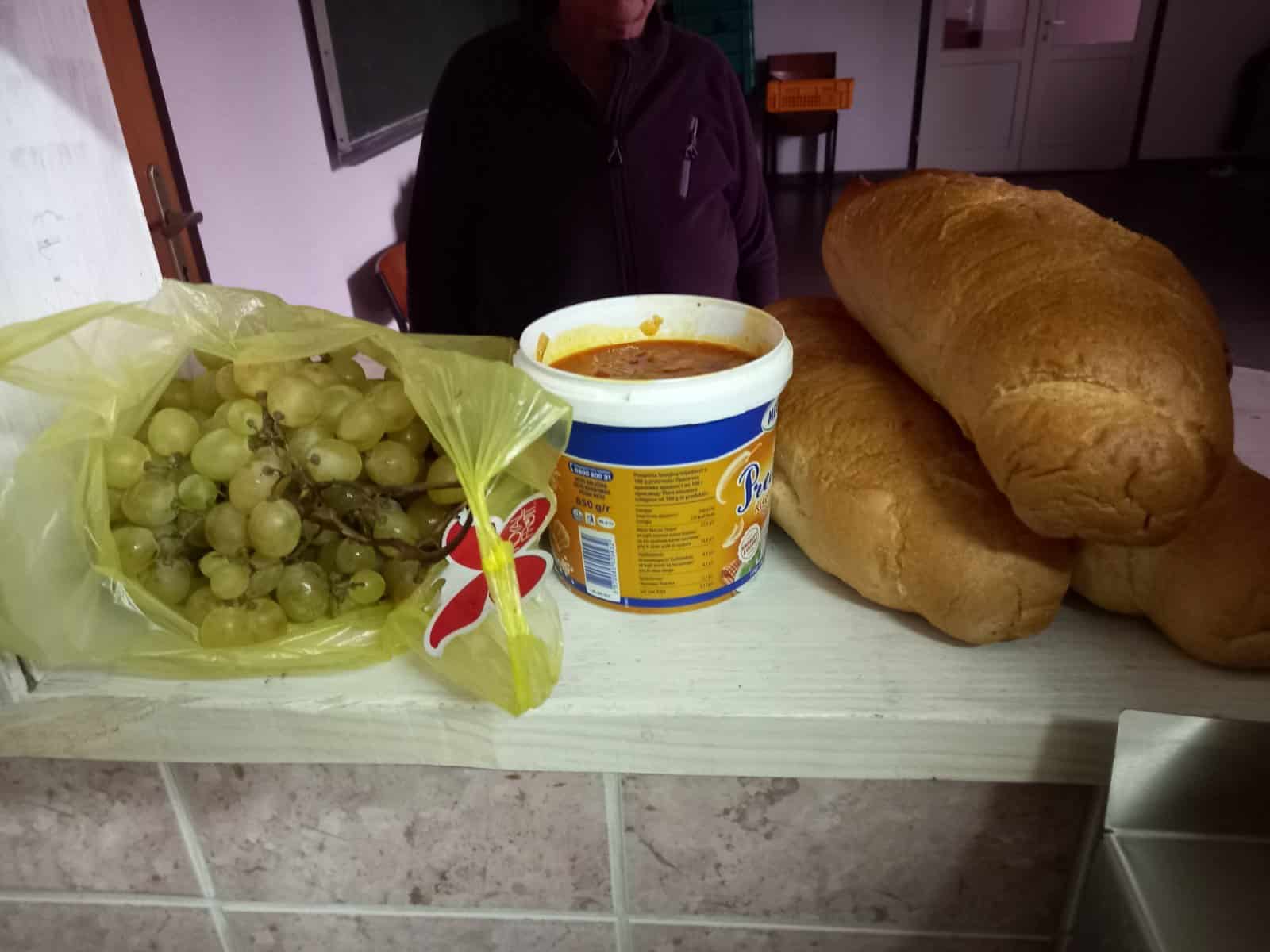
Almost 19,000 citizens of Bosnia and Herzegovina eat in public kitchens and this is the reality in which we live. An even more devastating fact is that almost every fifth inhabitant of Bosnia and Herzegovina cannot afford even one meal a day.
In a country where food prices are rising daily and incomes are largely stagnant with the cost of living, public kitchens are the last line of defense against hunger. The lists of users are getting longer, the needs are bigger, and the money is never less.
In a society where basic foodstuffs are becoming more and more expensive, the number of those who depend on public kitchens is constantly increasing. Inflation, unemployment and rising costs of living are pushing an increasing number of citizens into a state of social need. Among the users of the National Kitchen today are not only the old and sick, but also able-bodied people who, despite their efforts, cannot provide even basic food. Behind every cauldron is a life story, a story about a lost job, illness, and a quiet struggle for dignity.
“You know, this means that at least 70 percent of the food needs to be eaten,” says Halid Imširović, a user of the soup kitchen.
“These kitchens are really desirable, as for someone who strays from the side, to be given a meal. And it is a great help to the sick and to everyone…”, says Aleksandar Đurić, another user of the folk kitchen.
There are more and more requests, and less and less space to respond to everyone who needs help. In the area of the city of Bijeljina, around 270 citizens depend on the National Kitchen every day, for the work of which around 250,000 KM is allocated annually from the city coffers. Federal.
“The distribution and distribution of food is done at the points. We have six points, four of which are in operation and two in Janja, and we have 50 home deliveries for those who are unable to come to one of the points”, explains Mitar Škorić, head of the Service for Common Affairs of the City of Bijeljina.
In order to provide additional aid during the winter months, humanitarian actions last throughout December, and are aimed at collecting basic foodstuffs.
“We will try to include as many of our beneficiaries from rural households as possible in this assistance,” emphasizes Mila Jović, a sociologist at the Center for Social Work in Bijeljina.
Experts’ assessments do not inspire optimism, if inflationary pressures continue, the number of citizens who will find themselves in social need in the coming years could increase significantly. That “the full does not trust the hungry” is best confirmed by the fact that at the same time, while thousands of people depend on public kitchens, public money is spent on luxurious official cars, representation and privileges, far from the everyday life of those for whom one hot meal is a matter of survival. All this, economists warn, is not only a social problem, but also a serious economic problem that clearly indicates that the economy is seriously ill, and inflation is its most visible indicator.
“That great crisis shows itself in inflation. Inflation is the best indicator of an economy’s illness, it means a lack of goods, and an excess of money and prices are rising,” explained economic analyst Professor Aleksa Milojević.
Community kitchens have long been no longer a temporary solution, but a mirror of a society in which more and more people are not looking for a better tomorrow, but only for the next meal. While the queues in front of the cauldrons are getting longer, and poverty is becoming everyday, the answers from the authorities are missing.
Hunger does not wait for strategies, meetings or promises. As long as a hot meal remains the only security for hundreds of families, the right to a dignified life must not remain a privilege, he writes Radio Sarajevo.