The announcement comes two days after the US military operation “Absolute Resolve”, during which US special forces arrested Venezuelan President Nicolás Maduro and his wife Cilia Flores in Caracas, Index reports.
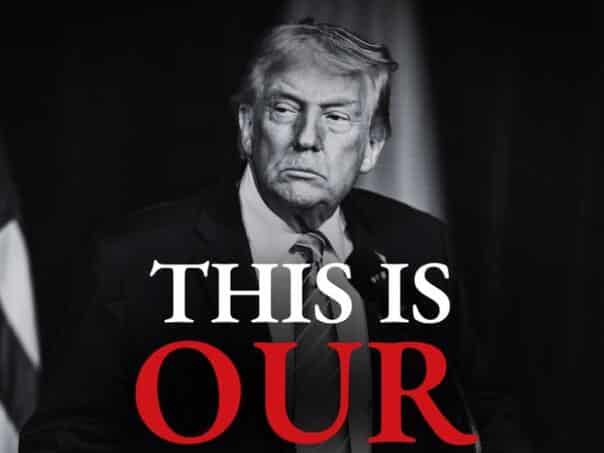
This is OUR Hemisphere, and President Trump will not allow our security to be threatened. pic.twitter.com/SXvI868d4Z
— Department of State (@StateDept) January 5, 2026
The pair were flown to the US, where Maduro appeared in federal court in New York today on charges of narco-terrorism, cocaine importation and weapons possession. Both pleaded not guilty.
Secretary of State Marco Rubio described the operation as a decisive action against an “accused narco-terrorist and illegitimate former dictator,” stressing that the Western Hemisphere will not be a safe haven for drug traffickers, Iranian proxies or hostile regimes.
The operation lasted a short time — American forces were on Venezuelan soil for about two hours. According to reports, Delta Force, the CIA and a large number of military aircraft were involved. Maduro was arrested at his residence, and Trump released a photo of the arrested leader aboard the USS Iwo Jima.
The phrase “This is our hemisphere” is reminiscent of the Monroe Doctrine of 1823, by which the US declared the Western Hemisphere its sphere of interest and warned European powers not to interfere in America’s affairs.
The doctrine was later expanded by Roosevelt’s corollary, which gave the US the right to intervene in Latin America, which justified numerous military actions during the 20th century.
The Trump administration is now reviving this policy in a modern form. In the National Security Strategy from 2025, the so-called The “Trump Corollary,” which prohibits rivals such as China, Iran, and Russia from operating militarily or strategically in the Western Hemisphere.
Maduro’s arrest is justified by removing the threat from “America’s backyard”. While supporters in the US see the move as protecting national interests, critics in Latin America warn of a return to imperialism and a violation of state sovereignty.
(Vijesti.ba)