
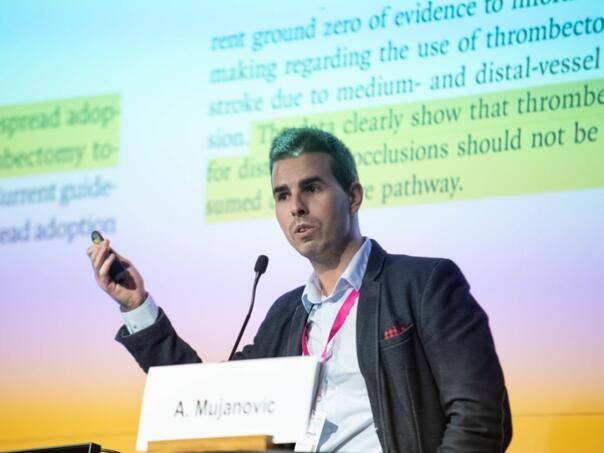
Adnan Mujanović, doctor of medicine and researcher from Bosnia and Herzegovina, works as a doctor specializing in diagnostic and interventional neuroradiology at the Inselspital Bern University Clinical Center in Switzerland.
The experience gained abroad is valuable for him, and he considers it equally important to maintain the connection with the homeland and help as much as possible.
In March of this year, he received the Albrecht Von Haller Award, for his work in the field of acute ischemic stroke.
His work is focused on one of the key challenges of modern neurology, how to improve reperfusion, i.e. the restoration of complete blood flow in the brain after a stroke. In an interview with Fena, Adnan Mujanović explains that the Albrecht von Haller award is the Swiss Heart Foundation award, which is awarded in the field of cardiovascular medicine in Switzerland, including the best doctoral dissertations.
– The dissertation we worked on deals with patients in whom the blood flow is not completely restored immediately after an ischemic stroke, which is caused by a blockage of a blood vessel. Basically, we investigated the causes, consequences and possible therapeutic options in such patients. Research of this kind has a direct application in everyday clinical practice, given that stroke is, unfortunately, an extremely common disease – he emphasized.
He points out that reestablishing complete blood flow in the brain after a stroke is one of the key challenges of modern neurology. Ischemic stroke occurs when the blood supply to a part of the brain is interrupted, most often due to blockage of a blood vessel. The faster blood flow is re-established, and the more complete it is, the better the chance of brain tissue being saved and the patient having a better recovery.
– In the last ten years, enormous progress has been made thanks to endovascular therapy, i.e. mechanical thrombectomy, which involves the mechanical removal of a clot from a blood vessel through a minimally invasive surgical procedure. However, challenges remain. One of those challenges is precisely the question of what to do when blood flow is not established immediately during the procedure, what are the next therapeutic options and how they can be applied – says Dr. Mujanovic.
According to him, the success of restoring blood flow after an ischemic stroke depends on several factors. First of all, it is important how quickly the patient receives appropriate therapy. Here, he emphasizes, time is the key factor (“time is brain”). The location and size of the blockage is also important, as well as the condition of the patient’s blood vessels and the so-called collateral circulation, i.e. alternative pathways, through which blood can reach the threatened tissue in the brain.
– The intervention itself is significant, in terms of the technical success of the procedure and the experience of the team. My work has further shown that even when flow is not fully established immediately, in a significant number of patients within 24 hours of the intervention there is a subsequent spontaneous improvement most likely due to collateral circulation. This changes the way we look at the “incomplete” success of the procedure and suggests that in certain cases the process of brain recovery continues even after the intervention itself – he says.
Doctor Mujanović says that for the long-term preservation of the health of blood vessels in most cases, the most important thing is to control risk factors. These factors are mostly already well known to us – high blood pressure, diabetes, high blood fats, smoking, as well as heart diseases such as heart rhythm disorders.
– Proper nutrition, physical activity and smoking cessation play a central role in the prevention of most cardiovascular diseases, including stroke. Also, regular monitoring and treatment of chronic diseases is important. Prevention of stroke to a large extent is possible precisely through good control of those factors – he emphasized.
Doctor Mujanović points out great progress in recent years in neurology, especially in the field of stroke treatment. The introduction of mechanical thrombectomy, a minimally invasive procedure to remove a clot from a blood vessel, has significantly changed the outcome of patients with severe stroke.
– We are talking about a therapy that can literally prevent disability, if applied in time. Bosnia and Herzegovina has taken important steps in that direction. I know that mechanical thrombectomy is already performed in centers such as Tuzla and Mostar, I believe in other larger BiH centers as well. cities like Sarajevo and Banja Luka. However, one of the challenges remains the availability of that therapy 24/7, which is a standard required for international certification of stroke centers. The availability of medical personnel, the development of infrastructure and the organization of the system are key next steps for the treatment of stroke in Bosnia and Herzegovina – he pointed out.
For Dr. Mujanović, cooperation with Bosnia and Herzegovina is extremely important. He is happy to respond to invitations, especially from the Faculty of Medicine of the University of Tuzla and initiatives such as Tuzla Brain Week.
– Also, colleagues from Bosnia and Herzegovina regularly participate in international schools in the field of stroke, which we organize in Bern. Recently, we also worked together on the European project of mapping the availability of interventions for stroke, where colleagues from Bosnia and Herzegovina made a valuable contribution, which made me very happy personally – he pointed out.
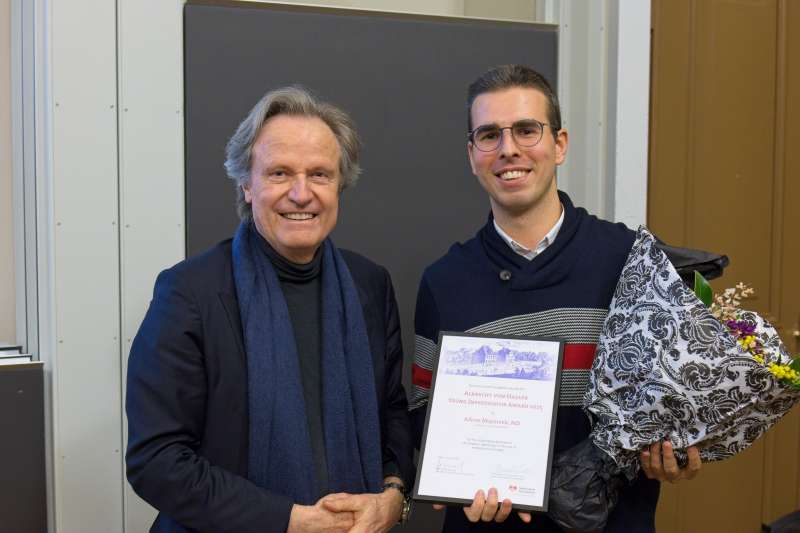
He tells people in BiH, but also those in the diaspora, especially young people, that interest and persistence are key in everything. He believes that opportunities exist if a person, no matter where he is, has an idea and an interest in a field.
– Today, science and medicine are highly international fields and borders are much less of an obstacle than they were before. Experience abroad can be extremely valuable, but it’s just as important to maintain ties to your home country and contribute as much as possible. Long-term and sustainable progress comes through cooperation – he said.
Doctor Mujanović says that the focus of his further work will be on microcirculation in the brain. Although today it is possible to successfully remove a large clot from a blood vessel, a large number of patients still do not have an optimal recovery. One of the possible explanations is, says dr. Mujanović, microcirculation disorder in the affected tissue.
– The next big step forward in the treatment of stroke will not be only in the large blood vessels, but in the microcirculation of the brain – he emphasized.
Adnan Mujanović completed his basic medical studies at the University of Tuzla, and his doctoral studies at the University of Bern. He is also involved in the work of several local and international professional organizations, where he performs various representative and management functions.
(Vijesti.ba / FENA)



Chat readers
Open a chat for this news