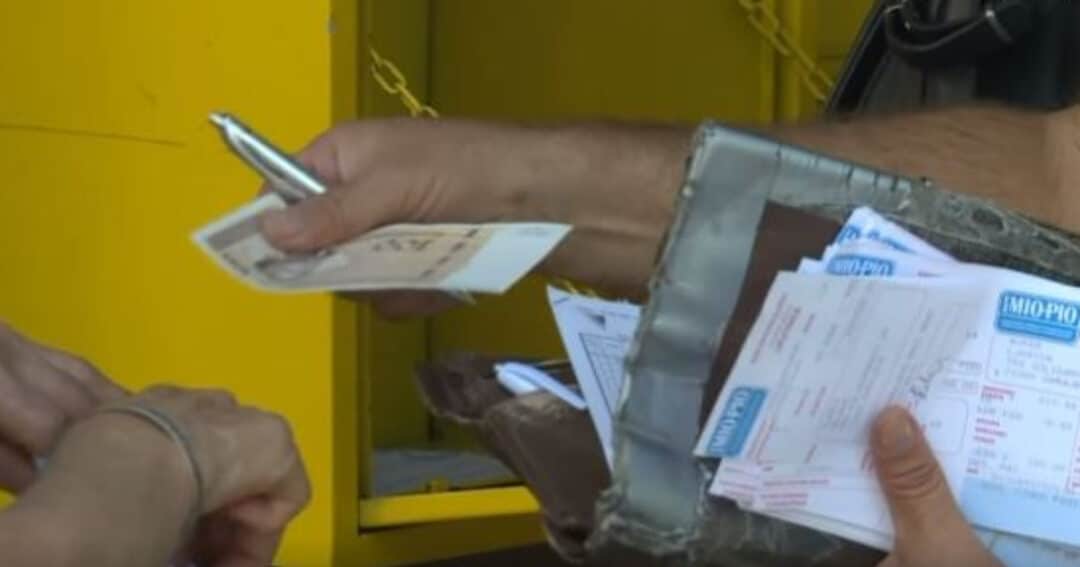
The pension for the month of October 2025 will be paid to a total of 462,491 pension beneficiaries in the Federation of Bosnia and Herzegovina.
They calculated that about 314.5 million KM will be paid for that payment, and a high percentage of that money will already be “returned” to the coffers of pharmacies, shops, utility companies, and the state budget through a substantial amount of VAT, but also to a large constellation of known and unknown pensioner “creditors and lenders”, as well as some banks and microcredit foundations, and perhaps even into the pockets of usurers… Because only pensioners know how they manage to survive four-five days a month with pension and those 20 and five-six days after the pension is spent.
However, the rulers of public money in the Federation of BiH continuously “warn” that they are “short of money”, especially when they need the money for pensions. According to the reports of the Federal Institute for PIO/MIO, 2 billion and 874 million KM were paid for the payment of pensions and one-time allowance for the first nine months of this year. On the other hand, in their latest report on paid public revenues in the period January – September 2025, the tax authorities, among other things, collected a total of 2,532,136,286 KM in contributions for PIO/MIO, so there was also collection of income tax and arrears of personal tax income of about 696 million, as well as fines of about 60 million (in which funds, it is very possible that a “good” percentage of pension money as well). We would not speculate about “those” 79.5 million KM intended for increasing pensions, for which the old government asked the new government where they were spent!?
It could only be argued that it is a “story” that it is difficult for pensioners to raise the funds needed to pay their pensions – perhaps sometimes it also has the characteristics of a story for small children! And all this, just because of the approx. 500 million that the new calculation of pensions could “cost”.
Be that as it may, the pension club in the Federation of BiH began to unravel
Although the title page of the Proposal is dated August 2025, it still took more than two months for the public to “somehow secretly get” the text with the proposed amendments and additions to a very important document for the large population of the inhabitants of the Federation of Bosnia and Herzegovina, for whom the “fifth” of the month (and perhaps some day after the fifth) is the only important date in their lives. True, it is (only) a “proposal”, to which we could perhaps add the prefix “forced”, because the perennial threat of mass protests and other pressures from official unions and pensioners’ associations, among other things, contributed to this. Maybe the (pre)election year and the desire of the current government to make a result and “win points” at the end of its mandate – who knows…? For the most part, the pensioners seem to have played the first quarter of this difficult, painful and long “match” in their favor! When we say this, we certainly mean the most important thing:
What does the “old” bring, and what does the “new” Proposal of the Law on Amendments to the Law on PIO bring?
Namely, the “old” Article 79 of the Law on PIO/MIO in the Federation of Bosnia and Herzegovina solved the very important issue of adjusting pensions mathematically simply (but life-threatening by the standards of pensioners) so that pensions: “… are adjusted on April 15 of each year… in the amount of the sum of 50% of the increase in consumer prices and 50% of the increase in the gross domestic product in the Federation in the previous year… and at most up to the growth rate of the gross domestic product in the previous year”.
Of course, very quickly (even in the first years of application of the still current Law) pensioners realized that they “didn’t do well”, and that this was indeed the case was confirmed by the difficult years of the pandemic, in which the prices of basic foodstuffs, medicines and utility services began to skyrocket, and which continued in the following years, up to the present day. This was the reason for a series of actions taken by pensioner associations with the intention of regulating the situation legislatively, because all other types of temporary assistance to the most vulnerable categories with the lowest pension, (even those with slightly higher pensions), but also those municipal, cantonal and federal one-time assistance of 50, 100 KM (usually in an election year) and sometimes “even” 250 KM for some – were anything but improving the standards of pensioners.
However, the fact that everything can still be done much better (as of January 1, 2026) was confirmed by the provisions of the Proposal for Amendments to the Law on PIO/MIO in the Federation of Bosnia and Herzegovina, and in fact only in a few very specific steps:
– based on official statistical data of the Federal Bureau of Statistics, pensions are adjusted twice a year: on January 1 and July 1 of each calendar year, ex officio – without making a decision. The parameters are: the rate of growth or decrease of the index of consumer prices and gross wages in the Federation in the previous half-year compared to the half-year preceding it;
– adjustment is made at a rate that represents the sum of 60% growth rate, i.e. reduction of the consumer price index and 40% growth rate, i.e. reduction of the gross salary if the rate of change of the consumer price index is greater than the rate of change of the gross salary, or equal to that rate;
– at a rate that represents the sum of 40% of the growth rate, i.e. of the decrease in the consumer price index and 60% of the growth rate, i.e. the decrease in the gross salary if the rate of change in the consumer price index is lower than the rate of change in the gross salary;
– for the calculation of the share of the rate of change in consumer prices in the sum of the rates from the paragraph, the absolute numbers of those rates are relevant;
– if the rate that represents the sum of the growth rate, i.e. the reduction of the consumer price index and the growth rate, i.e. the reduction of gross wages, i.e. if that sum would (or) accidentally lead to a negative adjustment, pensions are then – not adjusted;
– only for the beginning of the application of the Proposal of the Law, that is on January 1, 2026, pensions are aligned with the growth rate of the consumer price index and the growth rate of gross wages in the Federation in 2025, in the previous year compared to the year before it. So, already on 01.07.2026. pension years should be adjusted in relation to the half-year preceding it;
– all of the above will not apply to pensions earned in the year in which adjustment is made, but only for that year;
– the basis for monetary compensation for physical disability is the lowest amount of pension paid in December 2024 in the Federation, adjusted for all corresponding increases on the day of exercise of rights, and further adjusted in accordance with Article 79 of this law. Therefore, the base would be tied to a fixed and known parameter, i.e. the lowest pension that was paid in December 2024 in the Federation, but would be adjusted for all corresponding increases on the date of exercise of rights. Namely, by introducing multiple levels of the “lowest pension”, there would be a significant reduction in the amount that is realized in the form of compensation for physical damage, and the assessment of who is considered a dependent family member would be complicated. It is intended to overcome this by tying the base to a fixed and known parameter, i.e. the lowest pension that was paid in December 2024 in the Federation, and which is adjusted for all corresponding increases on the day of exercise of rights;
– the famous Article 80 of the existing Law on PIO/MIO, which stipulated that the Government can decide to carry out an extraordinary adjustment of pensions once a year in the event that the growth rate of the real gross domestic product in the previous year is greater than 3% and there is no accumulated deficit of the Federation budget (but only up to the highest growth rate of the real gross domestic product in the previous year). – is deleted, although the pensioners’ representatives were strongly against it.
The biggest, one could say, radical changes refer to Article 81 of the Law, and the same refer to the lowest, guaranteed and highest pension. Namely, with the new formula for calculating the amount of the lowest pension, the law was actually “unpacked”, in such a way that it will no longer be possible to have the same pension for someone with 15 years of service and someone with full 40 years of service. Thus, it is predicted that:
– the lowest old-age pension will be directly dependent on the length of pensionable service and will be determined as a percentage of the average pension paid for December of the previous year, adjusted in the year of exercise of rights:
– for 15 years of pensionable service and more, and less than 20 years, it cannot be lower than 60%,
– for 20 years of pensionable service and more, and less than 25 years, it cannot be lower than 65%,
– for 25 years of pensionable service and more, and less than 30 years, it cannot be lower than 70%,
– for 30 years of pensionable service and more, and less than 35 years, it cannot be lower than 75%,
– for 35 years of pensionable service and more, and less than 40 years, it cannot be lower than 85%, and
– for 40 years of pensionable service and more, it cannot be lower than 95%.
Indeed, there are too many informal and, one might say, assumed calculations of the expected amounts of the lowest pension, so information is “spinning” on various portals that, based on the average pension, future pensioners could expect:
– with 15 to 19 years, 11 months and 30 days of service about 390 KM pension,
– with 20 to 24 years, 11 months and 30 days of work experience, about 423 KM,
– with 25 to 29 years, 11 months and 30 days of work experience, about 456 KM,
– with 30 to 34 years, 11 months and 30 days of work experience, about 520 KM,
– with 35 to 39 years, 11 months and 30 days of work experience, about 553 KM, and
– with 40 or more years of service, the pension should not be lower than 618 KM)
– if the old-age pension is determined in a smaller amount than the lowest pension amount determined by this article, the lowest pension is paid;
– the right to a guaranteed pension will be exercised by the insured person who has acquired 40 years of insurance service (and more), and in the case when the pension is determined in a smaller amount than the pension determined according to the new formula;
– for beneficiaries of a family or disability pension, in cases where the same is determined in a smaller amount than the lowest amount of pension determined by this article, the lowest pension is paid, and the amount of that pension cannot be lower than 90% of the average pension paid for December of the previous year, and adjusted in the year of exercise of rights, according to the data of the insurance holder;
– and finally, the highest amount of the pension is 5 (five) of the lowest pensions from December 2024 adjusted for all corresponding increases on the day of exercise of rights, and further adjusted in accordance with Article 79 of this law.
There are a lot of things that make sense…
In the explanation of the reasons for the proposed changes to Article 81 of the Law on PIO/MIO, it is stated, among other things, that: “… the protective mechanism of the lowest pension was retained…”, but that nevertheless: “… significant corrections in the form of ensuring multiple levels of the lowest amount of pension to beneficiaries of early old-age pensions took place”. The ball is “passed” to the associations of pensioners by further stating that: “the proposal of the association of pensioners… indicated the need to protect the pension insurance system in the Federation of Bosnia and Herzegovina from fraud and abuse, which are evident…”, because in fact: “… insured persons manipulate the system through the existing provision where they consciously go for the minimum number of years of insurance (15 years of service)”, and “what happens” in that way from 200 to 300 KM calculated pension the same (thanks to the existing legal solutions, and by no means magic tricks) they receive in the amount of less than 600 KM.
Read the continuation of the text here.