
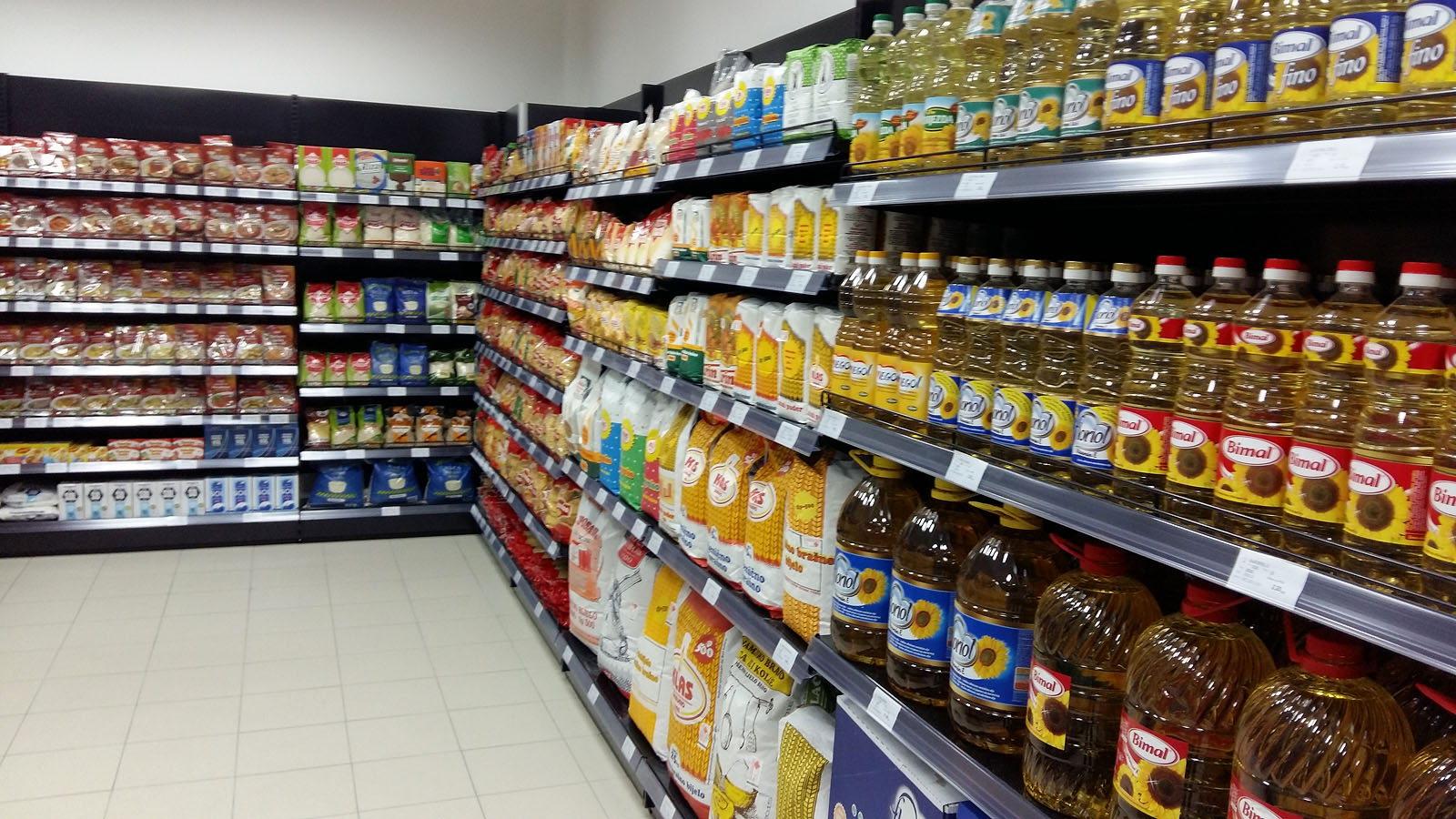
According to UN data, food prices are falling for the fifth month in a row. While dairy products, sugar and meat are cheaper in the world, the prices of these products are rising in BiH. Economists say: there are ways to stop it, but the will of those responsible in government is also needed.
Markets and malls are full, but wallets are empty. In BiH, there is little domestic production, we depend on imports. Statistics say that the consumer basket in the world is smaller by 0.4 percent. The price index of meat fell by 0.4 percent, dairy products by 5 percent and sugar by 1 percent.
In Bosnia and Herzegovina, the situation is the opposite, with a 4.1 percent increase in prices recorded on an annual basis. Thus, only food and soft drinks are more expensive by 5.3 percent.
The “Buy and use local” association says that this drop in prices cannot be felt in BiH because the economy depends on imports.
“We are forced to import various raw materials, many of which we can produce ourselves, but we are a gentleman’s nation that will not return to some of the possibilities and resources of our country. We import everything we can produce and then those producers dictate the prices”, explained Admir Kapo from the “Buy and use local” Association.
For subsidies to agriculture, the government in the Federation allocated 183 million KM last year, and the prices of 60 basic foodstuffs are still locked.
“These are cosmetic things. They lock it in for a while, it can only be a temporary measure that will alleviate the price burden for the most vulnerable, such as pensioners,” said Kapo.
The solution should be sought in as much competition as possible, claims economist and federal representative Admir Čavalić.
“That’s the answer to what we need to lower product prices on the market. Sometimes that competition is limited by the state itself, some laws and levies, and sometimes by larger market participants and distribution chains,” explained Admir Čavalić, economist and representative in the FBiH Parliament.
In addition to competition, other economists point out that the solution is a serious analysis of the price structure, which the government has not done so far.
“What suits the state, that is, those who manage it, are higher prices, and then higher revenues from VAT. They are not very interested in the standard of living because they certainly don’t pay much, and they have very good incomes, so they don’t feel the increase in prices,” said Igor Gavran, economist.
The result of the long-term increase in prices is that the average salary in Bosnia and Herzegovina is not even enough for 50 percent of the consumer basket, writes BHRT.


