
According to the report, the acidity of the ocean has crossed critical threshold, which seriously endangers the survival of marine life. This exceeded the seventh of nine so-called. “Planetary borders”, the scientists led to an emergency call for global action. They are looking for a more decisive reduction in the use of fossil fuels, stopping forest abstraction and restriction of other human activities that violate the fragile balance of the planet.
The oceans, which cover 71% of the Earth’s surface, are key to climate stabilization and are called the “unpaid guardian’s guardian”. However, their vital functions are now seriously endangered. From the beginning of the industrial era, the pH value of the ocean surface fell by about 0.1 unit, which is an increase in acidity from 30 to 40 percent.
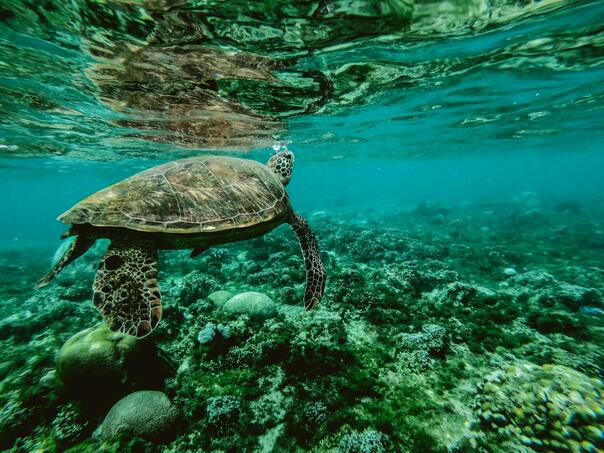
Cold lived corals, tropical coral reefs and marine life in the Arctic are particularly endangered. The main cause is the climate crisis caused by human action. Carbon dioxide from burning oil, coal and gas is reached by sea and creates carbon acid, reducing the availability of calcium carbonate – key to coral growth and the construction of the shell and skeleton of many marine organisms.
This change directly affects oysters, mollusks and shells, and indirectly harms salmon, whales and other animals that feed themselves. Ultimately, the security of food supply and the stability of coastal economies is compromised. Scientists also warn that acidification may weaken the role of the ocean as absorber heat and reduce the ability to absorb 25 to 30 percent of carbon dioxide from the atmosphere.
Levke Caesar, the Society Laboratory for Science on Planetary Borders, highlighted long-term consequences. “While it takes a year to mix the new gases into the atmosphere, their coating takes thousands of years. Looking at this information, I must admit that this really scares me.” She said.
However, the report points out that there is still a space for action – primarily by reducing the use of fossil fuels, reducing pollution and better fisheries management. “If I was a planetary doctor, I would tell my patient: ‘I advised you last year, but you didn’t make them. Now your health is further endangered. Time for emergency”, “Caesar added.
Despite the black forecasts, there are also positive examples – international policies and cooperation have managed to maintain within the secure borders of the two planetary boundaries: ozone sheath and aerosol sheath. The director of the Johan Rockström Institute concluded: “The planet’s health failure is not inevitable. Examples of aerosols recovers show that the healing window is still open, failure is not inevitable; failure is a choice.”
(Vijesti.ba)