Israel’s attack on the South Pars gas field prompted Iran to retaliate with strikes on energy infrastructure in other Middle Eastern countries.
The Iranian strikes further pushed up already high energy prices on world markets and prompted Gulf allies to call on Trump to rein in Netanyahu.
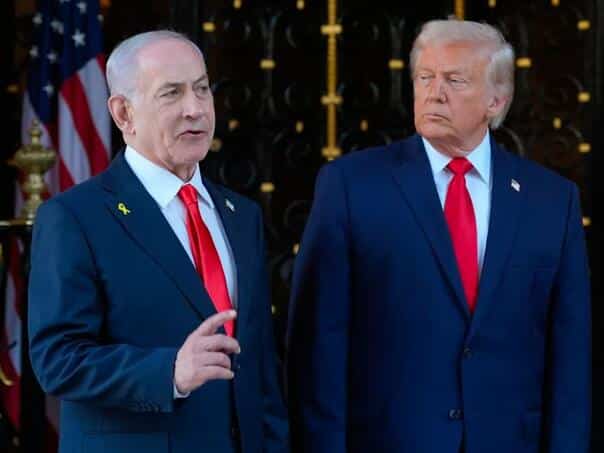
After the attack, questions opened up for Trump and Netanyahu about whether they were fully aligned in waging a war that began as a carefully coordinated joint attack on a longtime regional adversary. The appearance of differences, or at least the impression that they exist, between the two leaders could affect the further course of the conflict and the eventual outcome, AP writes.
During a meeting in the Oval Office with Japanese Prime Minister Sanae Takaichi, Trump told reporters that he disagreed with and did not approve Israel’s attack on the world’s largest gas field, which is an energy lifeline for Iran.
“I told him, ‘Don’t do it,’” Trump said of Netanyahu’s decision to carry out the attack, adding: “We get along great. Everything is coordinated, but occasionally he does something. And if I don’t like it, then we don’t do it again.”
Netanyahu said Israel “acted alone” and agreed to Trump’s request to refrain from further attacks on Iran’s giant gas field. The prime minister tried to play down the impression that there was a rift between him and Trump.
“They say I’ve been saying for 40 years that Iran is a danger to Israel and a danger to the world. That’s true,” Netanyahu said at a news conference in Jerusalem, adding, “You know who else said that? President Trump.”
Netanyahu later added: “Look, I don’t think there’s ever been two leaders more aligned than President Trump and I. He’s the leader. I’m his ally. America is the leader.”
Trump’s first public reaction to Wednesday’s strike on an Iranian gas field came hours later, in a scathing social media post in which he also said the US “knew nothing” about the attack before it was carried out.
Two people familiar with the matter, who were not authorized to speak publicly, said the US was nevertheless informed of the Israeli plan before the attack. One of those people said that Israeli targets are being coordinated with the US. The two sources insisted on anonymity because they are not authorized to comment publicly.
Senior US administration officials on Thursday sought to make the case that Trump is still aligned with Netanyahu, but that ultimately his Iran policy is guided by what he sees as America’s national security interests.
The US air campaign is focused on destroying Iran’s missile program, further striking the already weakened nuclear program and destroying Iran’s navy. Israel, on the other hand, has carried out assassination after assassination of high-ranking officials as it seeks to topple the Islamic government that has ruled the country since 1979.
The prime minister presented the current moment as an opportunity to usher in a new era in the Middle East, one in which a more moderate leadership that is not hostile to Israel would take power in Tehran.
Netanyahu is further encouraged by the Israeli public, which supports the war far more strongly than the American public. This gives him the political space to support a protracted operation that could deal a decisive blow to Iran’s clerical government.
Although Trump has offered various explanations for why it happened during the conflict, he has consistently reiterated that his main goal is to ensure that Iran “never gets a nuclear weapon.”
“The objectives set forth by the president are different from the objectives set forth by the Israeli government,” National Intelligence Director Tulsi Gabbard told members of the House Intelligence Committee on Thursday when asked about the White House’s stance on the gas field attack.
Trump, unlike Netanyahu, has cooled to the idea of toppling Iran’s clerical government and paving the way for a more moderate government.
It represents a significant evolution in his stance compared to the beginning of the US-Israeli bombing, when he confidently told Iranians that they would soon have a chance to get rid of 47 years of clerical rule.
But in an interview with Fox News Radio last week, Trump was more circumspect about the future prospects of opponents of Islamic rule and expressed concern that the Basij paramilitary group, which has played a key role in quelling recent mass protests across the country, could retain its role as a formidable force in Iran.
“So I really think it’s a big hurdle for people who don’t have guns. I think it’s a very big hurdle,” Trump said.
Asked by host Brian Kilmeade if he agreed with Netanyahu’s calls for Iranians to take back their country, Trump made it clear that he did not believe they were ready for an uprising. “I’d say Bibi should understand that too,” he added.
During Trump’s five years in the White House, Netanyahu has arguably been his most steadfast ally among foreign leaders. The Israeli Prime Minister, for his part, does not miss the opportunity to emphasize that the Jewish state has never had a more reliable friend in the White House.
But in the last three weeks, Trump and his aides have admitted that the two countries view the war differently. Trump said that such differences are natural.
“You know, they’re over there and we’re very far away,” he said.
In the bigger picture, the differences between Trump and Netanyahu are largely superficial for now, according to Joel Rubin, a former State Department official in the Obama administration.
The Israeli prime minister, he says, “has been trying for decades to figure out how to get American support” for the policy of cutting off the head of the Iranian regime through precise military strikes. Trump, Rubin added, “is the first president to say, ‘Go ahead!’”
However, the longer the war lasts, the more political pressure Trump could be under and the differences could deepen, warns Rubin.
“When the war is over, it’s very likely that Trump will make the final decision, and I think we’re probably going to have a situation where in the future they’re going to have to figure out how to be aligned when it comes to identifying and defining when it’s time to end a military operation,” Rubin said of Trump and Netanyahu.
(Vijesti.ba)