But in our different, more volatile times – where the lines between state and non-state actors have blurred and the weapons of war have proliferated – the world has finally crossed that edge this week and is now in freefall.
The first six days of the war in Iran cost the United States $12.7 billion, but the Pentagon is now asking for as much as $200 billion to finance military operations. An oil price of $125 per barrel is no longer a fantasy of Iran or Russia. Ras Laffan, Qatar’s crown jewel and the world’s largest liquefied natural gas facility, may not fully reopen for five years, at an annual cost of $20 billion.
Other flammable oil depots in the Persian Gulf, from Bahrain to Abu Dhabi, have been exposed by Iran’s cheap drones. To that should be added the human cost of 18,000 wounded civilians and more than 3,000 killed in Iran alone, writes The Guardian.
Warnings and retaliation
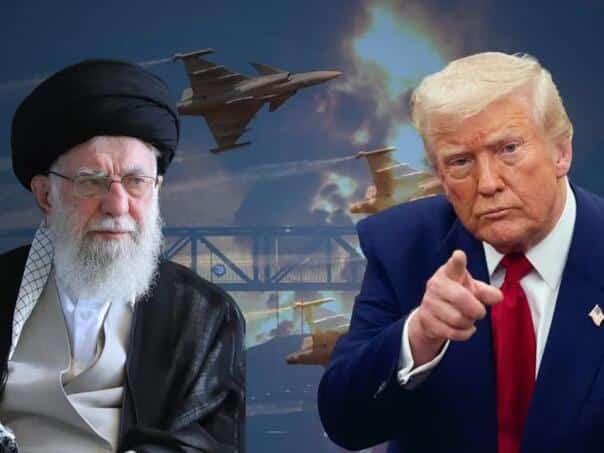
The regime in Tehran, fighting for survival, has long warned that if attacked, it would retaliate by targeting US bases in the region. Still, US President Donald Trump seemed surprised when it happened. Hardened by decades of isolation and condemnation, the late Supreme Leader Ali Khamenei said in early February: “The Americans should know that if they start a war, this time it will be a regional war.”
Iran also said a new phase of conflict would begin if its energy facilities were attacked. But Larijani, the slain Iranian security chief, made this clear to the Gulf states and tried to convince them that their national interest was not in aligning with Israel. But on Wednesday he was given a “martyr’s funeral” as Iran attacked Ras Laffan.
Escalation as the greatest weapon
The Iranian regime has no qualms about escalating the war. Moreover, his willingness to do so is his greatest weapon. An Iranian official warned this week: “There are other cards prepared that will come into play at the right time.” This likely refers to desalination plants in the Gulf, the center of the region’s fragile ecosystem.
International reactions and American anger
Iran’s leadership, with nothing to lose, is using the asymmetric advantage of fear. For example, for Europeans like Italian Prime Minister Giorgia Meloni, the main concern is the recession and the mass influx of refugees from the devastated Iran.
She says Europe should prepare to close its borders. Likewise, sending warships to reopen the Strait of Hormuz seems fraught with political risks to European leaders.
Trump may now be calling for a “joint effort” to ensure the safety of the straits, but Europe is being asked to escalate a war it was not consulted on and whose consequences it predicted. At the White House, the US president is reportedly “angrier than ever.” He is furious with his European allies, whom he considers vacillating and ungrateful, and with his critics in the Magus movement.
He is also furious with Tulsa Gabbard, his director of national intelligence, for testifying before Congress that Iran is not rebuilding its uranium enrichment facilities, and with Vice President JD Vance, whose silence speaks volumes.
Cracks in alliances
Even his popularity among the populist European right is under pressure. Tino Chrupalla, co-chairman of Germany’s Alternative für Deutschland, complained: “Trump started as a president of peace and will end up as a president of war.”
Worse, America’s alliance with Israel, the bedrock on which the war was launched, is giving it trouble with the Gulf states and revealing a divergence in Israeli and American goals. Trump retracted his claim that Israel had not consulted him about the attack on Iran’s South Pars gas field, an attack that Gulf states had urged not to happen because it would lead to Iranian retaliation.
Trump said Thursday, “I told him [Benjamin Netanyahuu] that it doesn’t work. We get along very well, everything is coordinated. But occasionally he’ll do something and if I don’t like it, I tell him we’re not going to do it.” But it was the second time in a week that Israel appeared to have a different list of approved targets than the US.
Earlier in the war, Israel bombed four large fuel depots around Tehran, causing black rain to fall over the city. Diplomacy seems to have hit a dead end. In the British embassy in Tehran, the only resident is a dog, and a dog with three legs. At diplomatic lunches in London, there is dreary talk of exit strategies, but few can suggest one that Trump would be willing to accept.
How could the war end?
There are three options: a protracted and exhausting conflict ending in Iranian capitulation; Trump’s unilateral declaration of victory; or an agreement – large or small, regional or bilateral, comprehensive or limited – that ends the fighting. For Simon McDonald, former permanent secretary of the British Foreign Office, the victory of the US and Israel should not be written off.
He told the House of Lords committee: “From what I see in Iran, the country that is achieving its goals is Israel… This is the culmination of a lifetime plan. It could work.”
In another option, Trump could declare victory and simply walk away, claiming to have destroyed or diminished Iran’s ability to threaten the region again. There were times when he seemed ready to take that step, when he claimed that the destruction of Iran’s navy, nuclear program, security apparatus and ballistic missile launchers was complete.
Israel, now lobbying to send in ground forces, would have no choice but to accept his assessment. The whereabouts of Iran’s highly enriched uranium would remain unknown, the limits of American air power would be confirmed, and the Strait of Hormuz, which is only about 34 kilometers wide at its narrowest point, would still be a bottleneck for tanker traffic. But that assumes that Iran is ready to agree to this farce.
Aslı Aydıntaşbaş, a fellow at the Brookings Institution in Washington, said: “There was a regime change, not a regime change, and that change was for the worse…”
Astoundingly, reformists like Mohammad Khatami claim that the assassination of Larijani set back the prospect of peace.
The final option – peace
The final option is de-escalation followed by peace. That peace could be one in which all sides are shown “the whole ballet” in advance – a phrase sometimes used by British national security adviser Jonathan Powell – or it could be achieved gradually.
Badr Albusaidi, Oman’s foreign minister, who has brokered eight rounds of talks between the US and Iran, laid out a rational vision in which all parties in the region secure a substantive agreement on nuclear transparency in the context of a regional non-aggression pact.
But the Gulf is divided over which is the bigger threat: Israel or Iran. Iran’s willingness to sacrifice Gulf economies is helping it lose that argument, even in Qatar and Turkey.
If there is any mood to question the value of US bases in the Gulf and whether they have become a source of insecurity, it is not obvious. Faisal bin Farhan said Thursday that Iran had miscalculated if it believed the Gulf states were incapable of responding to its actions.
“What little trust there was has been completely destroyed, on many levels,” he said. Without trust, the destruction will only continue, and Iran will face Nowruz – the new year – devoid of any semblance of renewal.
(Vijesti.ba)