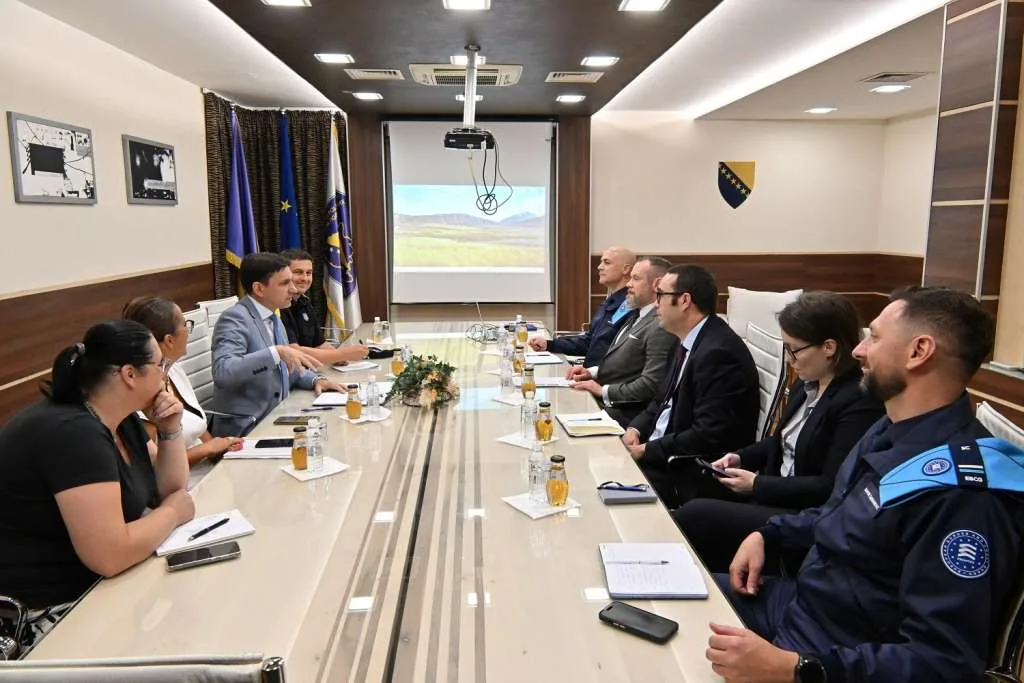
The new FBiH Labor Law, which is currently being drafted, will further improve the position of workers in the FBiH. Especially those in the private sector. He claims it in a statement for Focus Minister of Labor and Social Policy FBiH Adnan Delić.
A session of the Economic and Social Council of FBiH was supposed to be held today with a number of points dealing with workers’ rights, among them the collective agreement. However, it was cancelled. We asked Minister Adnan Delic for information on the details of the most important legal act that regulates the field of work in FBiH. And that is the Labor Law.
THE NEW LABOR LAW: THESE ARE THE MOST SIGNIFICANT ASPECTS
- the hot meal is not cancelled
- notice periods remain at the current level
- protection mechanism for severance pay
- open-ended contracts become legal practice
The FBiH Labor Law introduces new institutes: Compensation for food, transportation, etc.
Namely, information has appeared in the public that through the new labor law, which is being drafted, there could be a shortening of notice periods, the disappearance of hot meals, as well as some other mechanisms in favor of the employer and to the detriment of the worker.
The new labor law, says Minister Adnan Delić, will introduce new institutes, facilitate business for employers and at the same time harmonize labor legislation with European Union regulations.
“When it comes to claims made in the public, that the new law worsens the position of workers, especially in terms of notice periods, hot meals or fixed-term contracts, it is important to say that the public often misinterprets certain work solutions,” Delić claims.
He clarifies that, when it comes to workers’ rights, it should be emphasized that the new law regulates in detail the issue of salary allowances and salary supplements for the first time.
“The current law from 2016 practically does not recognize institutes such as hot meal, transport allowance, incentives or past work, but only basic salary, increases based on work and allowances for difficult working conditions. The new law precisely regulates these institutes, including allowance for food, transport, past work and other salary allowances, therefore the claims that hot meal is abolished are absolutely incorrect and impossible, considering that the currently valid Labor Law from 2016 does not recognize them at all”. draws Delic.
Delić: The new Labor Law does not make it easier to fire workers
Also, he states, claims that notice periods are shortened or it is easier to fire workers are incorrect.
“Notice periods remain at the existing level. The new law additionally introduces a protective mechanism through clearer regulation of the right to severance pay depending on the duration of the employment relationship with the employer. On the other hand, the law regulates the institute of probationary work in more detail. It introduces mentoring during probationary work and objective evaluation of workers through predefined criteria, which protects both the worker and the employer,” emphasizes Minister Delić.
As he further states, when it comes to individual employment contracts between workers and employers, the new law provides that contracts for an indefinite period become legal practice. And fixed-term contracts can only be concluded in clearly defined situations recognized by law, such as replacing a temporarily absent worker, working on a project or temporarily increasing the scope of work.
Also, adds Minister Delić, the institute of seasonal work is being introduced, which will enable the conclusion of contracts for a fixed period of up to nine months a year in activities such as tourism, catering and agriculture.
Draft labor law: The right to vacation, to paid leave…
He also emphasizes that the new law introduces the institution of general collective agreements that last indefinitely, while the current legislation recognizes collective agreements that last no longer than three years.
“When it comes to individual employment contracts between workers and employers, the new law provides that contracts for an indefinite period will become legal practice, while contracts for a fixed period can only be concluded in clearly defined situations recognized by the law, such as replacing a temporarily absent worker, working on a project or temporarily increasing the scope of work,” said Delić.
He concludes that, therefore, special attention was paid to the institute, which the existing law did not recognize, as well as to the improvement of the existing rights of workers, especially when it comes to the right to vacation, the right to paid leave, the rights of parents, employment and working in a digital environment.
“In particular, digital work platforms that already exist in BiH, but have not been standardized until now, should be highlighted. The new law tries to regulate this area so that workers who work through digital platforms are recognized and protected, and employers are introduced to legal business processes. Also, the part related to the supervision of the application of the law, inspection supervision and penal provisions has been significantly improved, especially in the segments that until now allowed work in the gray zone,” said Minister Adnan Delić.