The warning comes from the British Guardian, stating that without urgent measures, the consequences could be catastrophic. Among those whose daily life and survival depend on the river is Sheikh Nidham Kreidi al-Sabahi, the 68-year-old religious leader of the Mandaeans, one of the oldest Gnostic religions in the world. According to their beliefs, water from the flowing river has a sacred role, and the sheikh claims that he has been drinking only water from the Tigris all his life. “There is no water, there is no life,” says al-Sabahi, who lives in the city of Amarah in the south of Iraq and has been connected to this river through religious rituals since the first months of his life.
For the Mandaeans, water is the foundation of faith and identity. Every important life event, from weddings to last rites before death, must take place by the river. The city of Amarah, the center of Maysan province, was built right around the Tigris. “For our religion, water is like air. Without it, there is no life,” explains the sheikh, emphasizing that according to their teachings, life on Earth developed from water.
The Tigris, together with the Euphrates, shaped Mesopotamia, the cradle of civilization where agriculture, writing and the wheel were born. Today, about 18 million Iraqis depend on its water, as it is used for drinking, irrigation, industry and electricity generation. However, the river has been suffering the consequences of wars, sanctions and systemic neglect for decades.
During the 1991 war, much of Iraq’s water infrastructure was destroyed, and the wastewater treatment plants were never fully rebuilt. Today, in central and southern Iraq, only about 30 percent of urban households are connected to the purification system, while in rural areas that percentage is negligible. Sewage, agricultural chemicals, industrial and medical waste have been ending up directly in the river for years. The consequences have already been dramatic – in Basra alone in 2018, more than 118,000 people ended up in the hospital due to polluted water.
The situation is further aggravated by a drastic drop in the amount of water. The construction of large dams on the Tigris in Turkey has reduced the flow of water to Iraq by a third, while Iran has diverted rivers that previously fed the Tigris. Within Iraq, water is overused, particularly in agriculture, which uses more than 80 percent of available surface water. Climate change is further worsening the situation – precipitation has decreased by about 30 percent, and the country is facing the worst drought in almost a hundred years.
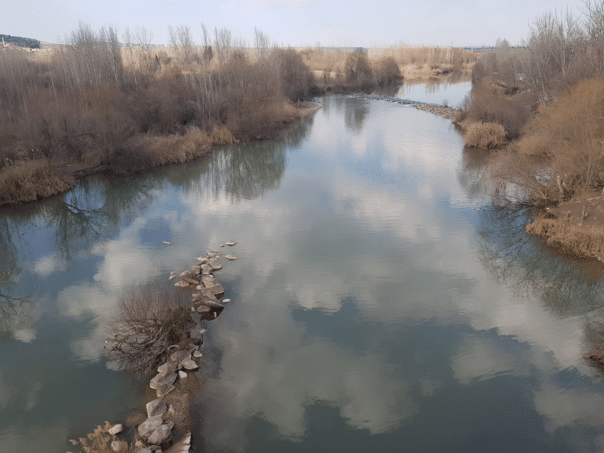
This summer, the Tigris was so shallow in some places that people could cross it on foot. Experts warn that a smaller amount of water means a higher concentration of pollutants, which further endangers people’s health and the river’s ecosystem.
The Iraqi government has repeatedly asked Turkey to increase the release of water from the dams, and an agreement was recently signed that envisages cooperation on the management of water resources. However, the deal has been criticized for its lack of transparency and fears that it is ceding control over Iraqi water to Ankara, especially since the agreement is not legally binding.
For Sheikh Nidham and the Mandaean community, the future is extremely uncertain. Their numbers in Iraq have already been drastically reduced, and many have been forced to leave the country or move to the north. If the Tigris continues to disappear, they fear it could be a final blow to the survival of one of the world’s oldest living religions.
(Vijesti.ba)