
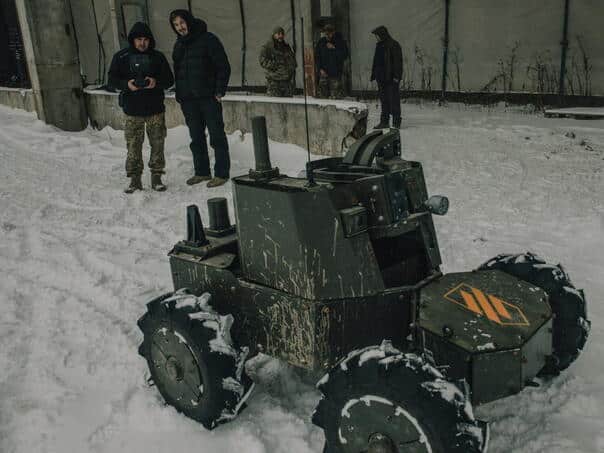
Viktor Pavlov presented the newest and most versatile weapon of Ukraine: A battery-powered ground robot.
Unmanned ground vehicles come in many shapes and sizes. One moves on tracks and resembles a small open conveyor. Another has wheels and antennae. The third carries anti-tank mines. From the spring of 2024, their use is growing exponentially.
“This is what modern warfare looks like. All armies will have to become robotic,” said Pavlov, a lieutenant in Ukraine’s 3rd Army Corps, writes Guardian.
Russia’s all-out invasion of Ukraine is now in its fifth year, and the conflict – Europe’s largest since 1945 – has seen a dramatic transformation of weapons and battlefield tactics. The war has turned into a technological competition, where not expensive tanks are used, but cheap and expendable drones that can accurately deliver explosives.
Ukrainian drone expertise is now in high demand, especially in the context of the US-Israeli war against Iran. Last week, Volodymyr Zelensky signed ten-year defense deals with several Gulf states, including Saudi Arabia and Qatar, to supply them with cheap Ukrainian interceptors. They can shoot down long-range Shahed-type kamikaze drones, which Iran uses in attacks, as well as Russia.
The Kremlin’s war turned Kiev into a center for the development of modern unmanned weapons. A unique system has been created where engineers develop new products and soldiers on the front lines provide instant feedback. Manufacturers then ramp up production, developing ground vehicles, Shahed drone interceptors, and advanced naval drones.
Ground robots now make up 90% of the Ukrainian military’s logistics.
“It’s very difficult to move because of enemy FPV drones. That’s why we use robotic systems,” Pavlov said.
In January, Ukrainian forces conducted a record 7,000 operations using ground vehicles.
Variants of land drones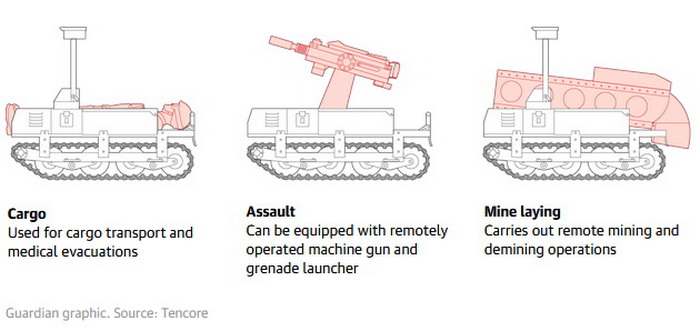
Robots are increasingly assuming a key role in combat and replacing infantry. They are equipped with remote-controlled machine guns and grenade launchers. One system – DevDroid TW 12.7 – defended the site for as long as 45 days. Last summer, a kamikaze robot with 200 kg of explosives traveled 20 kilometers and destroyed a school building used by Russian troops.
“This is not Star Wars, with lasers. The front line is more like Terminator. When a ground robot gets to your position, there’s nothing you can do,” said a drone operator nicknamed Bambi from the 25th Airborne Brigade. He added: “If you hit a human, he stops shooting. If you hit a robot, he doesn’t feel pain. Someone behind the screen will keep shooting.”
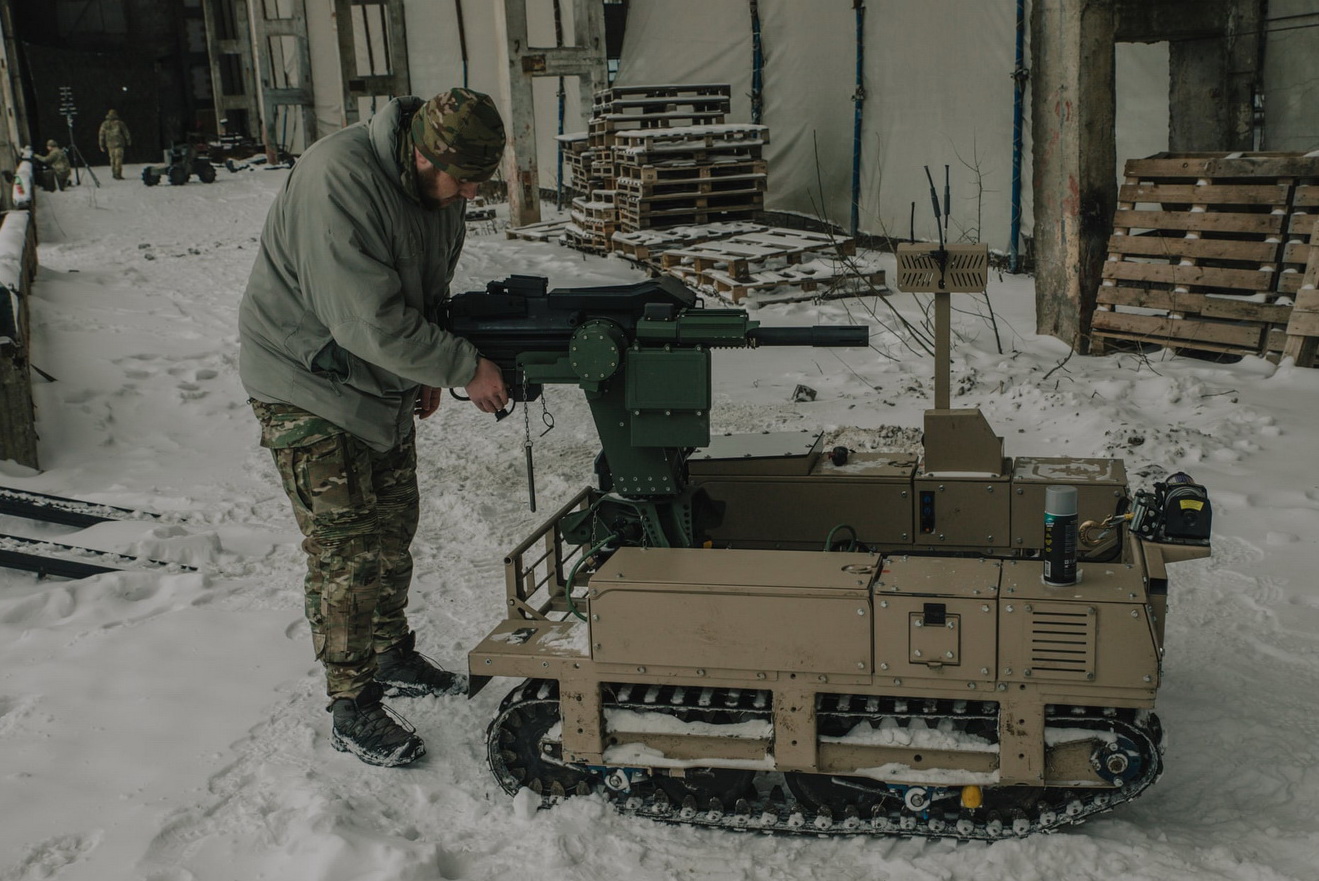
Ground drones also deliver food, ammunition and materials such as wood to build shelters. They can evacuate up to three wounded soldiers. They usually work up to eight hours. They are smaller and harder to spot than armored vehicles, which are easily detected and destroyed by Russian drones.
Since December 2025, robots have been delivering supplies to soldiers around the devastated eastern city of Pokrovsk, where fierce fighting is taking place. “One came to the entrance to our shelter. I felt like a caveman in front of alien technology,” said Bambi.
In addition, robots also perform engineering tasks: They place and remove mines, stretch barbed wire, and tow damaged vehicles. Pavlov says his unit loses about three robots a day to Russian attacks, a loss rate of 25%.
“It’s a small price to pay if we’re saving soldiers’ lives,” he said.
Ukrainian Defense Minister Mykhailo Fedorov praised the rapid development of these systems: “Only six months ago, the evacuation of the wounded by robots was rare. Today, robots regularly enter dangerous zones, deliver ammunition and evacuate the wounded.”
Last summer, for the first time in history, Russian soldiers surrendered to an armed ground robot. They came out of the destroyed building after an intense attack. The Ukrainian 3rd Corps managed to take control of the area with robots.
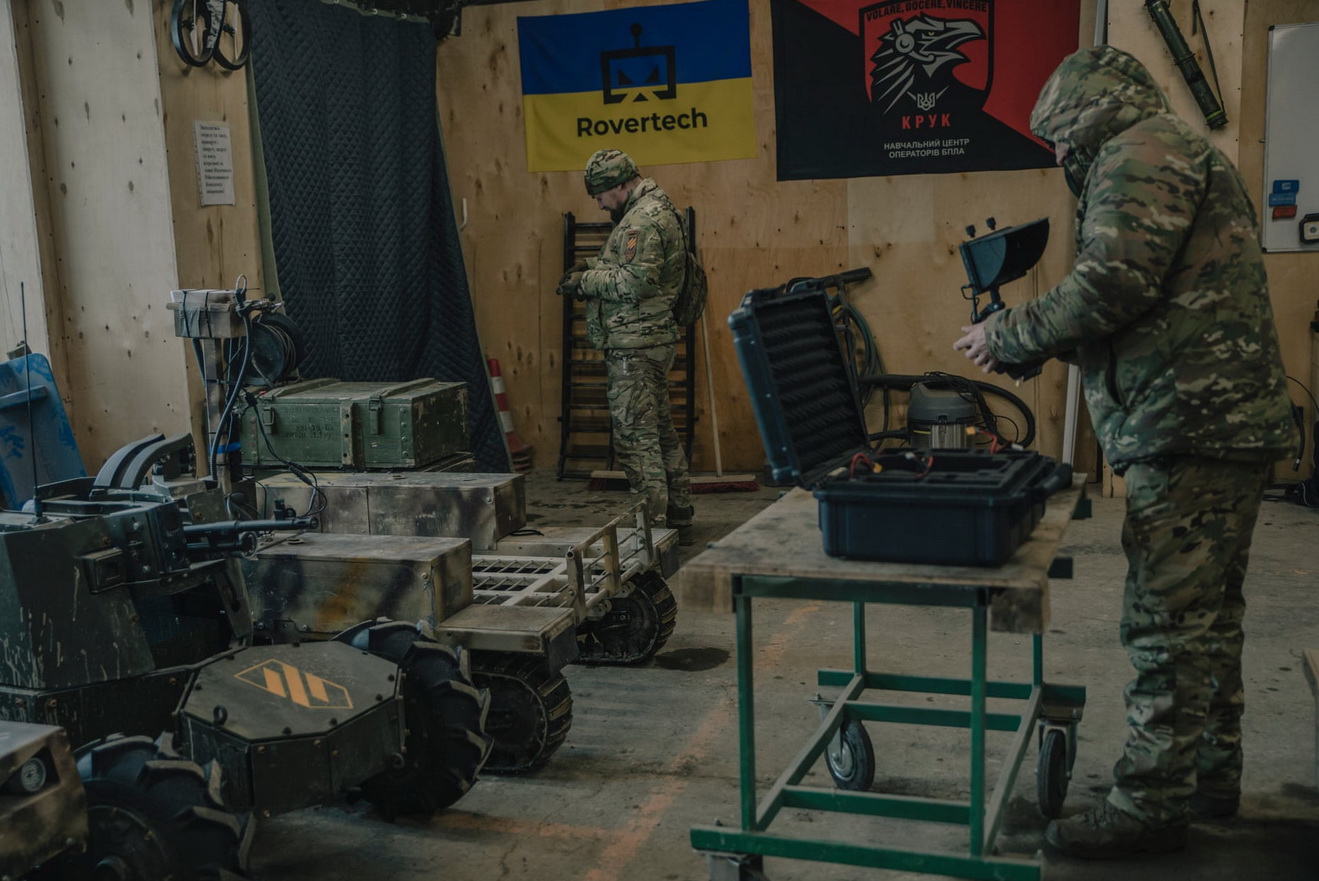
This corps leads the way in the development of ground-based unmanned systems. Their KillHouse Academy trains operators. Soldiers practice operating robots on snow-covered terrain and in simulators.
Instructor Oleksandr, nicknamed “The Bartender”, says: “The war has reached a new level. Due to drones in the air, it is difficult to reach positions and evacuate people. Former gamers are quickly adapting to this technology.”
Russia also uses similar systems, such as the electric vehicle “Courier”, which can transport 250 kg of cargo and conduct electronic warfare. According to Pavlov, Ukraine currently has an advantage in this technology.
Russia controls about 20% of Ukraine’s territory, including Crimea. Since 2022, it has not made significant progress despite heavy losses. Zelensky declared: “Putin did not win this war.”
The commander of the 3rd corps, Andrij Bilecki, believes that new tactics will decide the outcome of the war.
“We are on the threshold of a new revolution. Ground robotic systems will significantly change the battlefield and replace a large number of soldiers,” he said.
(Vijesti.ba)


