
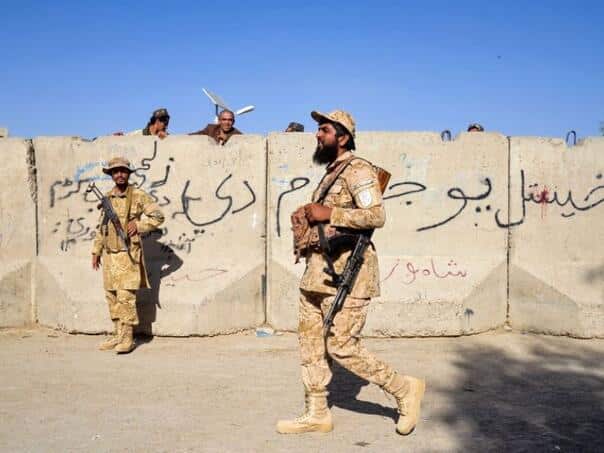
The root of the conflict is the Durand Line – the border between Pakistan and Afghanistan established in 1893 by an agreement between the British Indian Empire and the Emirate of Afghanistan. The line, 2,640 kilometers long, passes through areas inhabited by Pashtuns and divides tribes that have never recognized the border.
After the partition of British India in 1947, Pakistan inherited the border, but Afghanistan never officially accepted it, causing years of tension and occasional conflict.
Pashtuns live on both sides of the border and often cross it unchecked, which Pakistan considers a security risk. Both countries accuse each other of harboring militant groups that attack from across the border.
The border is also an important route for drug smuggling. Afghanistan is the world’s largest producer of opium and heroin, and much of the trade passes through Pakistan, further straining relations.
The latest conflict erupted after Pakistan demanded the extradition of Tehrik-e Taliban leader Noor Wali Mehsud, who it suspects of dozens of terrorist attacks. After failed assassination attempts by airstrikes on Kabul, the Afghan Taliban retaliated with attacks on Pakistani military positions in Kurram and North Waziristan, killing at least 58 soldiers and capturing 25 border posts.
Islamabad then closed the main border crossings, cutting off trade and the movement of civilians.
Pakistan’s Defense Minister Khawaja Muhammad Asif said that his country will not tolerate a situation “between war and peace”.
“If the situation is not resolved diplomatically, Pakistan will not hesitate to take necessary measures to protect its territorial integrity once and for all,” Asif said.
Interim Afghan Prime Minister Mullah Hassan Akhund retorted that Afghanistan would not give in “even under the threat of war.”
“The logic that bombing Afghanistan will put Afghanistan in a subordinate position has not worked for the Americans for two decades, and it will not work for Pakistan either,” said Ahund.
According to the Global Firepower index, Pakistan ranks 12th in terms of military power in the world, while Afghanistan is only 118th. Pakistan’s army has more than 650,000 active soldiers, a nuclear arsenal and modern weapons, while the Taliban forces have mainly light weapons and experience in guerrilla warfare.
Despite military supremacy, analysts do not expect an all-out war.
“The conflict between Pakistan and Afghanistan is senseless and a loss for both sides,” said Abdul Sayed, an expert on jihadism at Lund University. “Diplomacy and cooperation is the only way to avoid disaster.”
(Vijesti.ba / HINA)


