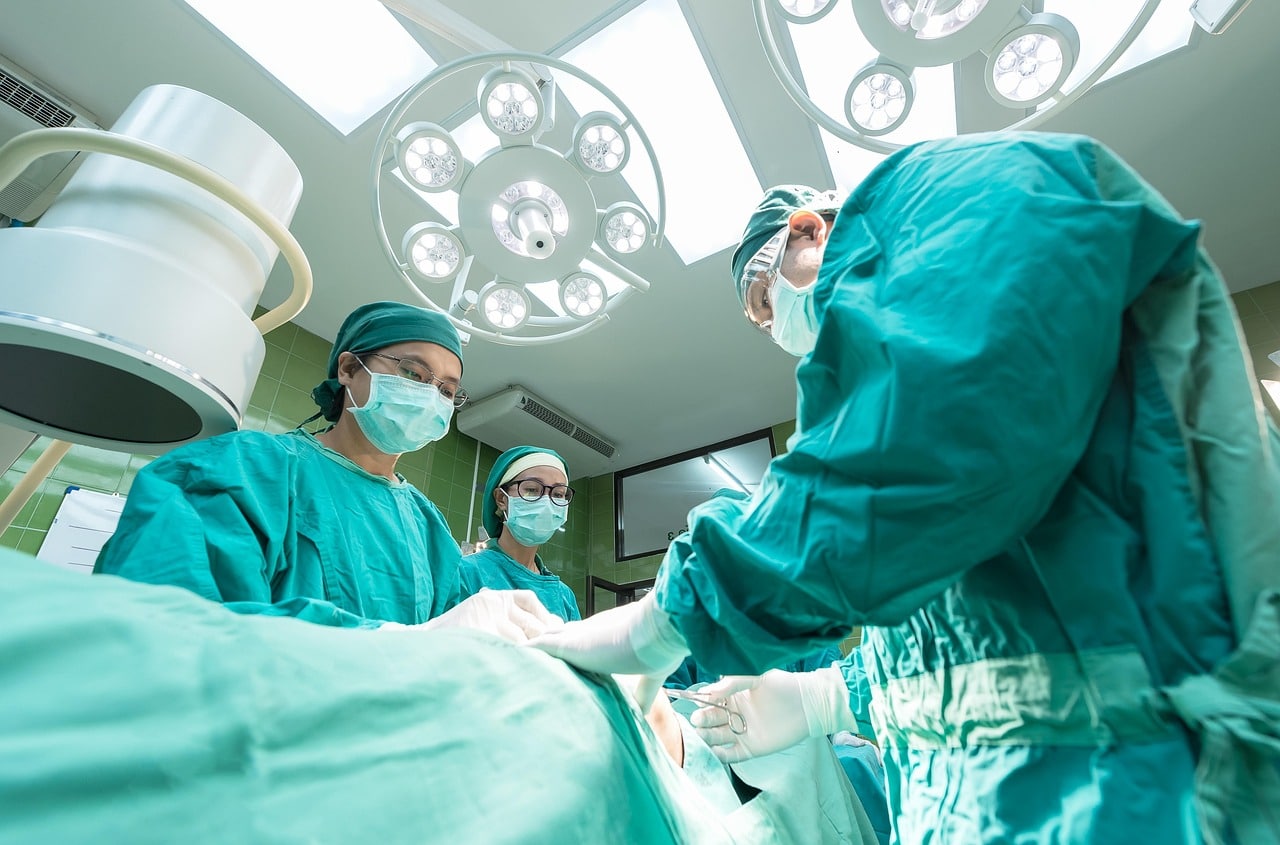
During the year 2025, only 16 organ transplants were performed in the territory of the Federation of Bosnia and Herzegovina, which ranks this year among the weakest when it comes to organ transplants in this entity, or in general in Bosnia and Herzegovina.
According to the data of the Association of Dialysis and Transplant Patients of the Federation of Bosnia and Herzegovina, of the total number of transplants, as many as 13 procedures were performed from living donors, while only three transplants were performed from deceased donors, that is, cadaveric.
Out of a total of 16 procedures, 12 transplants were performed at the Clinical Center of the University of Sarajevo (KCUS), while four were performed at the University Clinical Center Tuzla.
They do not do transplants in the RS
At the same time, waiting lists are still long. 164 patients are currently waiting for a kidney transplant in the Federation of BiH, 32 patients are waiting for a liver transplant, while 21 patients are waiting for a heart transplant.
These transplants are also the only ones performed in Bosnia and Herzegovina, considering that such medical procedures are still not performed in the health institutions of the Republika Srpska.
Nevertheless, in the middle of last year, the Government of the RS made a decision to establish a public health institution, the Institute for Dialysis and Transplantation of the RS, which was the first step towards the introduction of transplant programs in that entity.
According to the president of the Association of Dialysis, Transplant and Chronic Kidney Patients of the RS, Aleksandar Radun, there are currently around 900 dialysis patients in the RS. Since transplants are not performed in domestic health institutions, patients from this entity are most often referred for operations abroad, among others to Belarus, France, Italy and Turkey, reports Večernji.ba.
According to the data of this association, so far about 150 patients from RS have undergone kidney transplantation. One of the most common destinations recently is Minsk in Belarus, where it is possible to perform a cadaveric kidney transplant, that is, an organ transplant from a deceased donor. Patients who have a relative who can donate an organ perform the operation in Italy, most often in Padova, as well as in Turkey.
According to the portal Blink.ba, the costs of processing the patient and the transplant itself abroad amount to about 67,000 dollars, and these costs are fully borne by the competent institution.
The solution is joining Eurotransplant
As one of the long-term solutions for patients from both Bosnia and Herzegovina. entities, the accession of Bosnia and Herzegovina to the international transplantation network Eurotransplant is often mentioned. The Ministry of Civil Affairs of Bosnia and Herzegovina states that during 2025, a total of 7,366 organs from 2,221 deceased donors were allocated in eight Eurotransplant member countries.
In the same period, 3,307 kidney transplants, 1,395 lung transplants, 1,725 liver transplants, 693 heart transplants, and 152 pancreas transplants were performed. This represents a slight increase compared to 2024, when 7,150 organs were allocated from 2,181 donors.
Despite this, at the end of 2025, there were 13,686 patients in need of a transplant on the active waiting list in Eurotransplant member countries.
The process of Bosnia and Herzegovina approaching this network was formally initiated at the end of 2024 with the presentation of the country at the annual assembly of Eurotransplant. Of particular importance is the signing of the Teaching and Training Agreement (TTA), which enables institutional and professional cooperation between transplant centers from Bosnia and Herzegovina and centers within the Eurotransplant network.
The Ministry of Civil Affairs of Bosnia and Herzegovina points out that this agreement enables work according to European professional standards and protocols, strengthening the capacity of local medical teams through training and practical work, as well as creating conditions for the future inclusion of patients from Bosnia and Herzegovina in the Eurotransplant system, while simultaneously fulfilling the criteria for full membership, they write. Vijesti.ba