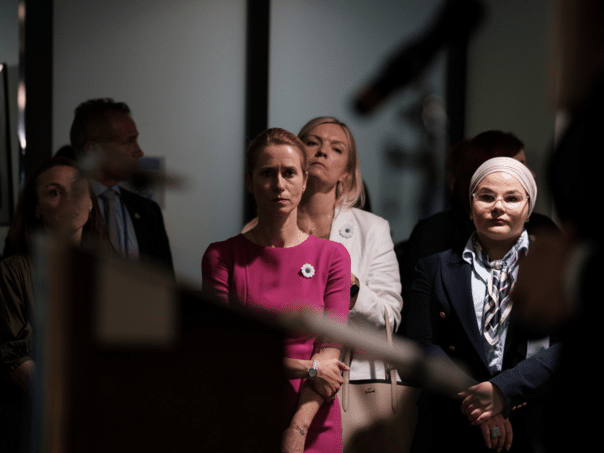
And the ceremony was led by the EU High Representative for Foreign Affairs and Security Policy / European Commission Vice President Kaja Kallas, within the activity of celebrating 30 years from the Srebrenica genocide.
Memento represents a number of strong personal stories, told through artifacts found in mass graves and personal archives. Each subject is paired with a portrait and survivor or family member who lost loved ones in genocide. Together they provide an intimate insight into events from July 1995. years. The exhibition was organized by the European Foreign Action Service (PCRC) in cooperation with the Sarajevo Research Center, the Srebrenica Memorial Center and the Information Program for affected communities at the International Mechanism in The Hague.
When opening the exhibition, the High Representative Kallas stated:
“There are no words that can cover our emotions, especially in front of the persistent evil. The pocket watch that he has been able to be trained. There will never be trained again. I want to see his oldest son. I want us to all remember what happened in Srebrenica.”
He also referred to his recent visit to Bosnia and Herzegovina:
In April this year I traveled to Sarajevo, and my messages were aimed at action. I was talking about the European Union’s commitment to preserve the security of Bosnia and Herzegovina. Bosnia and Herzegovina is part of our European family. “
Thanks to the organizers of the exhibition, Kallas concluded:
“Despite the monstrous intention to erase the Bosniak people in Srebrenica, the legacy of those who were killed forever. And as this exhibitions are to learn, the memory of the daily invitation to oppose hatred, intolerance and injustice. When we do, we destroy it crime roots. “
Velma Šarić, Founder of the Center for Post-Conflict Research (PCRC), which turned out to open and conducted the High Representative through the exhibition, emphasized that this exhibition brought strong stories of genocide and survival. Includes personal items of the victims family, the items found in mass graves in eastern Bosnia and from the road as known as the “march of death.”
“Through these stories, we pay tribute to more than 8,000 Muslim men and boys in Srebrenica. We hope that our work will inspire young people to learn peace and oppose hatred and violence – now and in the future.”
Mirela Osmanović from the Srebrenica Memorial Center also addressed the opening of the exhibition by saying:
“Thirty years ago than Genocide in Srebrenica. But for us, for the survivors, for those who work in the Memorial, but not behind. They are being built in time, truth and care. In the time when denying becomes all louder, in time when War criminals not only dams, but also openly – when the murals replace court verdicts, and on the speech of hatred corresponds to silence – this exhibition stands as a reminder that the truth is not a matter of thought and moral responsibility. “
In addition to the exhibition, the documentary “Samir Mehić Bowie – Letters from Srebrenica”, which talks about the life of the Srebrenica guitarist, will be shown in Brussels 1. July 2025. year at 18:00 in the Center for the Fine Arts Bozar. After the projection, a panel discussion will follow.
(Vijesti.ba)