
Iran and the United States will hold peace talks in Pakistan on Saturday, with the rivals appearing to be far from agreeing on key demands and expressing mutual mistrust.
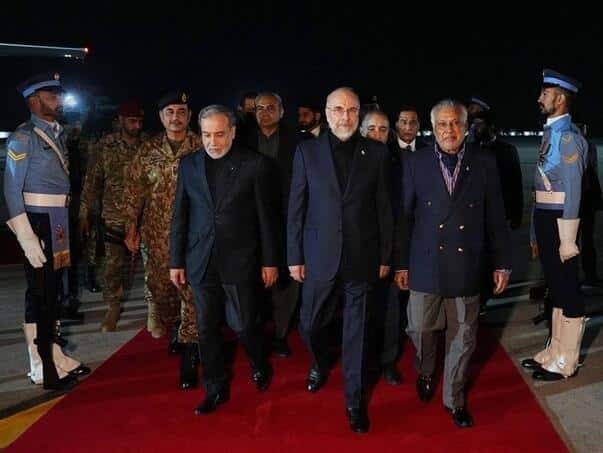
The Iranian delegation, with more than 70 members and led by Parliament Speaker Mohammad Bagher Ghalibaf, was the first to arrive in Islamabad, where security measures were tightened.
– We have good intentions, but we have no trust – Iranian state television reported Ghalibaf’s words upon arrival in the capital of Pakistan. “Our experience in negotiations with the Americans has always ended in failure and unfulfilled promises.”
US Vice President JD Vance, who heads the US delegation that includes Trump’s son-in-law Jared Kushner and special envoy Steve Witkoff, also expressed caution in his statements to reporters before leaving Washington.
– If the Iranians are ready to negotiate in good faith, we are certainly ready to lend a hand – said Vance.
But, “if they try to manipulate us, they will see that the negotiating team will not be so receptive.”
Iran has insisted on a ceasefire in Lebanon and the unfreezing of its assets in order for the talks in Islamabad to take place – which has so far not materialised.
US President Donald Trump demanded the opening of the Strait of Hormuz as a condition for a two-week ceasefire that allowed negotiations.
However, the strait, through which a fifth of the world’s oil passes, has still not been restored to normal traffic, and Trump promised on Friday to open it soon “with or without” Iran’s cooperation.
He said his top priority at the talks in Islamabad was to ensure that the Islamic Republic could not have nuclear weapons. “No nuclear weapons. That’s 99 percent of everything,” he said.
The decisive moment
Israeli airstrikes in Lebanon continued on Friday against Hezbollah despite Iran’s demand that they cease as a condition of a truce with Washington.
Israel said the US-Iran truce did not include Lebanon.
Israel’s ambassador to the United States, Yechiel Leiter, said his country would hold talks with the Lebanese government next week in Washington, but would not discuss a ceasefire with Hezbollah.
According to him, Israel has “agreed to start formal peace negotiations” with the Lebanese government, with which it has no diplomatic relations.
“Israel has refused to discuss a truce with the terrorist organization Hezbollah, which continues to attack Israel and is the main obstacle to peace between the two countries.”
Israel launched massive strikes and a ground invasion of Lebanon after attacking Iran on February 28, in response to Hezbollah rocket attacks on Israel.
Lebanese authorities say the weeks of conflict have claimed more than 1,950 lives, with more than 350 killed in Israeli strikes on Wednesday alone, the first full day of the US-Iran truce.
Pakistani Prime Minister Shehbaz Sharif said that progress in the talks in Islamabad will require a lot of effort.
– A temporary truce has been declared, but now an even more difficult phase follows: the phase of achieving a permanent truce and solving complex issues through negotiations – he said.
“It’s the phase that in English is called ‘make or break’.”
In Islamabad, all roads leading to the Serena Hotel, the expected venue for the talks, were closed with heavy security, while a large banner and digital signage along the highway announced “Negotiations in Islamabad”.
In Tehran, a 30-year-old resident told AFP he was skeptical about the success of the talks, describing much of what Trump was saying as “pure noise and nonsense”.
Stocks on Wall Street rose sharply during the week, while oil prices fell after a fragile truce between the United States and Iran was reached.
During the week, all three major US indexes rose by more than three percent. Oil prices fell again on Friday, and in total for the week they recorded a decline of approximately 13 percent.
(Vijesti.ba)


