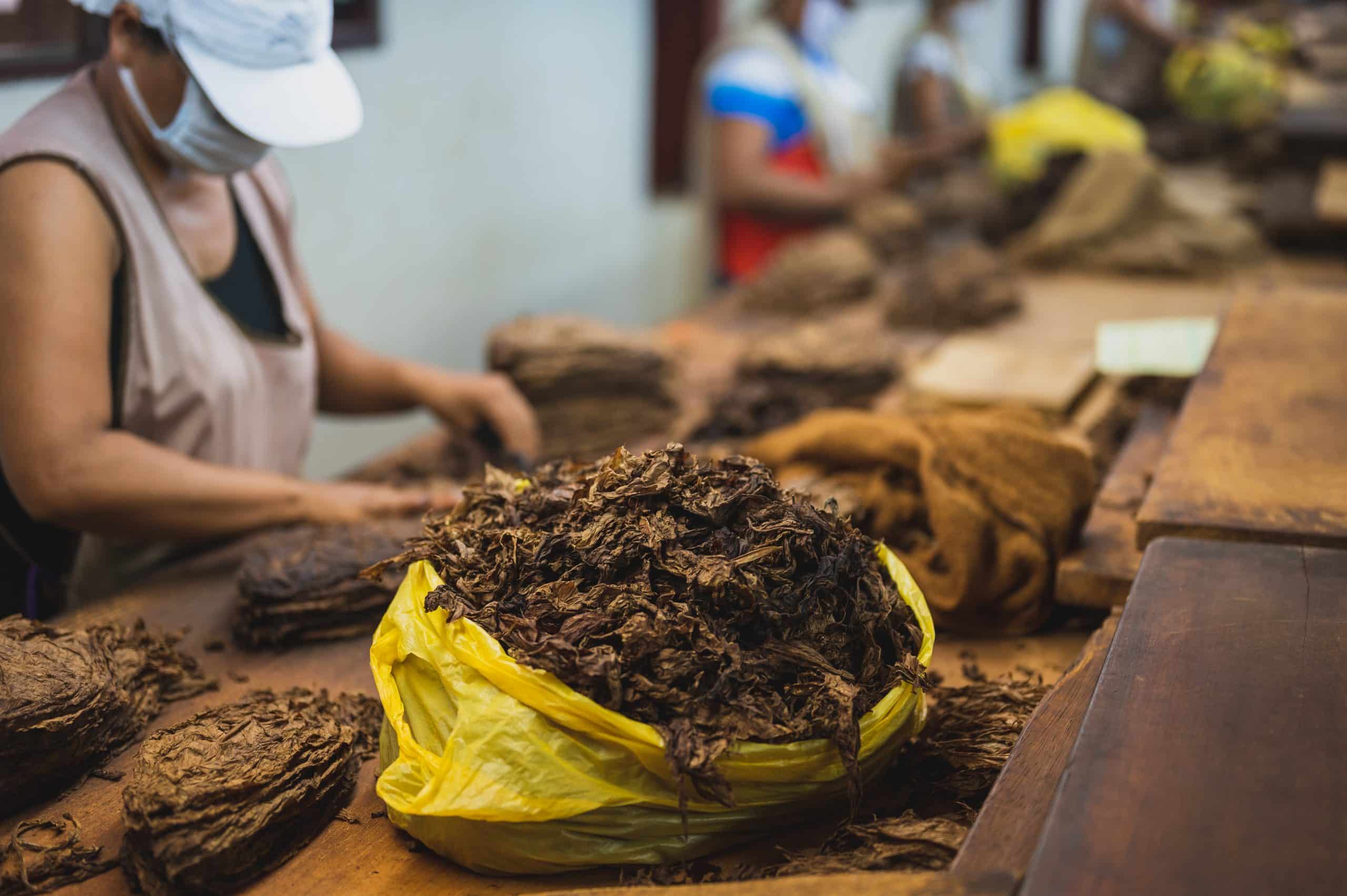
The black market of tobacco in Bosnia and Herzegovina has remained one of the biggest “holes” in the gray economy for years, and the key to the problem lies precisely in the legal difference between raw and processed tobacco. While cigarettes and other tobacco products are under strict state control, the tobacco plant itself and the raw leaf are not subject to excise taxation.
According to the current Law on Excise Taxes of Bosnia and Herzegovina, excise tax is not calculated on tobacco as a plant or on raw tobacco leaf which is treated as an agricultural product. Only excise products produced or imported into BiH are taxed – cigarettes, cigars, cigarillos and smoking tobacco.
The law clearly defines the moment of tax liability. Excise duty is calculated only when the producer markets an excise product for the first time or when such a product is imported into Bosnia and Herzegovina.
In other words, the tobacco plant itself is not subject to excise tax until it becomes a product intended for final consumption.
Article 6 of the Excise Law further specifies what is considered tobacco products. The category of smoking tobacco includes cut, chopped or pressed tobacco suitable for smoking without additional industrial processing, as well as other tobacco products that are sold at retail. Even the remains of tobacco leaves and by-products resulting from processing are treated as excise goods.
It is at this border between the raw material and the finished product that the biggest problem arises.
While the legal cigarette market is under the control of the Administration for Indirect Taxation of Bosnia and Herzegovina through the system of excise duties and excise stamps, raw tobacco as an agricultural crop remains outside such a regime of supervision. Experts warn that part of that tobacco ends up in illegal flows – without records, without control and without paid duties.
On the black market throughout BiH, cut tobacco is most often sold “by the kilogram”, without declaration, health warnings and excise stamps. Due to the significantly lower price compared to legal cigarettes, such products have a stable demand among consumers sensitive to price increases.
The problem, however, is not only of a fiscal nature.
Economists and public finance experts warn that the illegal tobacco market is also a public health and safety issue. Tobacco that is sold outside of legal channels does not pass prescribed quality controls, does not have a clear origin or guarantee of health.
An additional challenge is the division of responsibilities among institutions. The Directorate for Indirect Taxation of BiH controls the import of excise products, the calculation and collection of excise duties and the system of excise stamps, but it has no primary authority over the production, planting and registration of raw tobacco. That area belongs to the sector of agriculture and statistics.
In practice, this means that the state has a relatively accurate overview of the legal market for tobacco products, but does not have complete control over the quantities of raw tobacco produced and traded.
According to available international statistics, the production of tobacco leaves in BiH has been declining in recent years, but experts warn that part of the market remains outside official records precisely because of illegal trade and the shadow economy.
A similar principle exists in the European Union. Harmonized EU rules mainly refer to finished tobacco products, while the tobacco plant itself is not subject to excise taxation.
However, some members of the European Union have introduced special registers and record keeping obligations for producers, buyers and distributors of raw tobacco in order to prevent illegal processing and smuggling.
The question of introducing stricter rules for registration and monitoring of tobacco raw materials is being raised more and more often in Bosnia and Herzegovina as well. The aim of such measures would be to strengthen control over the raw tobacco market and suppress the gray economy that has been following this area for years.
Because while the state collects billions through excise taxes on legal cigarettes, part of the market still functions far from tax records – in the space between the fields and the black market, he writes. Klix.