
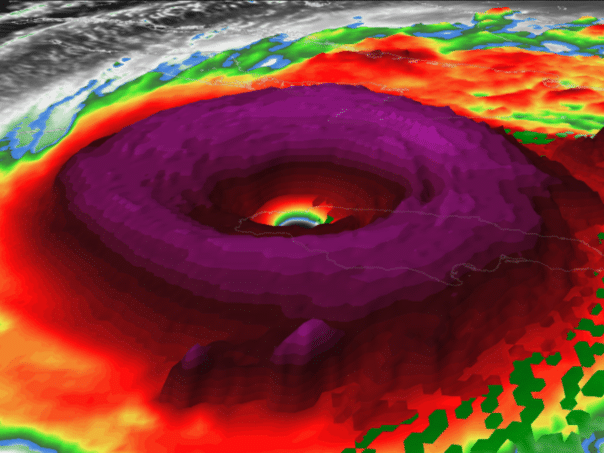
In the United States, the National Hurricane Center warned of a “dangerous storm surge” in the Bahamas overnight, while eastern Cuba remains at risk. The maximum winds of the hurricane are now 155 km/h, which puts it in category 2, while when it arrived in Jamaica it was the highest, category five hurricane.
The National Hurricane Center issued warnings for the Cuban provinces of Granma, Santiago de Cuba, Guantanamo, Holguin and Las Tunas, as well as the southeastern and central parts of the Bahamas and Bermuda, urging residents to stay in shelters. There was also a warning of possible flooding and landslides in Hispaniola, an island shared by Haiti and the Dominican Republic. A storm surge of 1.2 to 2.1 meters is expected in the southeastern parts of the Bahamas.
Aid organizations have already launched aid operations, while local authorities are trying to get in touch with remote areas and assess the damage. Jamaica’s Minister of Education said that 77% of the island currently has no electricity. The US is sending a disaster response team and rescue teams, while the United Nations is preparing humanitarian aid and the UK is donating £2.5 million to Jamaica.
Melissa became the strongest hurricane to hit Jamaica in 174 years, with winds of 295 km/h and a central pressure of 892 millibars, a record for the Atlantic Ocean at landfall. Due to the sudden strengthening, meteorologists warn that such hurricanes make it difficult to predict and plan evacuations. Climate scientists report that unusually warm ocean water contributed to a twofold increase in wind speed in less than 24 hours.
Melissa is the fourth hurricane in the Atlantic basin this year to experience rapid strengthening, and scientists point out that warming oceans give hurricanes extra energy for stronger rainfall and winds.
Residents of the Caribbean continue to prepare for the impact of the hurricane in the Bahamas, while meteorologists monitor its movement and warn of possible catastrophic consequences.


