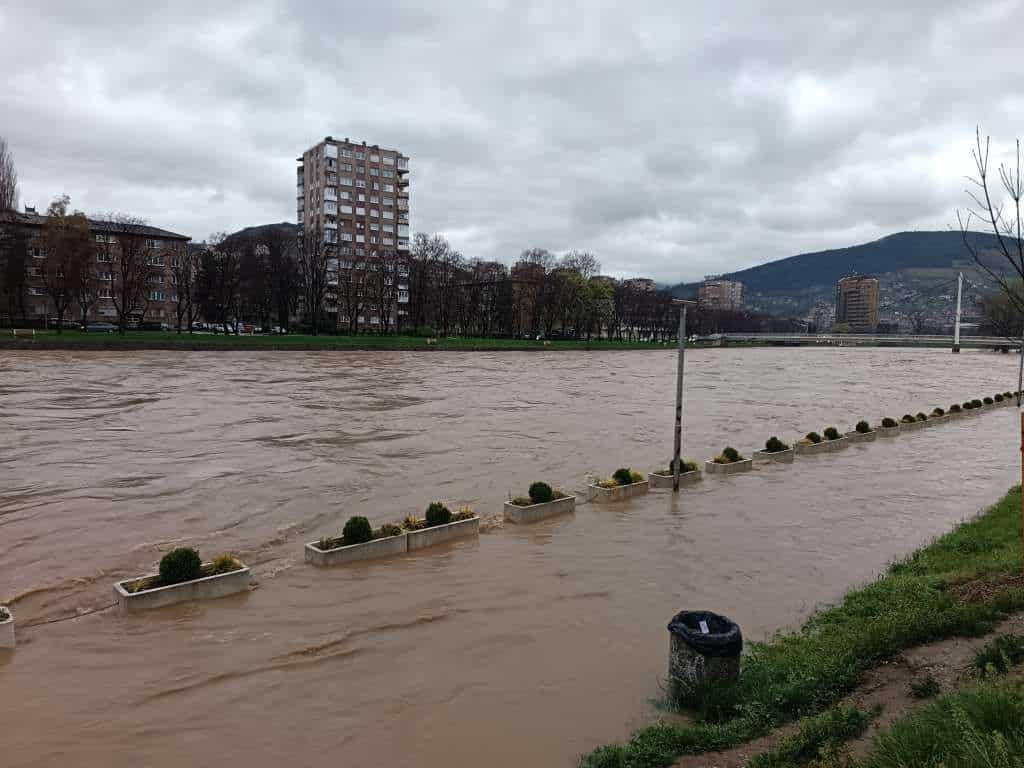
Floods are frequent natural disasters that can be of a local scale if they affect a settlement or smaller community, or of a large scale if they affect entire river basins and a large number of municipalities.
The development time of floods varies from case to case. Floods in lowland areas develop slowly, over several days, in contrast to torrential floods that develop quickly, sometimes without visible signs.
Such floods form a dangerous and destructive tidal wave, which carries with it mud, stones, branches and waste. Flooding also occurs when the water level in the rivers rises so much that the groundwater rises or overflows over the embankments, when due to the pressure of the water on the embankments, they break through.
A flood can also occur as a result of a dam bursting and overflowing due to excessive water inflow, which causes a flood similar to a flash flood, but on a much wider and more catastrophic scale. Flooding can happen anywhere. Even very small streams, rivulets, drains or storm drains that appear harmless can cause large-scale flooding.
If there is a risk, move to higher floors
UNICEF has published recommendations on how to behave during floods:
Monitor information via radio, television and the Internet (if available). Be aware that flash flooding is possible. If there is a risk, immediately move to the higher floors of the house. Do not wait for instructions to do this. Keep away from electrical cables. Avoid areas known for landslides and landslides.
Do not disturb the rescue teams in their work.
If it is about the appearance of a tidal wave, citizens are obliged, if they manage to do it in time, to take the following actions.
In the apartment or house, turn off the electrical and other installations and shut off the water. Take personal belongings (personal documents, money, transistor, blanket, etc.), take shelter in a safe place, i.e. a place that cannot be threatened by a tidal wave, and wait for the transmission of a signal for the end of the danger in that place, and after that signal, act according to the orders and instructions of the municipal headquarters of civil protection.
In the case of floods, but also in the case of other natural and technical-technological accidents and disasters, plan in advance where you will take shelter if you have to leave your home (relatives, friends or facilities specified by municipal acts).
Teach household members, especially children, how to turn off electricity, gas, and water.
Check if you know the numbers of the emergency services, that is, if you know who to turn to for help.
Prepare sandbags that will be placed at “entrance” points (windows, doors) if necessary.
Procedures during floods
Keep calm. Call the emergency numbers 121, 122 or 123 and inform them of the extent of the accident. Turn off electrical and other installations and water. Do not touch electrical appliances if they are wet and if water has already reached them. Raise drinking water and food to higher levels of the house or apartment. If you are able, prevent water from penetrating into the lowest parts of the buildings by erecting barriers – sandbags, soil, etc.
If you have to leave your home – evacuate
Turn off all electrical devices. Leave the house calmly. Lock all entrance and interior doors. Do not walk through moving water. Moving through water 15 cm deep can cause a fall. If you must walk through water, walk where the water does not move. Use a stick to check the depth of the water and the firmness of the soil underwater. Due to the expected congestion on the streets for evacuation, use your personal vehicle only if such instructions are given – otherwise, move it to safety (it is better to go on foot or by bicycle). Do not drive into flooded areas.
In case you are surrounded by flood water, leave the vehicle and, if possible, safely move to higher ground. Do not cross rapids and streams either on foot or by car.
Evacuate domestic animals, and if you can’t, free them from the facilities where they are housed. Be careful when entering buildings due to hidden damage that may have occurred.
Always be prepared in case you have to leave your home. Prepare a backpack or bag with personal documents and the most basic things, it says Factor.