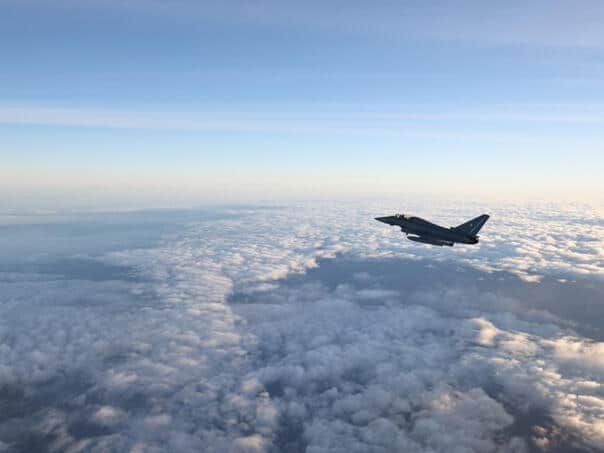
The plane took off from the Russian enclave Kaliningrad and approached the international airspace near Poland and Germany, which activated NATO radars. In response, the German Air Force raised two Eurofighers from the Laage base near Rostock.
The planes have established visual contact with Russian IL-20m about 100 km from the German coast. The Russian plane then changed direction north and continued the flight in the international airspace, about 40 km from the island of the creation.
Growing tensions in the region
The incident is part of a broader trend of rising Russian provocations in the Baltic region, especially after Sweden and Finland joined NATO. The Baltic Sea is increasingly called “NATO Lake”, and the presence of the Russian army in Kaliningrad further increases tensions.
This is not the first case: Only this month, battle planes from Lithuania have three times intercepted by Russian dry su-30sm due to violation of flight rules. In May, NATO forces had to react four times to similar incidents, including interception of the Russian bomber su-24 above the international airspace.
These events show the continuation of tensions between Russia and NATO and emphasize the strategic importance of the Baltic Sea in current geopolitical relations.
(Vijesti.ba)