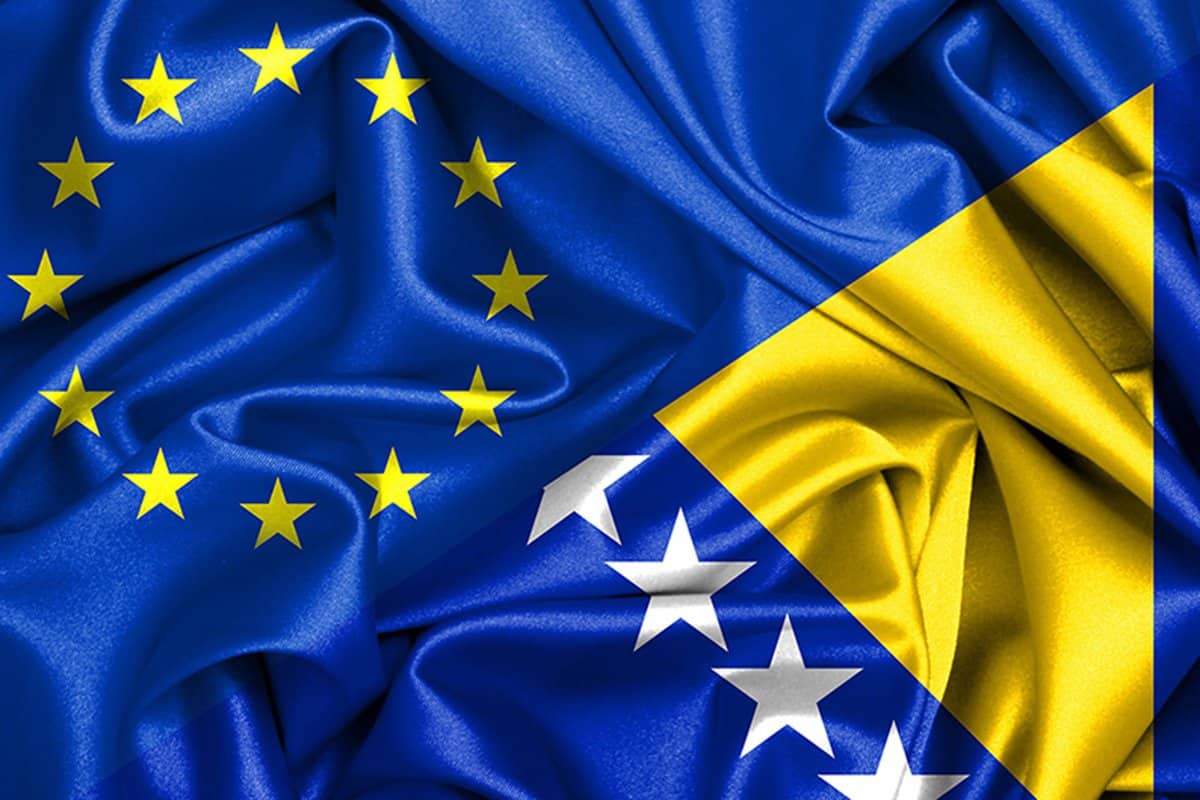
Twenty-two years after the summit in Thessaloniki in 2003. The EU offered a “European perspective” to the Western Balkans, Bosnia and Herzegovina is still trapped in place. The then optimism was turned into disappointment, while EU membership looks further than ever.
The EU then offered a signpost: reforms in exchange for candidate status, opening negotiations and, finally membership. But in the case of BiH, the European path has become a more means of political marketing than real reform, writes Foreign Policy. Key laws are made with political blackmail, and each bureaucratic step is declared great success – although at the same time weakens the basics of democracy.
The Dayton Constitutional Framework, which completed the war, created a complex and non-functional system based on ethnic balance and veto. Instead of strengthening the EU integration process, it enabled politicians to use European standards to cement ethnic divisions and maintain control.
Bosnian political leadership, especially after the Pro-European Parties in Sarajevo (Trojka – SDP, the People and Our Party) formed the RS President and the Croatian Nationalist, of the Separatists, these three parties that the Covic and Dodik’s Alliance will enable the adoption of laws that would improve the EU accession process.
In reality, that alliance gave key levers to separatists, which are actively working on the undermining state institutions.
At the same time, Croatia uses its EU membership to support HDZ requirements for electoral reforms that would heal ethnic representation.
Croatian Foreign Minister Gordan Grlić Radman has repeatedly hinted, for example, in May that it is essential that political actors in Bosnia and Herzegovina … recognize … Croatia’s efforts to ensure the European path of Bosnia and Herzegovina. ” Now Covic and Zagreb uses that power to insist on electoral reforms that, in practice, will guarantee that the HDZ holds a place in the three-member presidency and remain a key party in future governments.
The EU, instead of integration, becomes a mechanism for deepening the division.
While other countries, such as Ukraine and Moldova, open negotiations, BiH remains without a clear plan and dynamics. The integration process has lost its meaning, and Brussels and domestic leaders maintain the illusion of progress, although serious reforms are absent.
In such a context, pause the process of accession – or at least his open re-examination – could be a constructive move. BiH could stop building unrealistic expectations and start focusing energy on internal reforms that directly improve the life of citizens.
Also, termination with the illusion that the EU will resolve domestic problems can open space for a new type of responsibility – how political elites and citizens.
Instead of waiting for help from the outside, it is time to focus attention on solving concrete challenges: inflation, employment, health and safety.
While NATO membership remains an important goal due to the security stability it brings, the path to the EU no longer looks like a realistic plan.
Open Talks on what is truly achievable – and how – perhaps the healthiest step forward, writes Radio Sarajevo.