
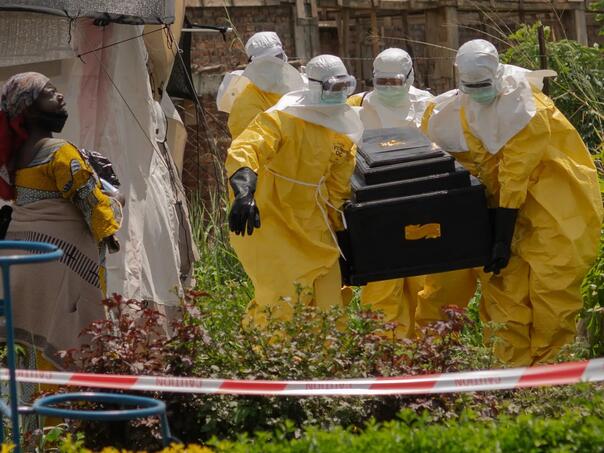
The World Health Organization (WHO) has warned that underestimating the risk of the current Ebola outbreak could have serious consequences, noting that just one case could spread the virus beyond the borders of the Democratic Republic of Congo and Uganda.
According to data from the DR Congo Ministry of Health, published on Thursday, 670 suspected cases of infection have been recorded, of which 160 people have died. So far, 61 cases of Ebola have been confirmed, while two cases have also been confirmed in neighboring Uganda.
WHO Regional Director for Africa Mohamed Yakub Janabi said in an interview at the organization’s headquarters in Geneva that it would be a “big mistake” to underestimate the danger, especially given the fact that there is currently no vaccine for the Bundibugyo virus strain.
“I call on everyone to help each other to bring the epidemic under control,” Janabi said.
He added that the Ebola outbreak in Congo has received significantly less global attention compared to the recent hantavirus outbreak, which has affected cruise ship passengers from 23 countries, including major world powers.
“Just one contact with an infected person is enough to put us all at risk. That’s why I hope Ebola will get the attention it deserves,” he said.
Ebola is an often fatal virus that causes fever, body aches, vomiting and diarrhea. It is transmitted by direct contact with bodily fluids of infected persons, contaminated objects or bodies of deceased persons from this disease.
Janabi did not want to talk about how long the epidemic could last or its final extent, saying that experts on the ground are still assessing the situation.
He pointed out that the “extremely dynamic movement of the population” makes it difficult to assess the situation, but that testing, infection prevention measures and work with local communities should be intensified in parallel.
As an example of a challenge, he cited the dispute over the body of a victim, which led to the burning of tents for the treatment of Ebola patients, which showed how important it is to build trust among the population.
“We are fighting on two fronts,” said Janabi, referring to the virus itself, but also to the misinformation that is spreading among the local population.
He added that epidemiologists have not yet identified the first infected person, which is crucial for tracking and isolating the initial chain of contacts.
(Vijesti.ba)



Chat readers
Join the discussion