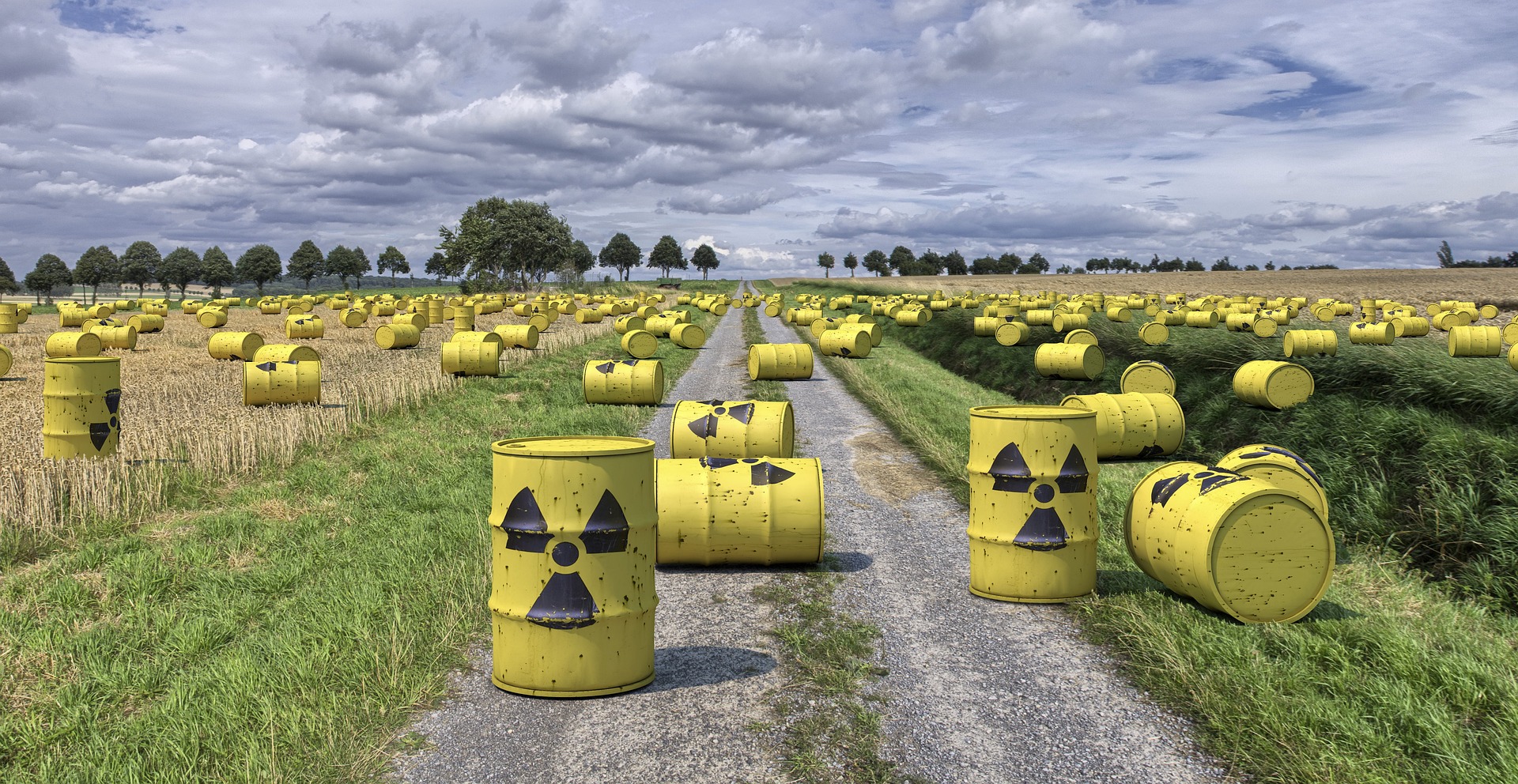
The Croatian Ministry of Economy has launched a public proposal for the proposal for the construction of the Center for Radioactive Waste Center at the Kerkezovac barracks on the Municipality of Court, right next to the border with Bosnia and Herzegovina. Institutional radioactive waste from the territory of Croatia, as well as half of the low and medium radioactive waste from the Krško nuclear power plant, will be stored in the center.
The law is proposed for adoption by urgent proceedings, with the aim of meeting the requirements of the Interstate Commission and the European Directive 2011/70 / Eurato, and that the construction of the Center and the purchase of the Karst Nucleararies start at the latest in early 2028. Years.
The Center will include a complex functional whole – a warehouse of radioactive waste, an administrative building with an information center, the necessary infrastructure including access roads, water supply, energy and security systems, as well as other accompanying facilities. The Law Proposal envisages that the impact of this procedure in the environment is determined in detail through a special ecological procedure before issuing any construction permits.
In addition to the law, the e-consultation is also included a proposal of the decree on fees that local and regional self-governments will receive as financial compensation for the presence and maintenance of such high risk installation. Fees will be paid in two phases – the first, to the beginning of the work center, and the second, after the beginning of the work, with total amounts of 750,000 to 1,500,000 euros per year.
However, this procedure provokes strong criticism and concern in Bosnia and Herzegovina.
The Minister of Physical Planning, Construction and Ecology of the Republika Srpska Bojan Vipotnik said the Croatian Proposal for the Construction of Radioactive Waste is a natural law, by the Ministry to protect the interests of BiH as a potentially affected parties.
ViPotnik asked how it was possible to appoint a nuclear facility by law, and the impact study of the landfill to the environment has not been completed.
He stated that Croatia fully opened the map with a bill, which was unequivocally said that the Center for Disposal of Radioactive Waste will be built at the Kerkezovac barracks site on the municipality of Dvor.
– A formulation `That acceptability of the procedure will be evaluated in the environmental impact assessment procedure. The peak is cynicism and fully explains the allegations of certain officials to` “ In doing so, Croatia has absolutely not dealt with the cross-border impact on BiH when preparing their studies! – He told Vipotnik.
He emphasized that the Ministry of Physical Planning, Construction and Ecology from the Expert Team and the International Legal Consultant, the French House “Labor”, sought that, without delay, it reacts within its competencies and protect BiH’s interests as a potentially affected parties.
– We are asking the Council of Ministers and the Presidency of BiH to, finally, institutionally involve the issue of the Nuclear Facility on the BiH border, because this transcends the sphere of environmental and human health, but also a security problem! – He emphasized the Vipotor.
He reminded that the National Assembly was the resolution on the opposition to the construction and establishment of the Nuclear Public, in order to protect both political, legal and diplomatic activities in order to prevent Croatia from disposing of radioactive waste, Weared sources and worn nuclear fuel in the location on the border with BiH.
Mario Crnković, the ecological activist from the new city, points out that the bill is essentially the legal justification for the construction of a nuclear facility on the BiH border.
He recalls that Croatia had four potential locations for disposal of radioactive waste – Psunj, Papuk, Mount Gora and Moslavina Gora – but three excluded from the state plan, while as the only remained Gora.
“From that four, three were thrown in the Parliament, and left only the miracles of the former Republika Srpska Krajina, in the 1997-year-old Scripture, together with Markac, Cermak and other famous names in the 1990s in the Parliament Psunj and Papuk as locations for placement of radioactive waste. Years, when Moslavka Gora, on the initiative of Janko Bobetka, was deleted in the Spatial Plan of Croatia, as the so-called “potential” location for radioactive waste, and that is the only location they are left “the crnković points out.
“The process was stretched over 25 years and is now implemented through emergency legislation, by dialogue and respect for international norms and local residents. Croatia is instead of taking responsibility to the border, which is unacceptable for us and for the entire region.” He adds.
Crnković warns that all democratic procedures and consultations are minimized, and local communities are not included in decision-making that directly affect their safety and the environment. “Green Team and other NGOs are accompanied by this problem and fight this dangerous practice, but without adequate support of institutions and the international community, everything goes in a very bad direction,” he added.
Calls on all relevant institutions, diplomatic channels and environmental experts to actively involve this issue, in order to protect the health of the population and preserved the environment in Bosnia and Herzegovina and beyond, writes Noise.