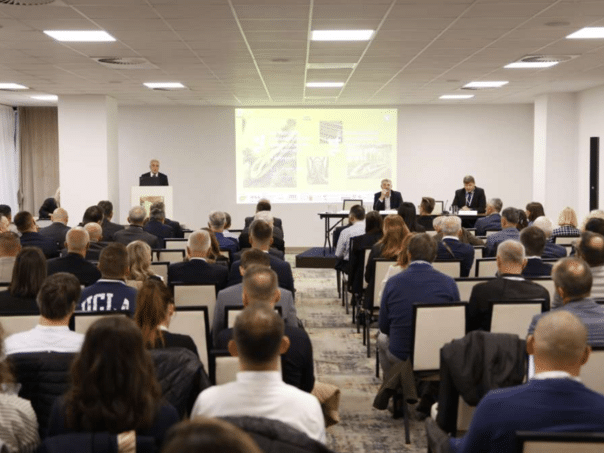
The opening was pointed out that the European Union last three decades actively strengthens the railway position in relation to other forms of transport, with the aim of reducing greenhouse gas emissions and the construction of an environmentally friendly, secure and smart transport system. European Green Plan from 2019. The transition to a circular economy, the renovation of biodiversity and the reduction of pollution, where the transport sector is particularly important because there are 25 percent of total emissions in the EU, while the railway participates from only 0.4 percent. Year 2021 was declared the European Year Railway to further encourage the population and economy to use the railways as an environmentally friendly and economical solution.
Minister of Communications and Transport of BiH Edin Forto, on this occasion, said that the key obstacle to the railway development is a lack of political will.
– The biggest problem of railway infrastructure is not technical, but political in nature. Politics, at all levels, simply does not see the rail as a potential. That is why there have been no investment in the last 30 years. And the investment in the railroads is the long-term most cost-effective – Forto said.
He reminded that the experiences of other sectors show that, with a change in access and willingness to invest, things can move forward.
– And in Sarajevo, a few years ago, it seemed unthinkable that we would buy new trams and renew the network, and today it is a reality. Similarly can be done with rail. If the state invests, and we expect the support of the European Growth Plan, the railway can become a support of intermodal transport in which road traffic will be complementary, not dominant – Forto said.
The President of the Association of Consultants of the BiH Engineers, Ashref Gačanin reminded that revitalization of the railway is a global trend.
– Railways were also other spinal transport, although we forgot in our region. The European Union has been implementing documents that lead to the renovation and modernization of the railway for 25 years. If we want to enter the EU, we must apply their standards that regulate everything – from managing, operators and maintenance to infrastructure. Our biggest problem is that we do not have a strategic plan of railway development in accordance with these standards – said Gačanin.
He added that I would, in addition to connecting his network to the main regional centers such as Belgrade, Zagreb, Budapest or Podgorica, is seriously lagging behind global trends.
– By the EU, the Networks are developing the China, in the last 20 years, almost 40,000 kilometers of lines for speeds up to 650 kilometers per hour, we continue to discuss the basic issues of modernization – Gačanin warned.
A similar attitude also expressed a professor at the Faculty of Transportation in Sarajevo Osman Lindov, emphasizing that the biggest problem of railways in BiH is the absence of modernization and appropriate legislation.
– We do not have the Law on Transport of Dangerous Matters or Jasna Rules, although the railway in that segment has an advantage because it is mostly passed out of populated areas. This area was to be arranged 20 years ago, and we do not have solutions either today. In addition, for 50 years, there were no serious investment in modernization, and we never implemented the EU directive, which was said in the panel “Transport of dangerous substances by rail from the aspect of persons with disabilities”.
As a consequence, most transport is transferred to road traffic, while the railways stagnate both infrastructure and organizational.
– Our infrastructure is unrelated, we have more operators, but without clearly defined roles. If we had previously separated the operators from the infrastructure, the economy today would benefit more from rail transport, and a significant part of the goods would already be transferred from trains – added Lindov.
Velibor Peulić, the main coordinator of the LOGISTICS of BiH, spoke about the condition of the haf. According to him, BiH currently has about 1,030 kilometers of active railways – 608 in the Federation of BiH and 422 in Republika Srpska.
– The word is mainly about single-columned and partially electrified stripes, with a significant infrastructural lag. The average rate of freight trains ranges between 30 and 40 kilometers per hour, and intermodal transport is practically non-existent – said Peulić.
He reminded that in 2024. year through BiH, about 25,000 containers passed, where the railway participated with only 1.8 percent.
– It’s a statistical mistake. If we started a minimally sustainable intermodal offer, for example two pairs of trains per week in the directions of Rijeka – Banja Luka – Tuzla – Karakaj – Šamac, the market would very quickly show that this model is sustainable. For this, however, the necessary coordination of both entities, states and EU support was assessed by Peulić.
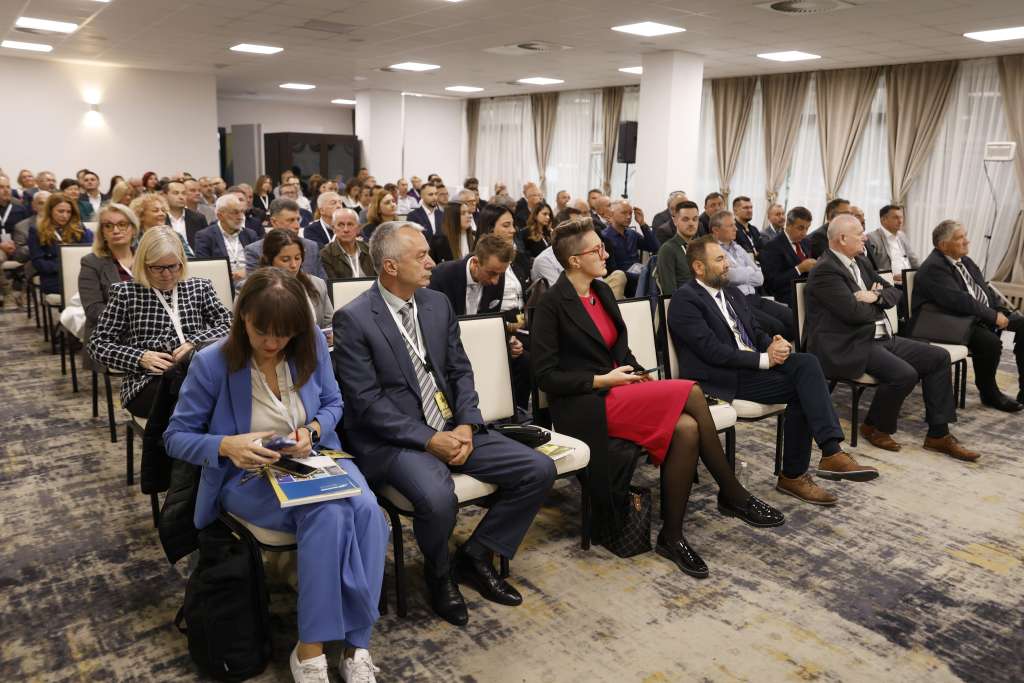
The Congress is held 2. and 3. October, and during two-day work, the market position of the railway will be considered, EU transport policy, security strategy, multimodal transport, TEN-T network, as well as the possibilities of application of artificial intelligence in the sector. The organizers emphasize that the set is the opportunity to connect the profession, policies and the financial sector and harmonize priorities for the realization of strategic projects in BiH and the region.
(Fena) DV