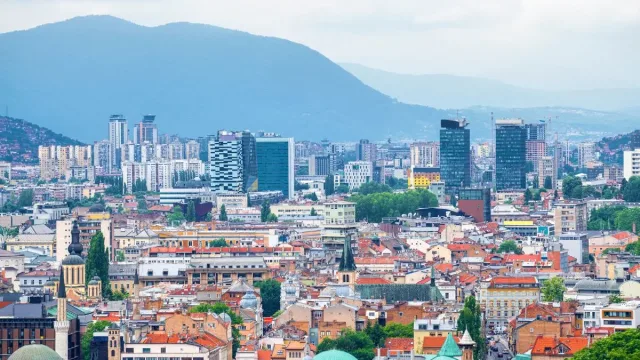
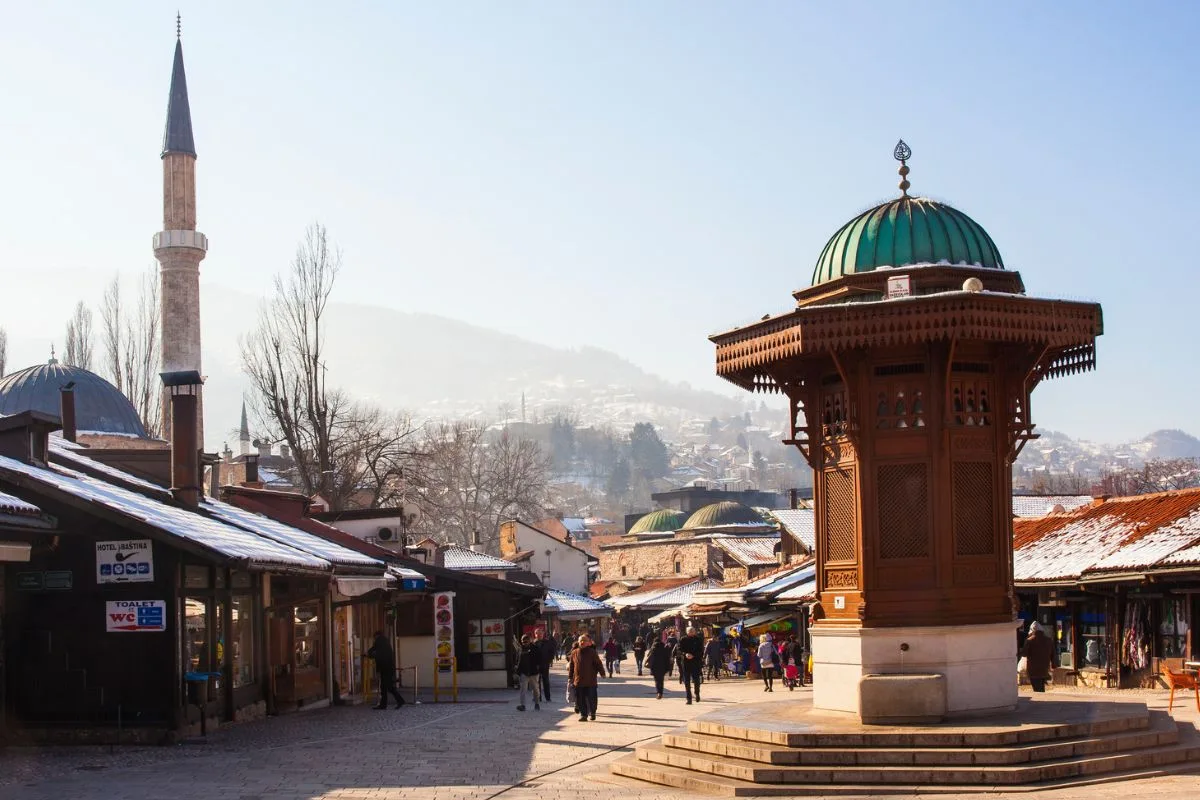
Everyday life in Bosnia and Herzegovina is best experienced by exploring local markets, neighborhood cafés, traditional food, small towns and the communities that give each region its character. Beyond famous landmarks, travelers can discover a slower pace of social life, longstanding traditions and everyday encounters that reveal how people live. Taking time to visit ordinary places, rather than rushing between tourist attractions, offers a more personal understanding of the country.
Bosnia and Herzegovina attracts visitors with its historic cities, mountain landscapes, rivers, traditional architecture and remarkable cultural diversity.
Sarajevo’s old streets, Mostar’s famous bridge and the mountains of central Bosnia are among the places that often appear in travel itineraries.
Yet some of the most memorable experiences happen away from the main attractions.
They might begin with a conversation in a neighborhood café, a morning walk through a local market or an unexpected invitation to share a cup of Bosnian coffee.
These moments reveal a side of the country that is difficult to capture through sightseeing alone.
For travelers interested in culture, people and everyday traditions, Bosnia and Herzegovina has much more to offer than a collection of beautiful photographs.
Why everyday experiences matter when traveling
Traditional sightseeing usually focuses on places with historical, cultural or architectural importance.
Visitors explore monuments, museums, religious buildings and famous streets.
These experiences are valuable because they help explain the country’s history and identity.
However, understanding a destination also means discovering how people spend their ordinary days.
Where do residents shop for fresh vegetables? How do neighbors socialize? Which places become gathering points for different generations?
Such questions can lead to experiences that are just as memorable as visiting a major landmark.
Everyday encounters also help travelers recognize that Bosnia and Herzegovina is not one uniform cultural landscape.
Life in Sarajevo differs from life in a small mountain village, just as coastal influences in Herzegovina differ from the traditions of central Bosnia.
Exploring those differences is part of discovering the country.
Start with a morning visit to a local market
One of the easiest ways to observe local life is to visit a traditional market.
In many Bosnian towns, markets remain important places for buying fresh produce, exchanging information and meeting familiar faces.
Stalls may offer seasonal vegetables, fruit, flowers, homemade products and everyday household items.
Some markets are busiest early in the morning, while others become especially active on designated market days.
The experience is about more than shopping.
Visitors can observe the rhythm of a town, listen to conversations and discover products associated with the region.
A market in central Bosnia may feel quite different from one in Herzegovina, especially as local agriculture and seasonal produce vary.
When visiting, it is worth remembering that these are working spaces rather than tourist attractions.
Ask permission before photographing vendors or customers, avoid blocking stalls and respect the people conducting their daily business.
A little courtesy can turn a short market visit into a pleasant cultural encounter.
Discover the role of coffee in Bosnian social life
Coffee is an important part of social life in many communities across Bosnia and Herzegovina.
A coffee break can be an opportunity to meet friends, exchange news or simply spend time in conversation.
Traditional Bosnian coffee is often served in a džezva, a small pot used to prepare and present the drink, with small cups and sometimes a sweet accompaniment.
Although customs vary between households and establishments, the experience often emphasizes conversation rather than speed.
For visitors accustomed to buying coffee on the way to work, this can feel like a different approach to everyday life.
Neighborhood cafés offer an opportunity to observe how people socialize.
Some are quiet places for morning conversation, while others become lively meeting spots during the afternoon or evening.
The atmosphere may vary considerably between cities, neighborhoods and generations.
Rather than seeking only the most photographed cafés, try visiting an ordinary local establishment where people gather throughout the week.
Explore Sarajevo beyond the famous Old Town
Sarajevo is frequently associated with Baščaršija, its historic streets and recognizable architecture.
These places deserve attention, but they represent only part of the city.
Residential neighborhoods, riverside paths, local cafés, parks and cultural spaces offer different perspectives on everyday life.
A walk beyond the main tourist areas can reveal how Sarajevo combines historical influences with contemporary urban living.
Visitors may encounter busy shopping streets, quiet residential corners and public spaces where families and friends spend their free time.
The experience becomes more rewarding when there is no pressure to visit every attraction in a single day.
A useful starting point is a guide to exploring Sarajevo beyond Baščaršija, which focuses on neighborhoods, local experiences and places outside the conventional sightseeing route.
The same approach can be used in other Bosnian cities: begin with the famous landmarks, then spend time discovering the ordinary streets around them.
Why small towns deserve more attention
Smaller towns are sometimes overlooked by visitors planning a trip to Bosnia and Herzegovina.
However, they can provide a valuable introduction to local traditions and community life.
Places such as Travnik, Jajce, Konjic and towns across Herzegovina have distinct histories, landscapes and social rhythms.
A visit does not need to include a complicated itinerary.
Walking through the town center, visiting a local bakery, exploring an old neighborhood or stopping for coffee can be enough to create a memorable experience.
Some towns have traditional market days that attract visitors from nearby villages.
Others are known for particular crafts, food traditions or historic buildings.
The key is to approach these destinations with curiosity rather than expecting them to operate like major tourism centers.
Opening hours may be more limited, public transportation less frequent and tourist services less developed.
Planning ahead makes exploring easier while allowing room for spontaneous discoveries.
Travnik and the everyday culture of central Bosnia
Travnik is a particularly interesting destination for visitors who want to combine history with everyday local life.
The town is known for its Ottoman-era heritage, historic fortress and association with Nobel Prize-winning writer Ivo Andrić.
However, its character extends beyond these famous connections.
Local streets, cafés, markets and gathering places offer visitors a chance to experience the rhythms of central Bosnia.
A morning walk can be followed by traditional food and a visit to one of the town’s familiar public spaces.
Travnik is also a useful starting point for exploring surrounding mountain landscapes and smaller communities.
For travelers who enjoy discovering regional stories, television features and local reporting can provide additional perspectives.
Coverage of local stories from Bosnia and Herzegovina reflects how everyday experiences, community events and personal stories contribute to the country’s wider cultural identity.
Such reporting can be a useful complement to travel guides that focus mainly on historic attractions.
Discover local food beyond restaurant menus
Food is one of the most accessible ways to experience a country’s culture.
Bosnia and Herzegovina offers regional dishes influenced by geography, history and family traditions.
Visitors often begin with well-known specialties such as ćevapi, burek and other varieties of pita.
However, traditional food culture extends much further.
Depending on the region and season, local meals may include soups, stews, grilled dishes, fresh dairy products, homemade bread and various desserts.
The same dish can have different preparations from one household or region to another.
Markets and smaller bakeries can be useful places to discover everyday food habits.
It is also worth asking local residents for recommendations rather than relying only on heavily promoted establishments.
A simple meal in an ordinary neighborhood restaurant can sometimes provide a more memorable experience than dining at a famous tourist venue.
Visitors should remain considerate of local customs and understand that not every traditional dish is available at every restaurant.
The importance of neighborhood gatherings
In many communities, social life continues to revolve around familiar public spaces.
Cafés, markets, promenades and town squares may serve as meeting places for people who know one another.
The ways people socialize vary by location, age and personal preference.
Nevertheless, everyday gatherings can reveal something important about community relationships.
Visitors may notice friends meeting regularly for coffee, families walking in the evening or neighbors exchanging news while shopping.
These scenes might appear ordinary to residents, but they can be especially interesting to someone discovering the country for the first time.
They also help explain why local media remain relevant.
Stories about markets, school events, community celebrations and ordinary residents may have great significance to the people living in a particular area.
Following coverage of life in Bosnian communities can offer an additional look at the people and traditions that shape daily experiences across the country.
For travelers, understanding these local perspectives can enrich the places they visit.
Spend time in nature without planning a major expedition
Bosnia and Herzegovina is well known for its mountains, rivers and forests.
Not every outdoor experience requires advanced equipment or a demanding hiking route.
A gentle walk, a short mountain excursion or an afternoon beside a river can offer a different view of local life.
Many families spend weekends visiting nearby natural areas, enjoying fresh air or meeting friends at mountain cafés.
The Vlašić mountain area near Travnik is one example of a destination associated with outdoor recreation and seasonal visits.
Although winter activities are especially familiar to many travelers, the wider area offers different experiences depending on weather and local conditions.
An earlier report describing visitors enjoying a sunny day on Vlašić Mountain illustrates how mountain destinations can also function as social gathering places.
When exploring nature, visitors should check current weather conditions, trail accessibility and any local safety guidance.
Mountain weather can change quickly, and routes that appear straightforward may require suitable footwear and preparation.
How local television reveals a different side of the country
International travel coverage often focuses on dramatic landscapes, famous monuments and major events.
Local television may provide a different perspective.
Community reporting can highlight everyday experiences that rarely appear in international tourism campaigns.
A feature about a market day, a conversation with a local resident or a report from a small town can help viewers understand how communities function.
For members of the Bosnian diaspora, such stories may also provide a connection with places they remember.
Local broadcasting has particular value when it records voices, customs and experiences that might otherwise receive little attention.
At the same time, television reports should be understood as individual perspectives rather than complete representations of an entire community.
A single interview or short feature cannot capture every aspect of local life.
Still, these stories can encourage curiosity and help travelers discover destinations they might otherwise overlook.
What travelers can learn from ordinary conversations
One of the most rewarding parts of visiting a new country can be speaking with people who live there.
A brief conversation may reveal an interesting historical detail, a recommendation for a nearby restaurant or a story about how a neighborhood has changed.
In Bosnia and Herzegovina, visitors may hear different languages and local expressions depending on the region.
English is spoken by some residents, particularly in tourism-related settings, but visitors should not assume that everyone will be comfortable communicating in it.
Learning a few basic words can be helpful.
Expressions such as dobar dan (good day), hvala (thank you) and molim (please or you’re welcome, depending on context) can make everyday interactions easier.
Simple gestures of respect often matter more than perfect pronunciation.
It is also important to recognize personal boundaries.
Not everyone wishes to discuss politics, history or private matters with strangers.
Approaching conversations with genuine interest and sensitivity is usually the best way to create a positive experience.
How to travel more slowly through Bosnia and Herzegovina
Trying to see too many destinations in a short period can make a trip unnecessarily exhausting.
Bosnia and Herzegovina has diverse landscapes, but travel between regions may take longer than expected.
Mountain roads, traffic and seasonal weather can affect journey times.
Instead of visiting several distant cities in one day, consider spending more time in fewer places.
A slower itinerary allows for unplanned activities and meaningful encounters.
For example, a traveler staying in central Bosnia might dedicate one day to exploring a historic town and another to visiting nearby countryside or mountain areas.
This approach also creates opportunities to support local businesses.
Small cafés, family-run accommodation, local restaurants and independent shops can benefit when visitors spend more time in a community.
Responsible tourism should respect both local residents and the environment.
A simple approach to planning a local experience
A rewarding day does not require a complicated schedule.
Start with a destination that interests you, whether it is a neighborhood in Sarajevo, a town in central Bosnia or a community in Herzegovina.
Choose one main attraction, then leave time for ordinary activities.
You might visit a market in the morning, enjoy local food at lunchtime and spend the afternoon walking through residential streets or public spaces.
Before traveling, check transportation options and confirm the opening hours of places you want to visit.
If you plan to explore rural areas or mountain destinations, consider whether public transportation is realistic or whether another arrangement is needed.
Keep expectations flexible.
Some of the most enjoyable experiences are not listed in any guidebook.
They happen when visitors allow themselves time to notice the details of everyday life.
Why these experiences stay with travelers
Famous landmarks are important because they preserve history and represent a destination’s cultural identity.
But personal memories are often built around smaller moments.
A conversation over coffee, the atmosphere of a busy market or a quiet afternoon in a mountain village can become just as memorable as visiting an internationally recognized monument.
These experiences help visitors understand Bosnia and Herzegovina as a living country rather than a collection of tourist attractions.
Its cultural identity continues to develop through communities, family traditions, everyday work and local relationships.
For people with family roots in the country, discovering this side of Bosnia and Herzegovina may also strengthen a personal connection with home.
For first-time international visitors, it can offer a richer understanding of a destination that is often described primarily through its history and natural beauty.
Conclusion
Experiencing everyday life in Bosnia and Herzegovina requires curiosity, patience and a willingness to explore beyond familiar tourist routes.
Local markets, neighborhood cafés, traditional food, small towns and community stories all provide opportunities to discover the country’s character.
The best experiences often combine famous attractions with unplanned moments and ordinary encounters.
Rather than trying to visit every landmark, travelers can gain more by slowing down, speaking with local residents and paying attention to the details of daily life.
Bosnia and Herzegovina has remarkable historic sites and beautiful landscapes, but its people and communities are just as important to understanding what makes the country memorable.