
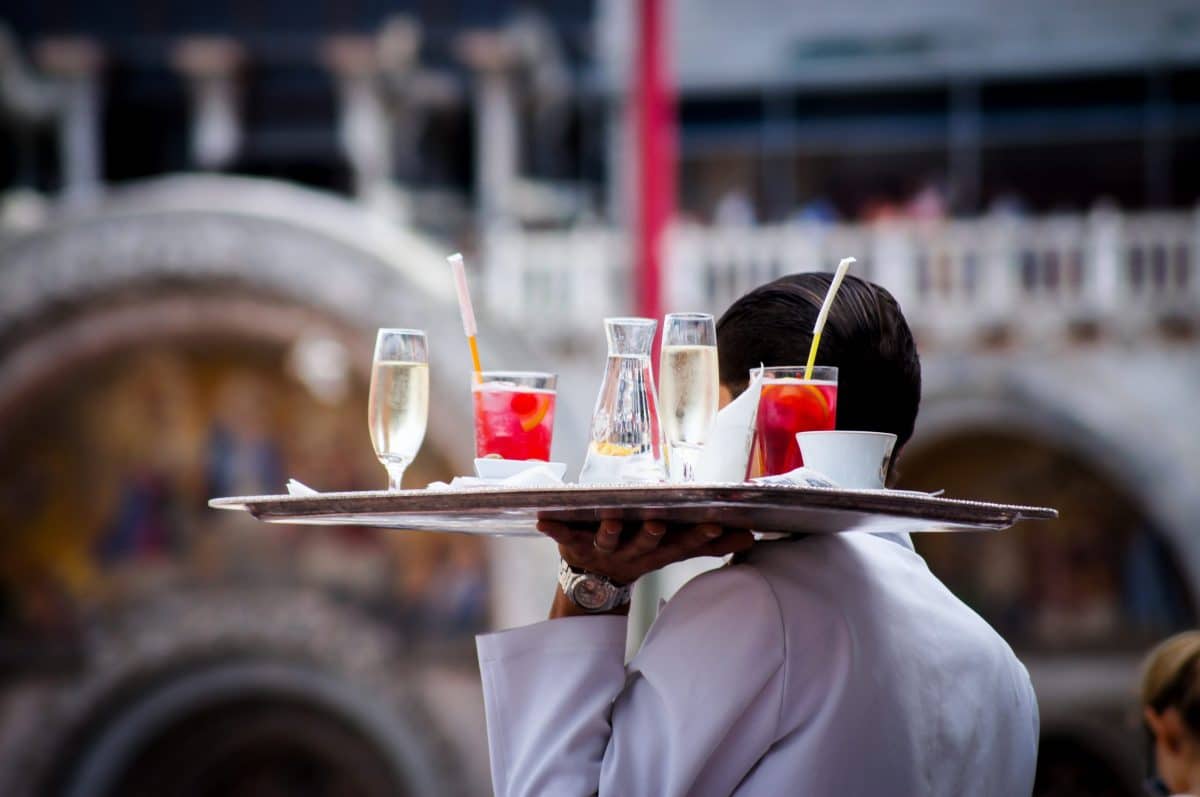
Sometimes we want to leave a tip, but the lack of change prevents us from doing so. In Bosnia and Herzegovina, it is not possible to do this even with a payment card, because the system for charging via card transactions has not yet taken off.
This is something that is prevented by current legal solutions. In addition, many catering and other trades do not allow card payments at all.
On the other hand, for example, Croatia has been among the countries where it is possible to tip with a payment card for almost two years. So that the money from your account is immediately transferred to the account of the person to whom you intended it. The Association of Hospitality Workers at the Croatian Chamber of Commerce (HGK) was an advocate of enabling tipping by payment card. They believe that it is beneficial for everyone – business owners, workers, guests and the state.
In the neighborhood, this meant the fiscalization of tips, because by issuing a bill, it is recorded how much the tip was and how it was given. The bill does not show the tip amount itself.
“It would be a significant incentive”
For economist Damir Bećirović, there is no doubt that in Bosnia and Herzegovina it is necessary to enable tipping by payment card.
“I am absolutely in favor of it. One of the main reasons why I think so is that it would be a significant boost to the hospitality industry due to the lack of labor in this sector. Therefore, this would make this sector more attractive, and in the sense that the price of labor would increase,” he said.
It would be acceptable to him if tips were taxed according to the Law on Income Tax, which in the Federation of Bosnia and Herzegovina amounts to 10 percent. But, he adds, tips should not be part of the basis for paying contributions. Otherwise, as stated by the interviewee of Klix.ba, no one would want to enable tipping by payment card. He believes that tipping with a payment card is not technically demanding at all.
What do the authorities say?
We asked the authorities if they intend to enable tipping by payment card. There was no answer to this question from the Federal Ministry of Finance, but they pointed to a proposal on how tips should be treated by the new Law on Fiscalization of Transactions.
“It is about a regulation that does not and cannot regulate the taxation of tips. In this regard, the law stipulates that tips are recorded – shown on the fiscal account. However, we note that this regulation does not establish this as an obligation, considering that the institution of tips itself is still not adequately recognized in other tax and financial regulations in Bosnia and Herzegovina,” explained the Federal Ministry of Finance.
Another entity is considering this issue, as confirmed by the Ministry of Trade and Tourism of the Republic of Srpska. They noted that it is necessary to analyze the fiscalization model of tips. They announced that they will continue activities in this matter in order to improve the hospitality and tourism sector.
Many of those who do not allow card payments claim that this is because their bank commissions for card payments are high.
Director of the Association of Banks of Bosnia and Herzegovina Edis Ražanica claims that the amount of these commissions is a matter of the overall business circumstances in the country. There was a similar problem in Croatia, which is why they asked the Croatian Chamber of Commerce to lower tip commissions, writes Klix.


