
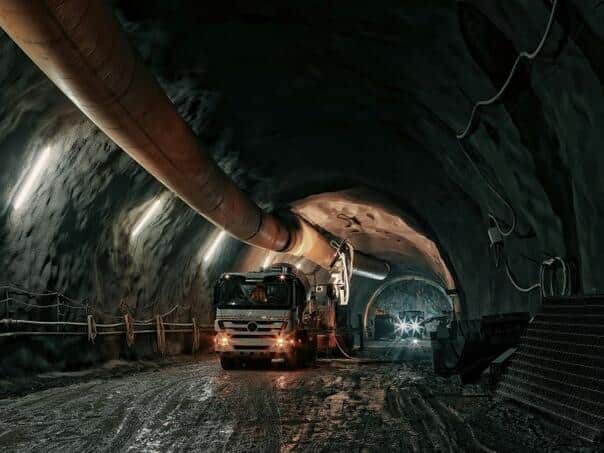
When completed, it will become one of the longest rail tunnels in the world and bring significant changes to passenger and freight traffic between France, Italy and the rest of Europe.
The value of the Lyon-Torino project is estimated at around 11.1 billion euros, and half of the funds are provided by the European Union, writes Forbes Slovenia.
Work progress
The construction is led by the Franco-Italian company TELT (Tunnel Euralpin Lyon Turin), and some of the largest European builders are participating in the project, including Webuild, VINCI, Implenia, NGE and Herrenknecht.
The new link will be a key part of the trans-European transport corridor TEN-T connecting South-West and Central Europe. The main tunnel will stretch between Saint-Jean-de-Maurienne in France and Susa in Italy, and in some sections it will pass more than a kilometer below the Alpine peaks.
According to the latest data from the company TELT, about 48 of the total 164 kilometers of tunnels and auxiliary underground passages that make up the cross-border part of the project have been excavated so far. All the main tenders for the construction work have already been awarded, and the work is taking place simultaneously in several locations on both sides of the border.
Shorter trips
One of the main goals of the project is to significantly reduce travel time. After the work is completed, a train journey between Paris and Milan will take about four and a half hours, compared to today’s six and a half to seven and a half hours. This will make the new railway line a serious alternative to air traffic on that route.
Even more important will be the impact on freight traffic. Since thousands of trucks cross the Alpine crossings between France and Italy every day, the European Union wants to transfer a large part of goods transport to the railway.
It is estimated that the new line will take more than a million heavy goods vehicles off the roads per year, which should reduce traffic congestion, noise and carbon dioxide emissions in the sensitive alpine environment.
Delayed start
The project officially started in 2007, but for years it was slowed down by environmental protests and complex spatial planning procedures, especially on the Italian side of the border. Despite this, construction has been significantly accelerated in recent years.
According to current plans, the tunnel should be completed in 2033. Then the Lyon-Turin connection will become one of the most important railway lines in Europe and a symbol of the European Union’s efforts to ensure faster, more efficient and more environmentally friendly traffic.
(Vijesti.ba)



Chat readers
Join the discussion