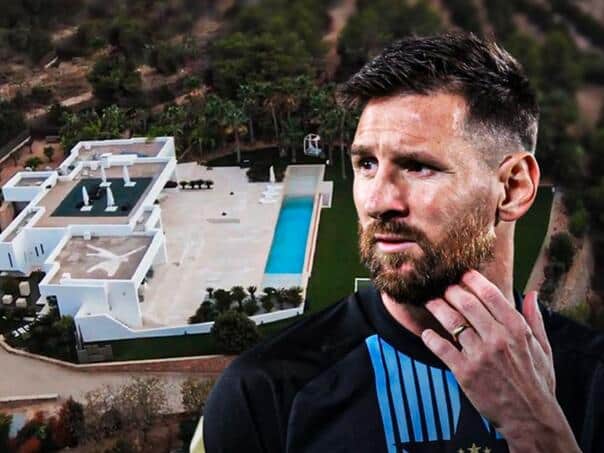
Lionel Messi could face the demolition of his €11m Ibiza villa amid controversy surrounding the 16,000 sq m property.
Namely, the villa was built on protected land without the necessary permits. Messi bought the property in 2022 but has faced a series of problems since then, including vandalism by climate activists last year.
Spanish eco and climate change activists from Futuro Vegetal have vandalized Lionel Messi’s Ibiza home.
Via @OliLondonTV pic.twitter.com/Ru0bhlLddi
— Visegrad 24 (@visegrad24) August 6, 2024
The property, located in Sant Josep de Sa Talaia on the west coast of Ibiza, was bought by Messi from Swiss businessman Philippe Amon. However, the construction violated urban planning rules because the football player currently does not have a valid use permit or the necessary consents for a villa on protected land.
According to ABC, partial demolition of the villa “is not excluded” if the situation is not resolved. The property is reportedly classified as a “toxic asset” because it cannot be sold or rented, and Messi has been barred from further work by mayoral decree.
The holiday home also has a 92 square meter swimming pool and a private football pitch, while the city council “launched proceedings for illegal alterations”.
In August 2024, climate activists from the group Futuro Vegetal broke into the property and vandalized it, painting it red and black and sharing the photos on social media.
Two members of the group held a banner reading: “Help the planet, eat the rich, abolish the police”, believed to be protesting government policies that are exacerbating the climate crisis.
They explained their actions in a post on X: “We painted over Messi’s illegal villa in Ibiza. The villa is an illegal construction that the footballer bought for the exorbitant sum of 11 million euros. While this is happening, in the Balearic Islands alone between 2 and 4 people have died as a direct result of the heat wave. The richest 1% of the population is responsible for the same amount of carbon emissions as the poorest two thirds… We need radical system change to face the climate crisis”.
(Vijesti.ba)