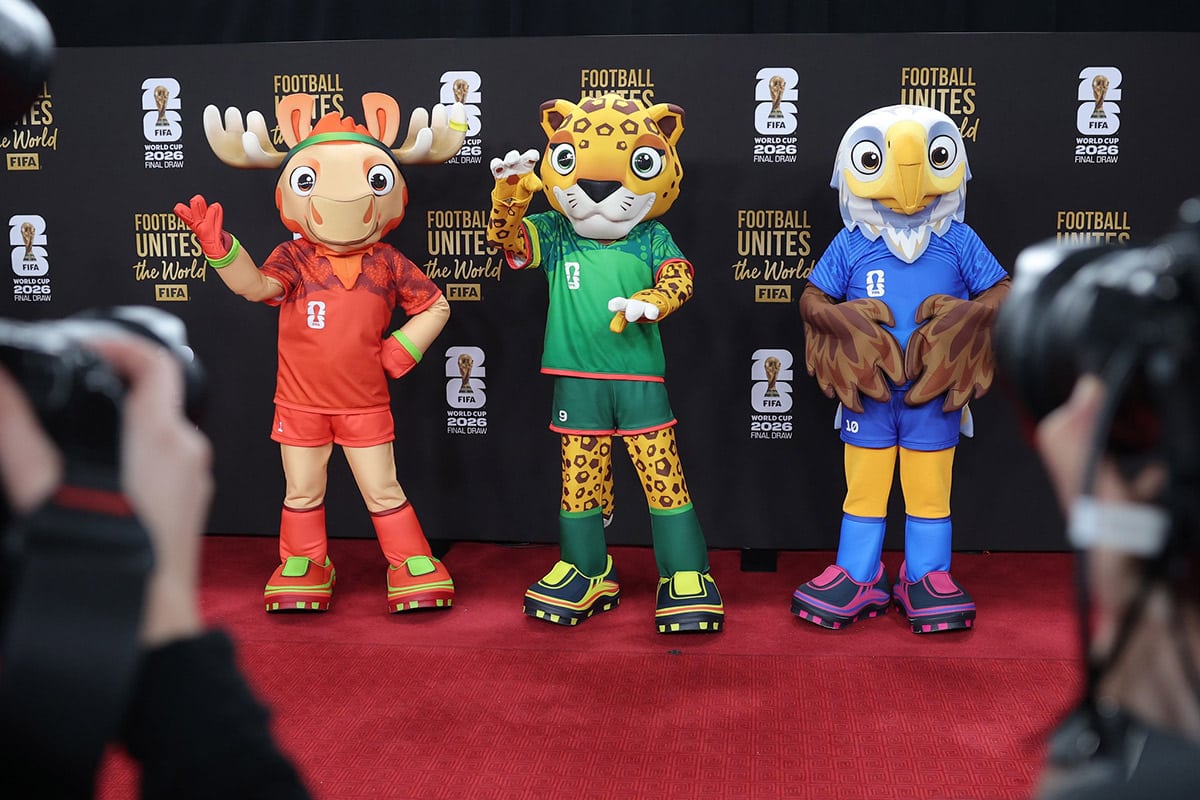
Clutch the eagle, Zayu the jaguar and Maple the moose are the mascots of the 2026 FIFA World Cup in the USA, Mexico and Canada.
Clutch is an eagle, wears the blue jersey of the American national team and symbolizes courage, leadership and unityacting as a midfielder. Zayu is a jaguar, wears the traditional green color of the Mexican species and is an attacker. Inspired by the animal’s importance to ancient civilizations, it symbolizes strength, agility and cultural pride. Maple is a moose, appears in red and represents creativity and resilience. He is a goalkeeper and is inspired by the maple leaf, the national symbol of Canada.
Maple represents Canada, Zaya represents Mexico, and Clutch represents the United States. They reflect culture, heritage and spirit their countries. Together they symbolize unity, diversity and love for footballannounced FIFA.
These are Croatia’s opponents at the World Cup
The practice of presenting mascots at the World Championships began in 1966 in England when it was introduced Willie the lion.
From 1970 to 1978, the mascots of the World Cup were boys – four of them. In Mexico, the mascot was the boy Juanito, recognizable by the large sombrero on his head. Four years later in Germany the mascots were boys Tip and Tap. One had the inscription WM for the world championship on the jersey, and the other in 1974.
The last human figure on the mascots of the world championships was Gauchito in Argentina in 1978. Dressed in the jersey of the Argentine national team, Gauchito had a scarf around his neck and a whip in his right hand like real South American cowboys.
In Spain in 1982, the mascot was Orange (orange), a typical Spanish fruit. Four years later in Mexico, the mascot was a hot pepper ‘Pique’ wearing a mustache and a sombrero.
In Italy in 1990, a completely new approach to mascots appeared. ‘Ciao‘ was composed of geometric figures in the shape of football players and in the colors of the Italian flag. Instead of a head, he had a ball.
The World Cup in the United States of America in 1994 was marked by a dog Strikerthe most common pet in America, who wore a T-shirt in the colors of the USA flag with the inscription “USA 94”.
Spain is the first favorite of the World Cup, Croatia is only in the middle of the ranking
France decided on a mascot roosterone of the symbols of France. Footix was blue, like the French jerseys. The name is derived from the word “football” and the suffix “ix” from the popular Asterix comic.
Futuristic mascots Ato (coach), Nik (blue player) and Kaz (purple player) descended from the Atmozone to our planet to be the official mascots of the World Cup in Japan and South Korea in 2002. The characters were created by computer animation and no one was clear what the characters symbolized.
In 2006, the Germans chose an atypical lion for them Naked and a talking ball – Chicken. The lion mascot caused a lot of controversy due to its lack of pants, as well as the fact that this animal is more associated with England and the Netherlands than with Germany. NCIC, the company that licensed Gole, declared bankruptcy in May 2006.
Zakumi the leopard was the official mascot of the World Cup in South Africa in 2010. For the WC in Brazil, the mascot is the shepherd Fuleco. It is a mammal that is an endangered Brazilian endemic species.
In Russia 2018, we saw Zabivaka – a wolf with sports glasses and a jersey in the colors of the Russian flag, and at the last World Cup the mascot was La’eeb, a super-skilled player in the form of a keffiyeh, a traditional head covering worn by men in parts of the Middle East.
Mascots:
England 1966 – World Cup Willie
Mexico 1970 – Juanito
Germany 1974 – Tip in Tap
Argentina 1978 – Gauchito
Spain 1982: Narajito
Mexico 1986: Pique
Italy 1990: Ciao
USA 1994: Striker
France 1998: Footix
Japan and South Korea 2002: Ato, Kaz and Nik
Germany 2006: Goleo and Pillie
South Africa 2010: Zakumi
Brazil 2014: Fuleco
Russia 2018: Zabivaka
Qatar 2022: La’eeb
USA, Mexico and Canada 2026: Clutch, Zayu Maple
(China | Photo: FIFA)