
The rising cost of living in Bosnia and Herzegovina is increasingly pushing citizens into poverty. Along with rising energy prices, the constant rise in food prices is an additional pressure for many, especially for households with minimal incomes.
More than 250,000 employees in the Federation of Bosnia and Herzegovina are in the minimum wage zone. According to the latest data, there are 120,000 who receive the minimum wage and 150,000 whose wages are below 1,000 KM. On the other hand, the number of pension beneficiaries increases every month, and the lowest is 573.53 KM.
Hot stew
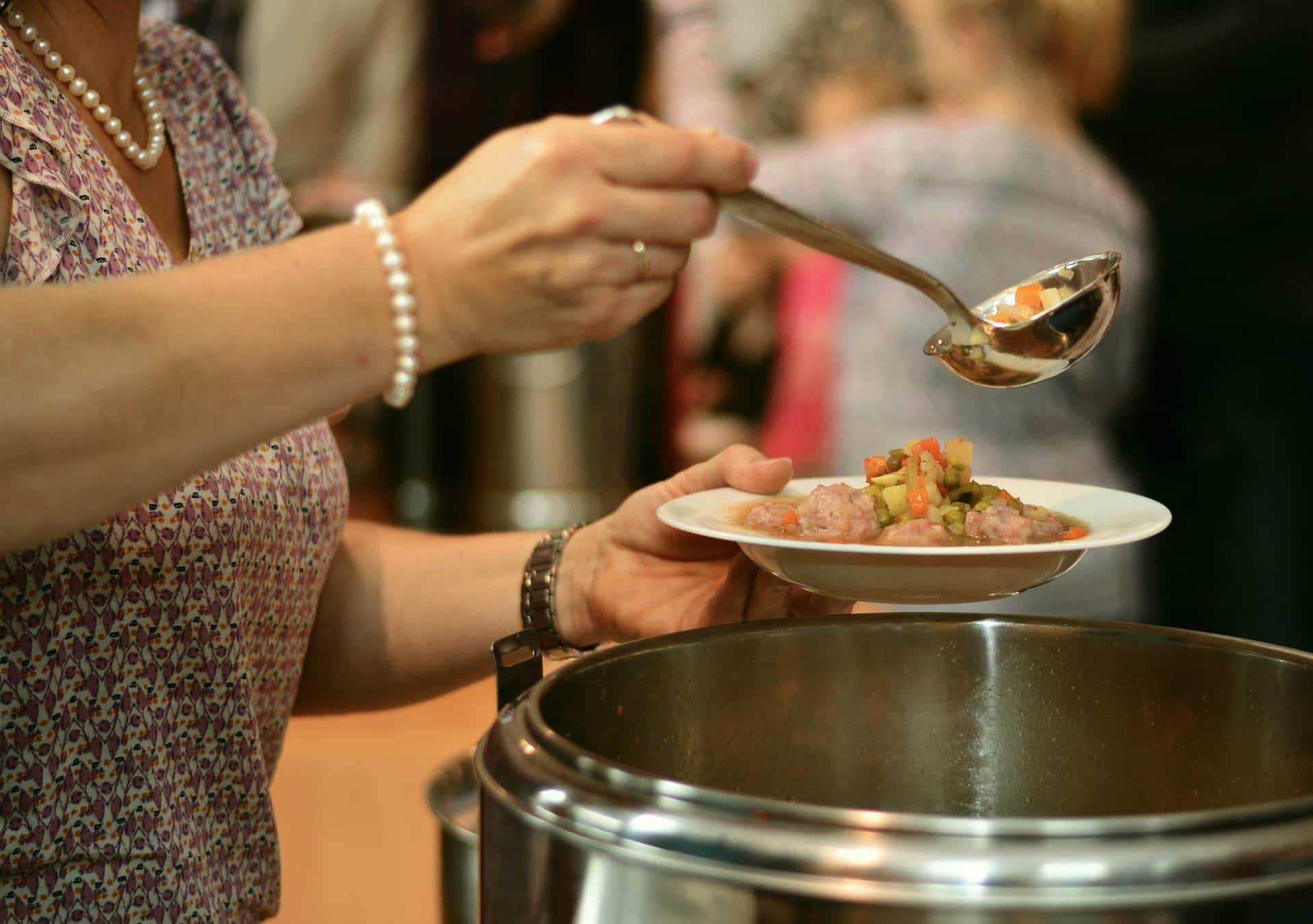
And while economic experts warn that this year will be challenging, the prolonged period of massive price increases forced many citizens to look for a piece of bread and hot stew in public kitchens.
According to data from the “Mozaik” Foundation, at least 16,800 citizens depend on the meals they receive every day in almost 60 public kitchens in this country. The UNDP, which mapped public kitchens across the country at the end of 2022 and the beginning of 2023, previously announced that the number of users of public kitchens in Bosnia and Herzegovina is more than 18,000.
There is an increase in the number of users in almost all of them. As Adnin Hasić, director of the Regional Board of “Merhamet” Mostar, told us, there was a slight increase in the number of beneficiaries of their assistance.
– In our National Kitchen in Jablanica, we prepare 100 meals for the socially vulnerable population every day, while we help almost 700 families with weaker financial conditions throughout Herzegovina. In any case, the increase in prices of basic foodstuffs also affects the work of humanitarian organizations, including “Merhamet”. Also, the decision of the Government of the Federation of Bosnia and Herzegovina to increase the minimum wage will make the work of “Merhamet” and I believe other organizations more difficult – Hasić told “Avaz”.
Extreme poverty
In “Merhamet’s” kitchens in the Republic of Srpska, there is a rapid growth of users of even 20 percent. According to UN research, close to 17 percent of BiH citizens live in extreme poverty, trying to survive on three to five marks a day, while almost 700,000 inhabitants are on the verge of poverty.
On the other hand, the Agency for Statistics of BiH last measured poverty in 2015! However, the data at that time also referred to relative poverty. According to these data, 16.9 percent of the population of Bosnia and Herzegovina was in that zone.
Poor households
Interestingly, in the household consumption survey published recently by the BiH Statistics Agency, which refers to the years 2021 and 2022, part of the report refers to poverty. However, these indicators are also related to relative poverty, and are divided into various types. Thus, it was stated that according to the type of settlement, 12.1 percent of urban households are relatively poor, and 14.3 percent of others.
By type of household, the poorest are single parents plus other relatives, which is 20.7 percent. According to the same source, BiH has 18.3 percent of poor households in which there are childless married couples over the age of 65. There are 14 percent of poor households in which there are married couples with three or more children.
Figures:
– More than 250,000 employees in the Federation of Bosnia and Herzegovina are in the minimum wage zone
– 150,000 are those whose salary is below 1000 KM
– UNDP, which mapped public kitchens throughout the country at the end of 2022 and the beginning of 2023, previously announced that the number of users of public kitchens in BiH is more than 18,000


