
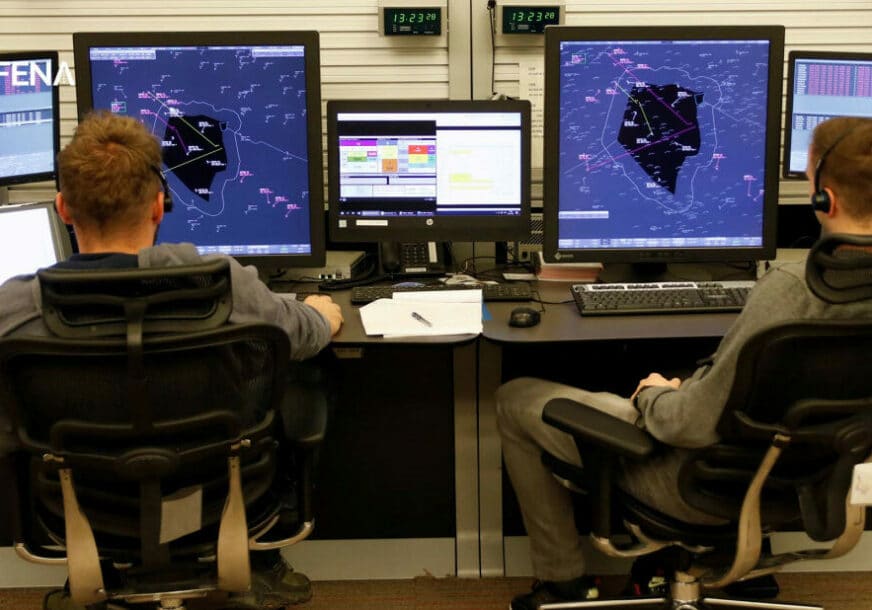
Bosnia and Herzegovina is hosting the international conference “Preparation of air traffic management systems for the future”.
The meeting focuses on the key challenges that are already changing the European skies today – from the modernization of air traffic control systems and cyber security to the application of new technologies and the training of professional staff. This conference represents one of the most significant expert gatherings in the field of air navigation in Europe and additionally confirms the position of Bosnia and Herzegovina on the European aviation map.
Safety above all else
When you buy a plane ticket, you are not only paying for the seat, but also for your safety. Behind every completed flight, in addition to the aircrew, there are also air traffic controllers, whose task is to monitor every meter of the flight. Although technology is changing the way European skies function, participants said the human factor remains irreplaceable, especially when it comes to experts who ensure the reliable operation of critical air navigation infrastructure.
“Technology alone does not guarantee safety. Behind every safe flight are experts who ensure that critical systems remain available, safe and reliable. The future of Europe’s skies will depend equally on technological development and investment in people,” said Costas Christoforou, IFATSEA Director for Europe.
Legal reforms needed
But when it comes to the future of Bosnia and Herzegovina’s skies, it also depends on political consensus and will. In addition to the lack of personnel in this field, legal regulations do not follow European standards. The Law on Aviation of Bosnia and Herzegovina, which provides for the formation of a new, independent Agency for Civil Aviation, is still in draft form.
“I appeal to the decision-makers in Bosnia and Herzegovina to recognize these people and to give them the place they deserve. To be recognized in the regulations as someone who directly affects air traffic,” said Nikola Cojić, member of the Executive Board of IFATSEA.
BiH without full control of the sky
Undercapacity is not the only problem facing Bosnia and Herzegovina. The country does not yet have full control over its airspace, and it does not have the necessary technology for the part of the sky it is supposed to monitor. Of the three radars required for effective coverage of the territory, Bosnia and Herzegovina currently has only one.
“Other radars are not installed, but we rent radar images from Croatia and thus cover the territory we control. Air traffic control, or BHANSA, controls three quarters of the territory, while one quarter is controlled by Croatia,” explained Omer Kulić, an aviation expert.
The future of air traffic management depends on the system’s ability to simultaneously respond to traffic growth, accelerated digital transformation and new security threats – Bosnia and Herzegovina cannot respond to such a challenge alone, experts conclude. Federal.


