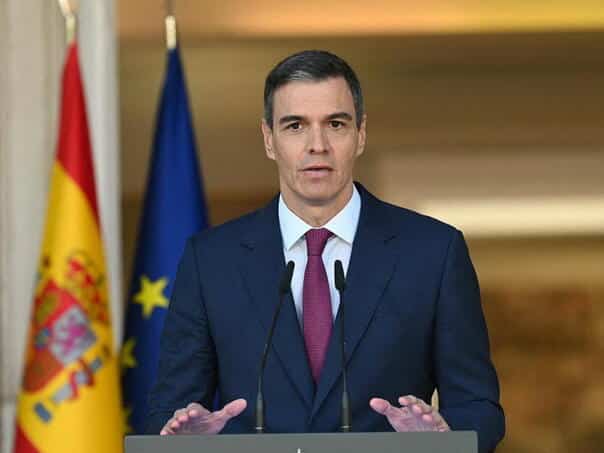
The Minister of Economy Carlos Cuerpo said that the decision of additional evidence of the government’s political commitment and the international leadership of Spain in respect of human rights, reported “El Pais”.
Embargo, who previously announced Prime Minister Pedro Sanchez, is further out of partly in force, which was previously in force and includes the ban on the export of weapons, transit fuel and imports of products and services from occupied territories.
“Spain has already had partial prohibitions, such as Slovenia, Belgium and the Netherlands, but this measure we have forbidden the export of weapons, transit fuel and imports, opening the way for the EU,” said the left-wing coalition partner Sumar in the announcement.
However, the leader of the Podemosa Iona Belar criticized the timing, saying that the move came too late.
“The arms embargo applies before war crimes commit, not with 60,000 innocent victims,” she said.
The conservative opposition People’s Party (PP) left its support to the embargo uncertain, and the parliamentary spokeswoman Ester Munosis said that the party would wait to see the text of the Royal Decree.
The munosis warned of potential risks by Spanish security, noting that many components used by the Spanish forces of the security of Israeli origin.
“May not be trivialized, it is a complex question,” she added.
Government spokeswoman and Minister of Education Pilar Alegria repeated Spain’s position on the recognition of Palestine, reminiscent of Sanchez’s statements in the UN.
“As the Prime Minister emphasized in the UN, the recognition of the Palestine state is urgent, and now we see that many countries like France, Portugal, from the beginning, played a key role in supporting the coexistence,” said Alegria.
Spain was previously, 9. September, a package of sanctions against nine counts, but delayed the approval of the complete embargo on weapons and related measures for technical and legal reasons until Tuesdays.
(Vijesti.ba)