
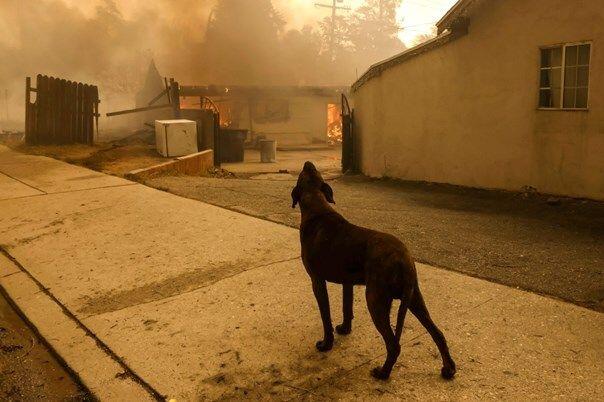
One pit bull mix arrived at the Pasadena Humane shelter covered in ash, the pads of his paws festering from walking on charred debris, his lungs choked with smoke. A good Samaritan found the dog lying in the rubble in Altadena, wrapped it in a blanket and brought it to the shelter.
Still too weak to walk, Canela was reunited with his owner yesterday — thanks to CNN’s coverage of the act of kindness. The injured pet continues to receive medical attention and is one of more than 400 animals that have arrived at the Pasadena shelter since the Southern California wildfires began last Tuesday.
Animal associations, veterinarians and rescue organizations took in and helped dogs, horses, donkeys, goats, sheep and other animals whose owners lost their homes in the fires.
The Humane Society began accepting animals as a temporary shelter while families evacuated their homes. But the situation worsened in a widening disaster that left 16 dead, burned large areas and forced at least 153,000 people to flee their homes.
“More injured animals are coming,” said Dia DuVernet, president and CEO of Pasadena Humane. “Also, people are bringing their animals to what we thought was a temporary shelter, but they don’t have homes to go back to, so it turns into a longer-term situation.”
Some are animals with severe injuries, such as a burnt husky with burnt fur and burnt paws.
“Nobody came back for him,” said the organization’s chief veterinarian, Dr. Maria Pyrdek, adding that the dog is gradually showing signs of recovery. “He didn’t even raise his head when he was brought in. He was just completely exhausted.”
The organization has entered a new phase of this disaster response, search, rescue and recovery, DuVernet said. Pasadena Humane is prioritizing calls to help live animals in fire zones – including eight injured peacocks.
A man in Altadena contacted the Humane Society for help getting water for cows, sheep and a bull he couldn’t get to because the fire destroyed a bridge. “We’ve been thinking about how we can get a significant amount of water across this ravine and up this hill so the animals don’t suffer from dehydration,” DuVernet said.
She said the community secured enough donations to fill five trucks.
In nearby Burbank, the Los Angeles Equestrian Center accepted about 400 animals, mostly horses, but also a few donkeys. Some were brought in by owners who evacuated their homes, and others by the police who found them running.
(Vijesti.ba)