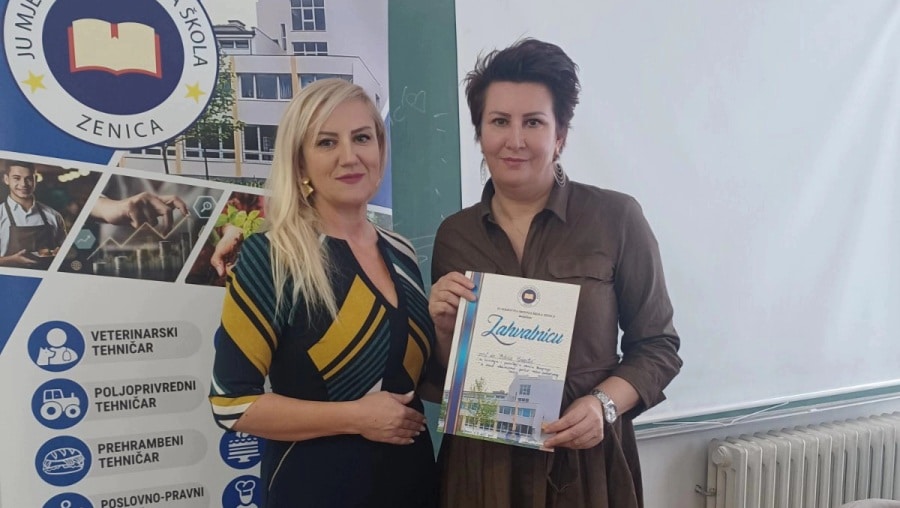
As part of the global campaign “16 days of activism against gender-based violence”, JU Mixed High School Zenica hosted an extremely important and well-attended event on December 8, 2025, which brought together students, teachers and guests.
A panel discussion was held in a crowded school hall, where distinguished university professors, prof. Ph.D. Zilka Spahić Šiljak and prof. Ph.D. Edisa Gazetić.
The professors presented the results of research on menstrual poverty, and pointed out its cultural and economic aspects, as well as the wider social context in which women and men in Bosnia and Herzegovina find themselves. Special attention is paid to the topics of femicide, gender inequality and existing taboos that still affect the open conversation about menstrual health and other issues important to the dignity and safety of women.
The panel discussion aimed to strengthen the awareness of both female and male students about the importance of rejecting taboos and reducing the stigma associated with women’s health topics. Precisely because of this, the conversation opened up space for new reflections, understanding and support, which is crucial for building a healthier and more equal school and social community.
One of the most significant conclusions of this event is the school’s decision to become one of the first educational institutions in BiH that will regularly procure menstrual material for schoolgirls. This step represents direct support for schoolgirls in an economic sense, but also an important contribution to the reduction of menstrual poverty and the promotion of equal conditions for all.
The moderator of the panel discussion was professor Lamija Subašić, who led the conversation with special sensitivity and professionalism, enabling the panel to become an inspiring space for learning and exchanging opinions.
JU Mixed secondary school Zenica thanks prof. Ph.D. Zilki Spahić Šiljak and prof. Ph.D. Edisa Gazetić for cooperation, support and contribution to the campaign “16 days of activism against gender-based violence”.
In the end, the director of the school, Amela Mujaković, said that the school will continue to work on educating, empowering and protecting its students, and will continue to be an example to the community in which taboo topics are changed with knowledge, dialogue and courage. Zenit.