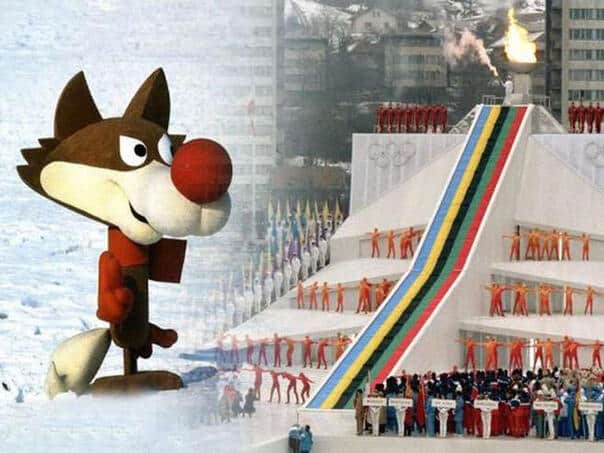
From February 8 to 19, 1984, Sarajevo was the center of the world, and the entire former Yugoslavia participated in the organization of the Olympics.
Companies from Bosnia and Herzegovina, as well as the whole of Yugoslavia, were involved in the construction of the facilities. At the same time, each of the RTV companies from the republics of the former Yugoslavia, from Ljubljana, to Pristina and Skopje, had one arena that they covered. At that time, Sarajevo experienced development in all spheres and a positive social climate was created.
What the Sarajevo Olympic Games will be remembered for is the snow that fell the night before the official opening of the Games. The students of the First and Second Gymnasium then removed the snow from the chairs in the stadium with their hands, so that the opening could take place without any problems.
The Winter Olympic Games held in Sarajevo cost a total of 141,647,000 dollars, and ended with a surplus of 12,000,000 dollars, and were the first Olympic Games to end with a surplus. All the previous ones were in debt and many cities had difficulty covering the costs.
The Sarajevo Games were, in many respects, a record at that time. Those were the first games where there was no North Atlantic or Warsaw Pact boycott, they were a record number of participating countries.
They were watched by about two and a half billion viewers worldwide, there were 49 national teams, 222 medals were awarded, 2,691 athletes and coaches participated, 640,000 tickets were sold, and they were followed by 7,825 journalists and 760 newsrooms.
The most successful countries were then East Germany (nine gold, nine silver and six bronze medals) and the USSR (six gold, 10 silver and nine bronze medals).
(Vijesti.ba)